


Black Wall Table
A black wall table brings weight and focus to a room, anchoring the space with dark timber, marble tops and gilt work.
Black Wall Table
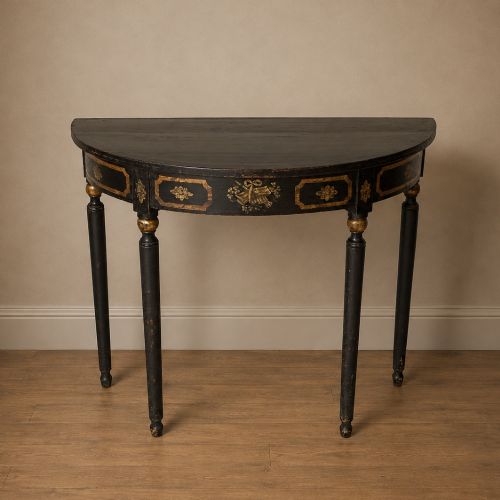
A black wall table is typically represented here by console tables designed to sit against a surface, drawing on Regency, Georgian and later Victorian periods.
These items span forms like painted wood, ebonised finishes and marble-topped console tables, often featuring demi-lune shapes or parcel gilt accents.
Origins stretch from French provincial workshops to Chinese export pieces, reflecting diverse regional interpretations of wall-mounted and console furniture.
Materials and construction
Makers utilised painted wood, ebonised timber and wrought iron to achieve dark structural surfaces, frequently pairing them with heavy marble tops.
Decoration often involved parcel gilding to highlight carved details, alongside fine painted finishes and applied brass elements.
Assessing quality
Quality rests in the crispness of carved details and the depth of the ebonised or painted finish applied to the timber.
The integration of heavy materials like marble or glass with the supporting frame distinguishes finer architectural consoles from simpler country house pieces.
Gillows
The Black Wall Table Glossary
- Console table
- A table supported by brackets or console legs against a wall. These forms are built to anchor spaces without protruding deeply into the room.
- Ebonised wood
- Timber stained or painted to resemble ebony. This finish provides a dense, dark surface common in nineteenth-century furniture.
- Demi-lune
- A half-moon shape. This curve appears frequently on the tops and frames of wall-mounted console tables.
- Parcel gilt
- Part gilt, where thin layers of gold leaf highlight specific carved details against a painted or dark background.
Black Wall Table: Frequently Asked Questions
How do I secure a wall console?
Console tables designed for walls often require mechanical fixing to ensure stability, particularly when topped with heavy stone.
Matching the weight of the piece to appropriate wall fixings keeps the structure secure.
Where should I place this table?
These tables suit hallways, dining rooms or living spaces where a shallow surface is needed against a vertical plane.
They pair well with mirrors or wall-hung artwork positioned directly above them.
How do I clean ebonised surfaces?
Dust regularly with a soft cloth to prevent particulate accumulation on dark painted or ebonised wood.
Avoid harsh chemical cleaners that can degrade nineteenth-century painted finishes.
What periods do these tables represent?
The selection includes pieces from the eighteenth and nineteenth centuries, spanning Regency, Georgian and later Victorian eras.
Stylistic influences range from French provincial designs to Chinoiserie and Chinese export work.