
Black Tripod Side Table
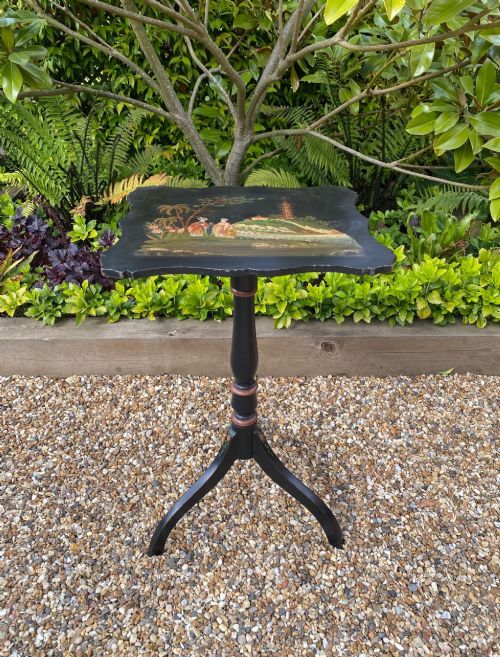
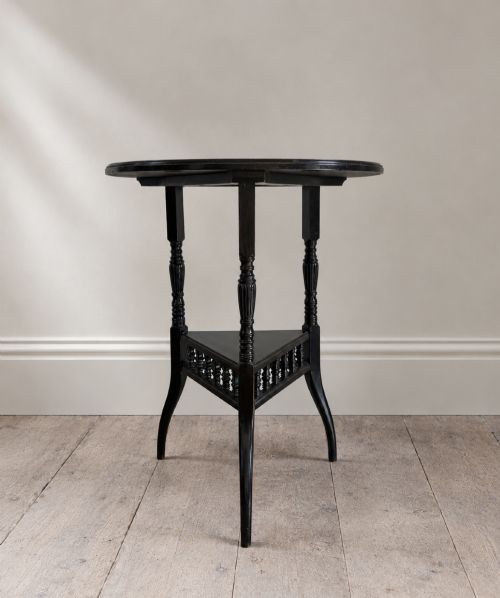
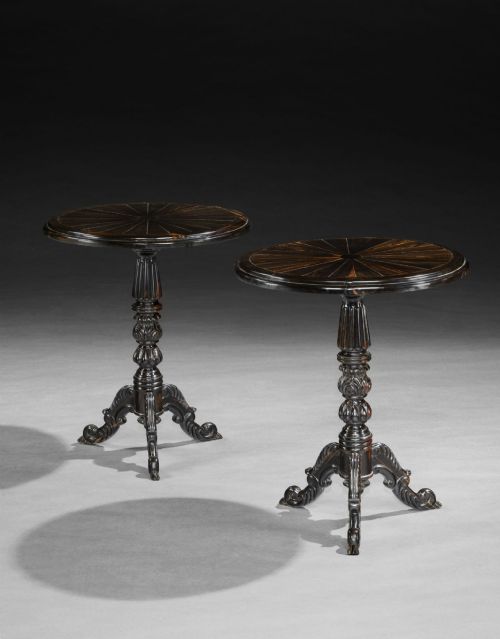
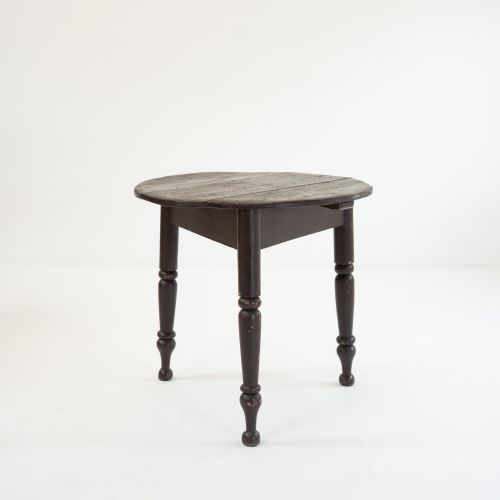
A black tripod side table brings dark elegance and compact utility to a room, ranging from Chinoiserie lacquer to carved wood.
Black Tripod Side Table
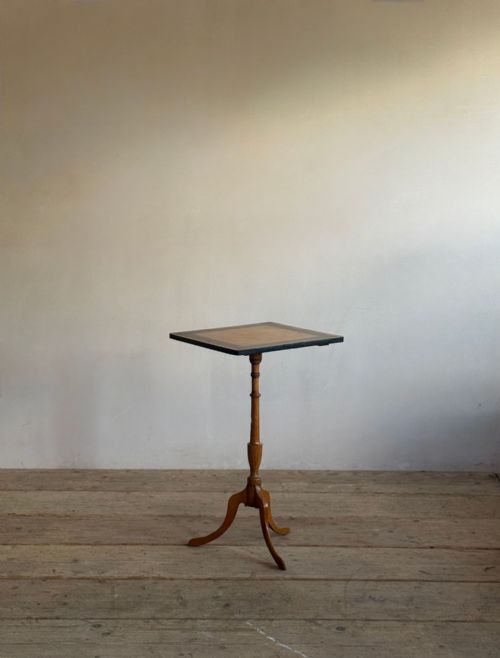
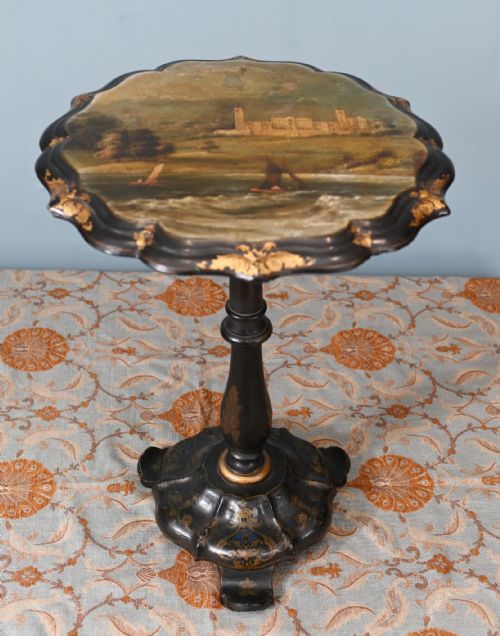
The black tripod side table appears across the nineteenth century and into the early twentieth century, spanning Georgian, Regency, Victorian, and Arts and Crafts periods. These pieces serve primarily as occasional tables, wine tables, and tilt-top tables designed for domestic spaces.
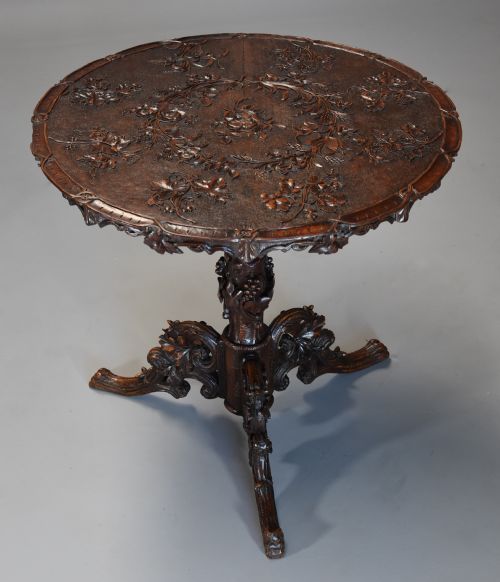
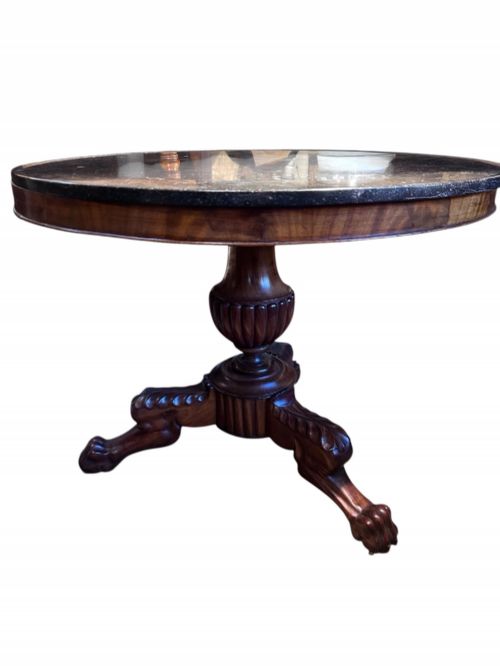
The selections on this page encompass diverse stylistic traditions, including English painted examples, French Empire and Louis Philippe gueridons, and Swiss Black Forest linden wood carvings. Regional interpretations stretch from Anglo-Indian ebony work to Chinese and oriental lacquer designs.
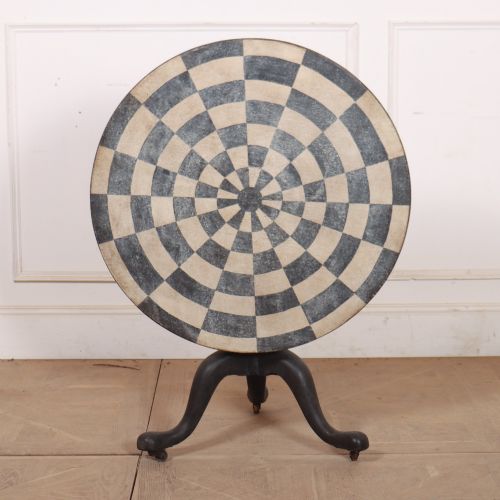
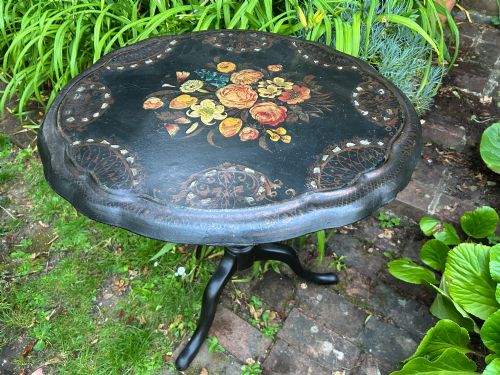
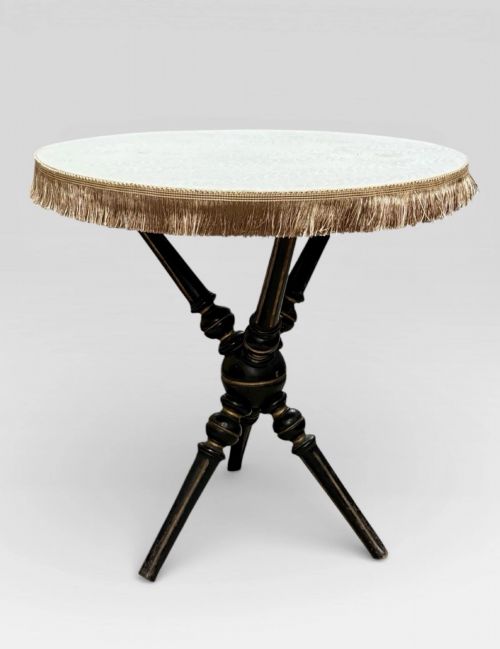
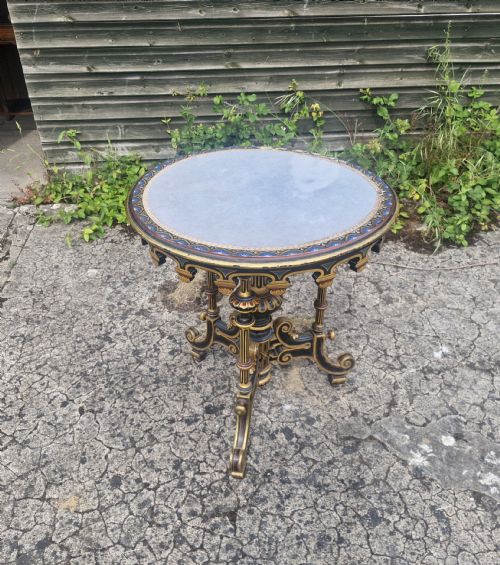
Formations vary from round and octagonal tops supported by three-legged pedestals to cast iron scrollwork and papier mâché surfaces. Buyers frequently encounter pieces featuring hand-painted decoration, penwork, or mother-of-pearl inlay.
How they were made
Construction relies heavily on woods such as mahogany, pine, walnut, and solid ebony, alongside ebonised timber and papier mâché. Artisans achieved the characteristic dark finish through black lacquer, Japaning, and ebonising techniques.
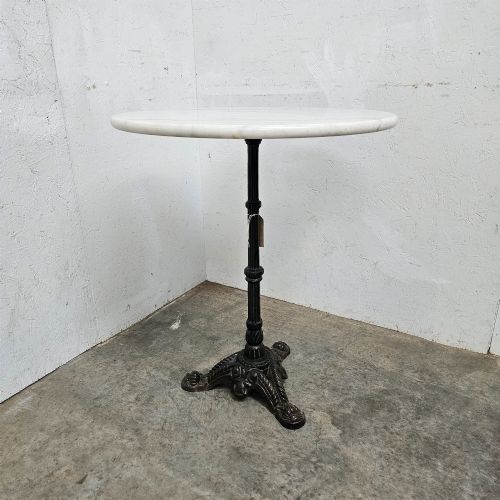
Surface ornamentation involved intricate hand painting, penwork, ink work, and chip-carving, often enhanced by gold leaf, parcel gilt, or parcel silvering. Marble tops appear on French café and gueridon tables, while tilt-top mechanisms utilise pivoting wooden brackets.
Periods represented across the pieces include Georgian, Regency, Victorian, Edwardian, and the Arts and Crafts movement.
What varies in quality
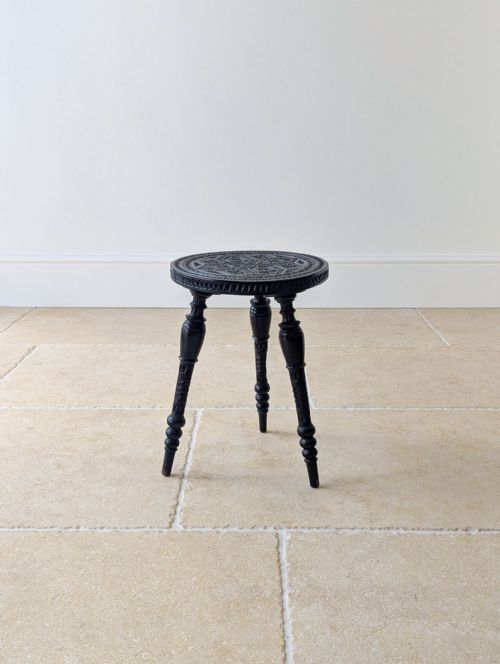
Quality reveals itself in the execution of the surface decoration, distinguishing masterly hand-painted Chinoiserie and penwork from simpler painted finishes. The depth and crispness of carving, particularly on Black Forest linden wood or chip-carved tables, set finer examples apart.
Structural integrity of the tripod base and the precision of the tilt-top mechanism dictate everyday utility and craftsmanship. Materials also signal distinction, such as solid ebony or marble inserts compared against standard painted pine.
The Black Tripod Side Table Glossary
- Ebonised wood
- Timber treated with stain or paint to imitate the dark appearance of ebony. This finish became particularly popular during the Victorian and Arts and Crafts periods.
- Gueridon
- A small French table supported by a central column or pillar, frequently featuring a round marble or wooden top. These pieces often date from the Empire or Louis Philippe periods.
- Penwork
- A decorative technique utilising ink applied with a quill or pen to create detailed motifs on a light or dark ground. It is frequently seen on Regency games and occasional tables.
- Chinoiserie
- European decorative art influenced by Chinese design traditions, characterised by lacquered surfaces and painted landscapes. It appears prominently on Georgian and Victorian occasional tables.
- Tilt-top table
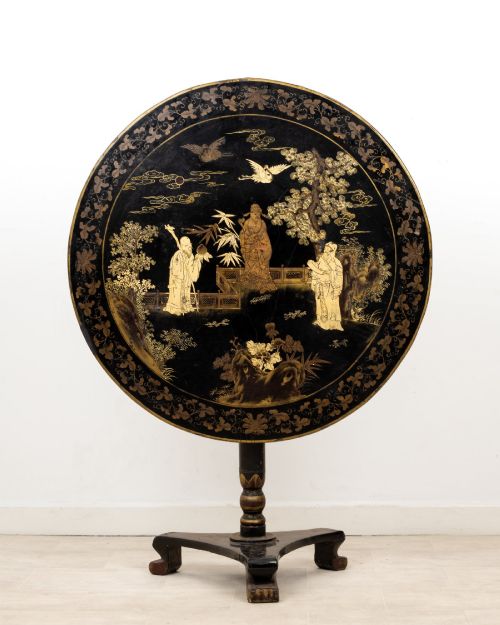
- A table equipped with a hinged mechanism allowing the top to rotate and rest vertically when not in use. This design saved space in smaller rooms.
- Torchere
- A tall, slender stand designed to hold a light or a decorative object. They frequently feature tripod bases and dark lacquered or decorated surfaces.
Black Tripod Side Table: Frequently Asked Questions
How do I identify a Chinoiserie table?
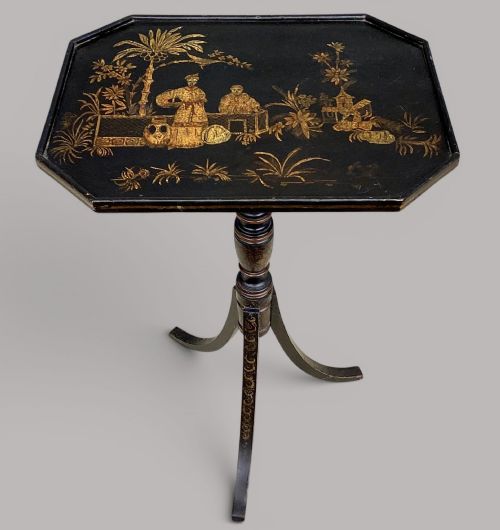
Chinoiserie tables are distinguished by dark lacquered surfaces adorned with hand-painted oriental motifs, figures, and landscapes. These decorations often incorporate gold or gilt highlights.
They emerged strongly during the Georgian and Regency periods, continuing into Victorian revivals.
Where were gueridon tables made?
Gueridon tables originated in France, becoming particularly fashionable during the Empire and Louis Philippe eras. They typically feature a central pedestal support and round marble or wood tops.
French makers utilised mahogany and cast iron alongside traditional gilt finishes.
What is ebonised wood?
Ebonised wood is standard timber, such as beech or fruitwood, treated with a dark stain or black paint to resemble genuine ebony. This technique was widely adopted by Victorian cabinetmakers and Arts and Crafts designers.
It provided a striking, uniform dark finish for occasional and gypsy tables.
How do Black Forest tables differ?
Black Forest tables are defined by profuse, highly detailed hand-carvings executed in linden wood or walnut. They often feature naturalistic motifs, animal figures, or musical themes.
Originating from central Europe, these nineteenth-century pieces showcase exceptional sculptural craftsmanship.