






Black Slate Clock
A black slate clock anchors a room with architectural gravity, bringing the heavy presence of Victorian mantelpieces and French ateliers into your home.
Black Slate Clock
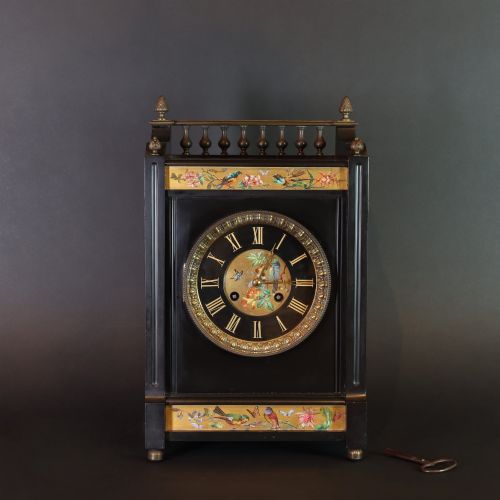
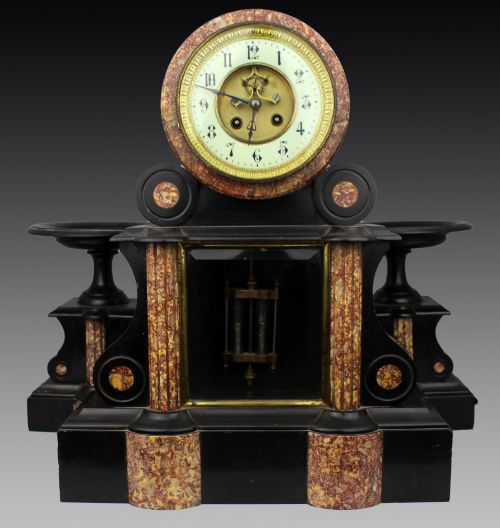
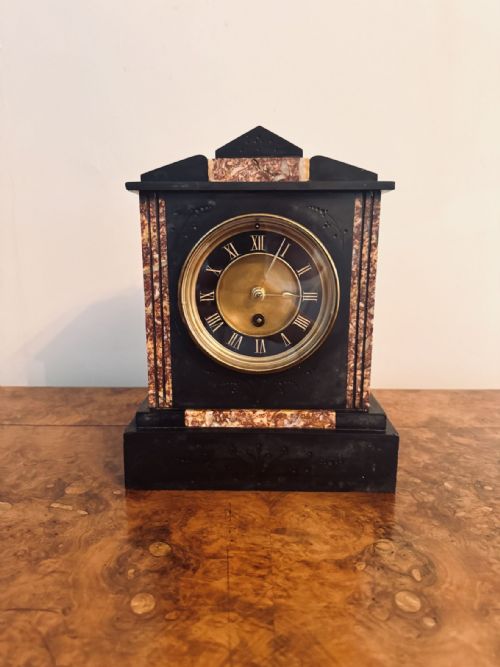
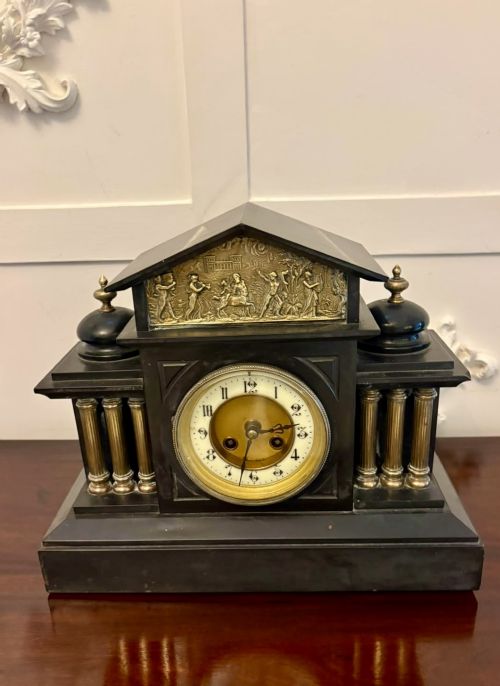
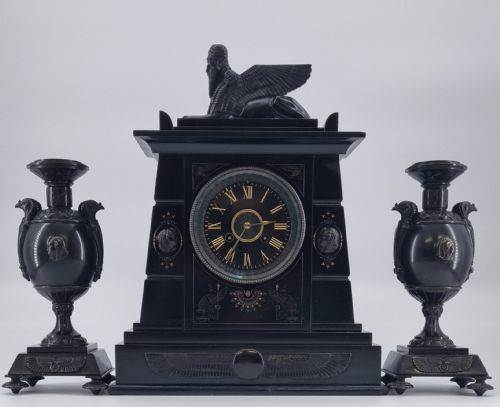
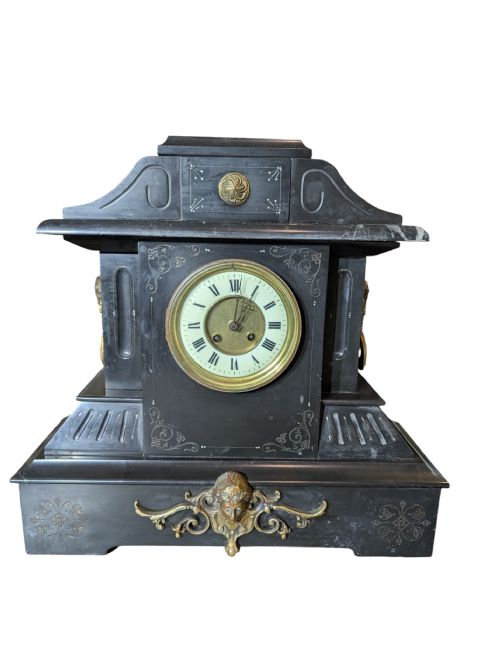
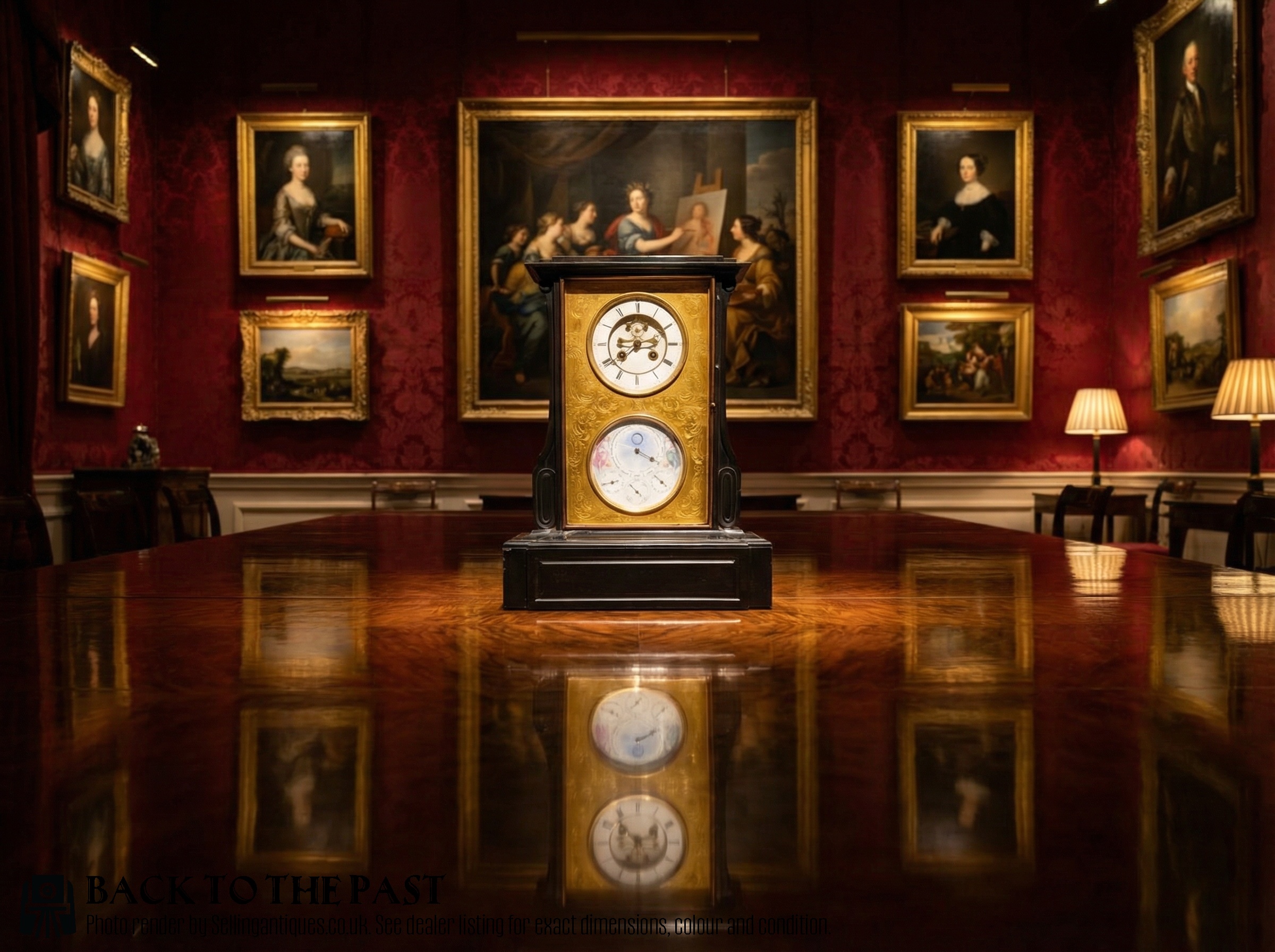
A black slate clock is a sturdy timepiece designed for the mantelpiece, appearing primarily in Victorian domestic interiors and nineteenth-century French workshops. Buyers searching for a black slate clock encounter substantial architectural cases, drumhead designs, and imposing garniture sets flanked by matching urns or sidepieces. These heavy timekeepers range from simple domestic pieces to elaborate Egyptian Revival and Neoclassical designs incorporating contrasting marble and bronze mounts.
The most common examples on this page date from the mid-to-late nineteenth century, spanning Victorian Britain and France. Many feature visible escapements, enamel dials, and prominent architectural pediments styled after classical temples or French Second Empire monuments. Alongside strict black slate, makers frequently combined the stone with red marble, faux marble finishes, or intricate coloured stone inlays.
Materials and construction
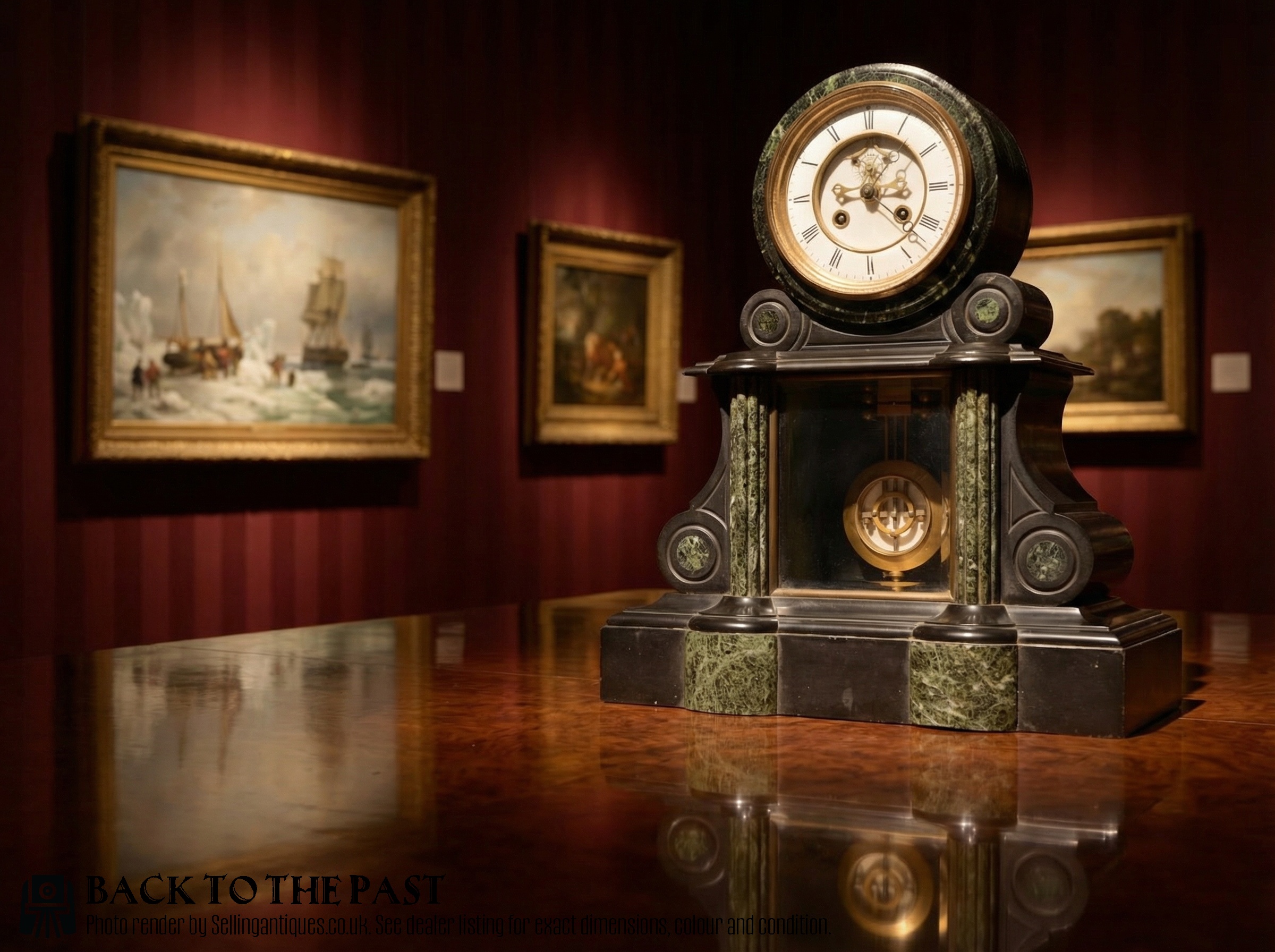
Clockmakers utilised dense black slate and marble as the primary structural bodies, shaping the stone into heavy architectural cases that mimicked classical masonry. These substantial stone carcasses were frequently polished to a high sheen and accented with contrasting marble inlays, cast bronze, or gilt brass mounts.
Movements were housed securely within the heavy stone housings, often featuring eight-day mechanisms, French pin-pallet or visible Brocot escapements, and white enamel dials protected behind bevelled glass. Artisans also integrated decorative elements such as cast metal figures, putti musicians, or lion ornaments directly onto the slate and marble foundations.
Black Slate Clock Retail Price Guide 2026
Typical asking prices for black slate clock among the pieces listed under this phrase on Sellingantiques today, from the lower quarter to the upper quarter. They describe what is for sale here now, not the wider market.
Materials recorded across the archive include black slate, various marbles, brass, bronze, glass, and enamel dials.
Distinctions in craftsmanship
Quality in a black slate clock rests upon the architectural ambition of the case and the precision of the housed movement. Finer examples display crisp, hand-cut stone mouldings, sophisticated inlay work using contrasting marbles, and high-grade signed French or English movements.
Simpler domestic items rely on plain slate boxes with standard mechanical parts, whereas superior productions integrate architectural details such as bronze Egyptian Revival motifs, gilt mounts, and matching garniture urns that elevate the entire ensemble.
Japy Frères·Philippes Paris·Sacre·Baby and Jannings·D. Munsey of Cambridge·Achille Brocot·Barraud & Lund London·Vulliamy London
The Black Slate Clock Glossary
- Garniture
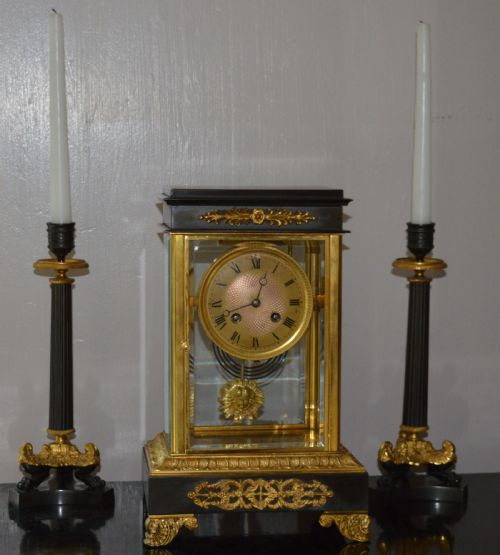
- A matched set consisting of a central clock flanked by two decorative ornaments such as urns or vases. These sets were designed to sit harmoniously across a mantelpiece.
- Visible Escapement
- A dial opening that exposes the ticking regulating mechanism of the clock in motion. This feature allowed Victorian observers to watch the heartbeat of the movement directly.
- Fusee
- A conical pulley used in mechanical clocks to maintain even power as the mainspring unwinds. This mechanism improves timekeeping accuracy across the duration of the wind.
- Drumhead Clock
- A timepiece featuring a circular clock case mounted centrally upon a rectangular stone base. This specific silhouette is particularly common in Victorian slate and marble designs.
Black Slate Clock: Frequently Asked Questions
How heavy is a black slate clock?
These timepieces are exceptionally heavy due to the solid stone cases used in their construction. Most require a sturdy mantelpiece or shelf capable of supporting significant dead weight.
Buyers should ensure the surface is entirely level and secure before placing a stone clock of this density.
What is a clock garniture?
A clock garniture is a matched decorative set comprising the main timepiece alongside a pair of matching side ornaments, typically urns or vases. They were created to form a balanced display across a fireplace mantle.
In period interiors, these matching pieces unified the decorative scheme of the room.
How do I wind an eight day movement?
Eight-day movements require winding via the key boles on the enamel dial approximately once a week. Care should be taken not to over-wind the springs.
Maintaining a regular winding schedule keeps the mechanical train operating smoothly and accurately.
Are these clocks English or French?
The listings include both British Victorian examples and nineteenth-century French productions from workshops in Paris and provincial centres. French pieces frequently incorporate Neoclassical, Egyptian Revival, or Belle Epoque styling.
British examples tend towards robust architectural interpretations suited to domestic Victorian interiors.