
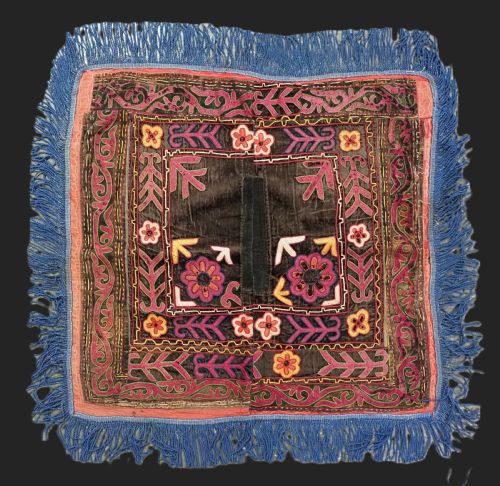


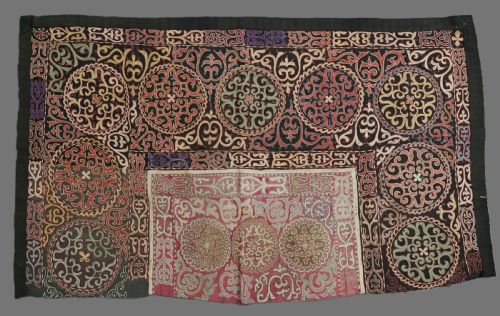

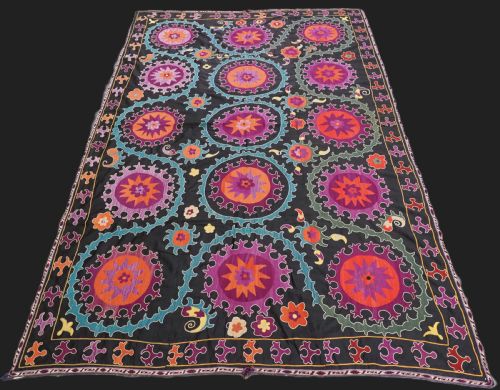


Black Silk Textile Panel
These black silk textile panel examples bring rich embroidery and historical craft directly to your walls, offering striking visual depth.
Black Silk Textile Panel
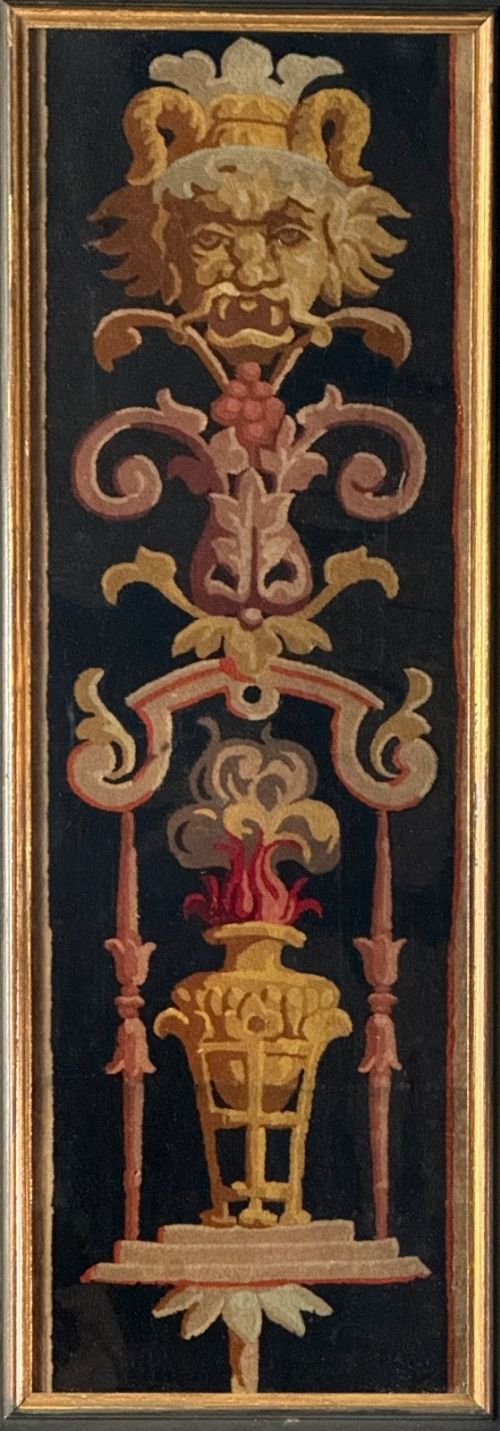
A black silk textile panel encompasses a diverse range of embroidered wall hangings, framed pictures, and folding screens originating from various cultures. When you search for this phrase, you encounter pieces that often utilise a dark ground cloth to make colourful needlework stand out.
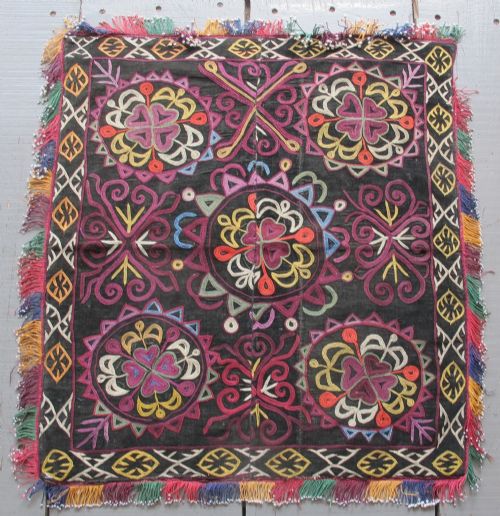
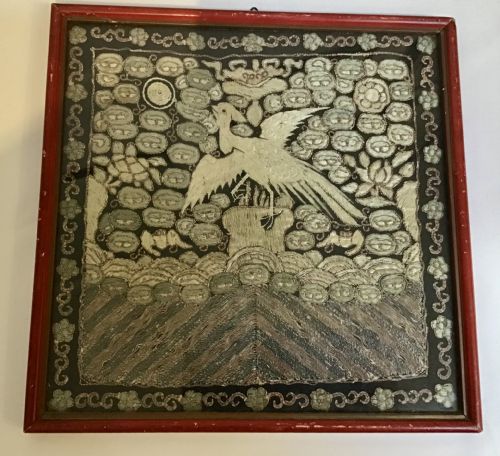
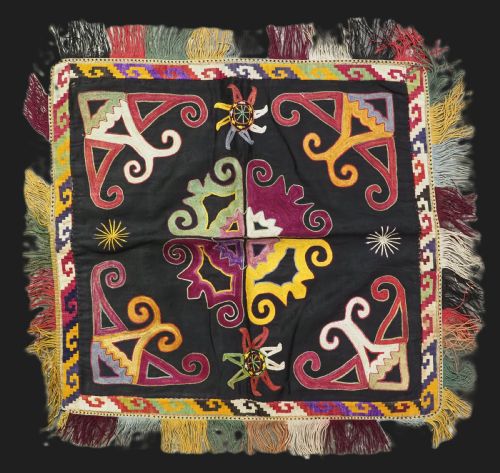
The selections span distinct cultural traditions, including Central Asian tribal embroideries, Chinese rank badges, and Japanese folding screens. Many of these items served functional or ceremonial purposes in their original contexts, such as dowry embroideries or yurt wall hangings.
Victorian and Georgian English silkwork pictures also appear alongside Asian and Middle Eastern pieces. These items demonstrate how different societies applied needle and thread to dark foundations to create lasting decorative art.
How They Were Made
Maker execution relies on silk thread applied to supportive grounds such as silk, cotton, velvet, or felt. Metallic thread frequently joins the silk to add reflective highlights to the embroidered surface.
Techniques range from intricate needlework and embroidery to applied relief work. Framing, mounting on wood, or integration into folding screens provided structural support for these delicate textiles.
Geographic origins span Central Asian tribal groups, China, Japan, Persia, and nineteenth-century England.
What Varies in Quality
Quality depends heavily on the intricacy of the needlework and the preservation of the ground material. Finer pieces demonstrate dense, precise stitching that maintains its structural integrity over time.
The complexity of the design and the richness of the materials, such as the inclusion of metallic thread or fine velvet grounds, elevate the status of an object. The provenance and cultural authenticity further distinguish standard examples from masterworks.
The Black Silk Textile Panel Glossary
- Ilgich
- A Central Asian embroidery piece, often created by Lakai tribes as dowry work for wall hanging. These items feature bold geometric and figurative motifs.
- Rank Badge
- A square insignia worn on official robes in imperial China, indicating the social standing of the wearer. Later examples are frequently mounted as panels for display.
- Suzani
- A type of embroidered and decorative tribal textile made in Tajikistan, Uzbekistan, and other Central Asian nations. They are traditionally worked on a cotton or silk ground.
- Tush Kyiz
- Large, elaborately embroidered wall hangings made in Kyrgyzstan and Kazakhstan by nomadic women. They traditionally commemorate the marriage of a son.
- Sampler
- A piece of needlework produced as a demonstration or test of skill in various stitches. Early examples often display alphabets, numerals, and familial names.
Black Silk Textile Panel: Frequently Asked Questions
How were textile panels used?
Many of these pieces functioned as domestic wall hangings, ceremonial dowry items, or architectural dividers within tents and homes.
Over time, individuals mounted or framed them to preserve the fragile silk embroidery and adapt them for Western interior display.
Where do most panels originate?
The available examples span multiple continents, with strong representation from Central Asian tribal regions, China, Japan, and Victorian England.
Each region employed distinct cultural motifs, such as dragons, geometric tribal symbols, or European floral compositions.
How should I hang textiles?
Framing behind glass protects delicate silk threads and metallic elements from dust and atmospheric degradation. Alternatively, professional textile mounting onto conservation-grade backing supports heavier wall hangings safely.
What periods do these pieces date from?
The pieces predominantly date from the nineteenth and early twentieth centuries, encompassing Victorian, Georgian, and Qing Dynasty eras.
Earlier nineteenth-century English silkwork sits alongside turn-of-the-century Asian tribal embroideries.