
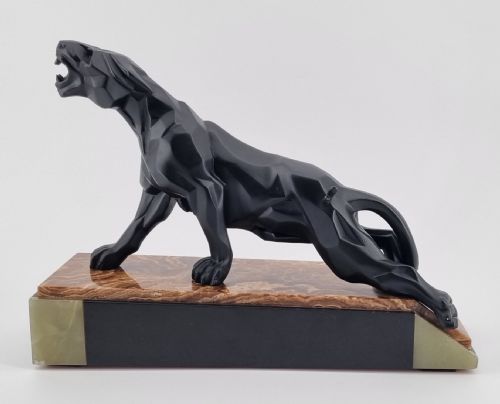
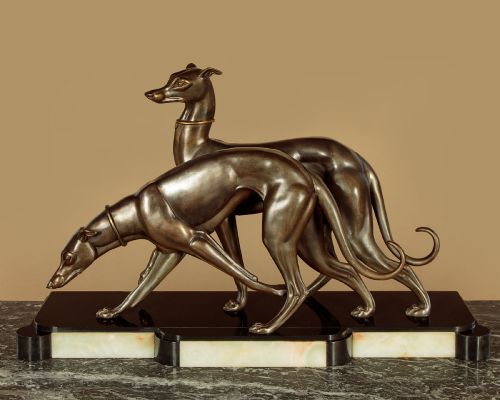



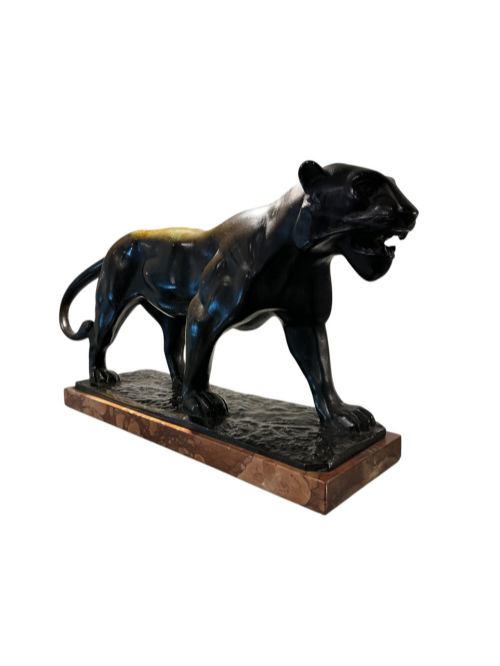
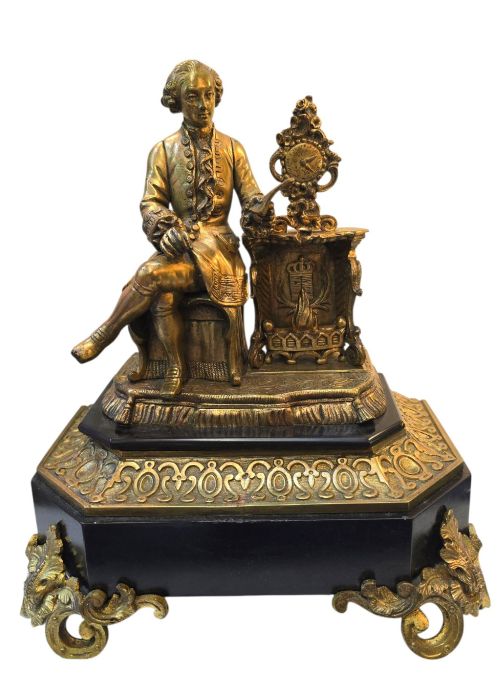
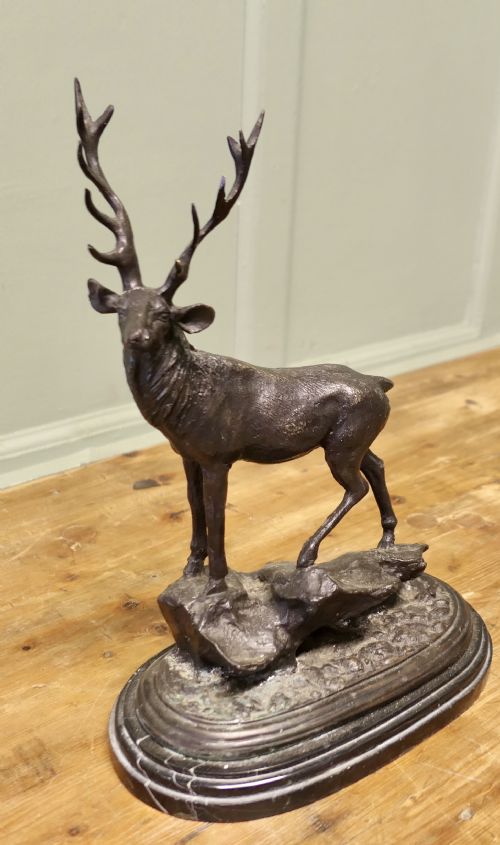
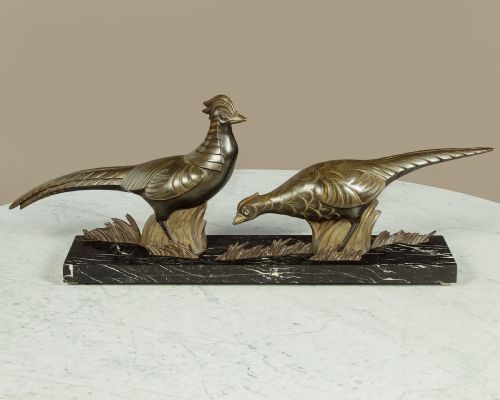
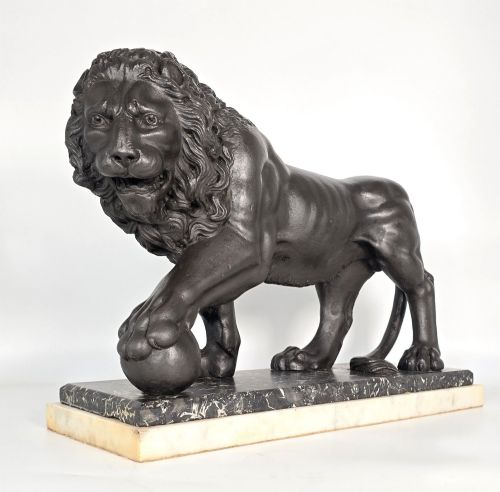
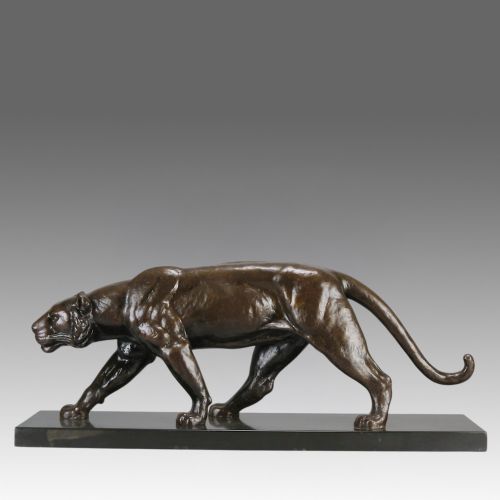

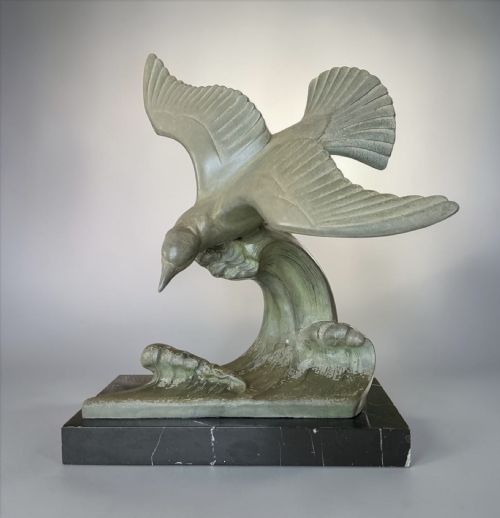


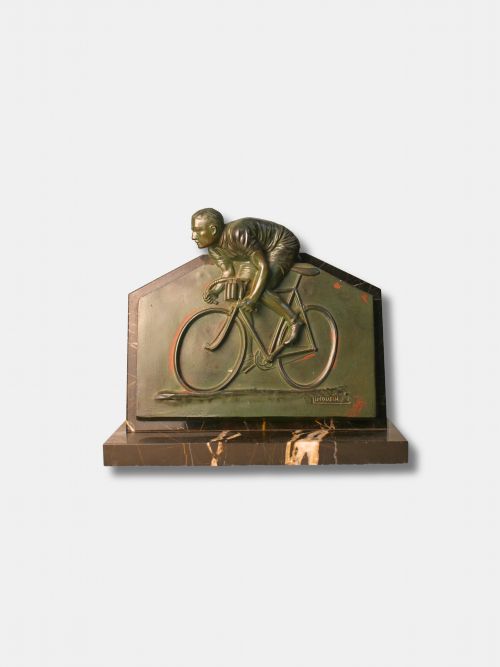
Black Marble Bronze Figurine
A black marble bronze figurine pairs heavy stone bases with cast metal figures, uniting two distinct materials in one sculpture.
Black Marble Bronze Figurine
When you search for a black marble bronze figurine, you encounter pieces that combine metal casting with dark stone plinths.
The selections span the nineteenth century through the art deco period, bringing together classical subjects and twentieth-century animal and dancer studies.
Most examples originate from French workshops, with black marble or onyx providing a heavy architectural foundation for the metal subject above.
Materials and Construction
Foundries cast figures in bronze, gilt bronze, silvered bronze, and spelter, applying patination to achieve dark or coloured surfaces.
Makers mounted these metal castings onto polished blocks of black marble or onyx, securing the figures with pins or bolts through the stone base.
Listings feature works spanning the nineteenth century, Victorian era, and the 1920s through the 1950s.
Distinctions in Execution
The standard of a black marble bronze figurine depends upon the crispness of the metal chasing and the depth of the casting detail.
Superior pieces exhibit careful finishing to the metal surface and precise fitting of the figure to the stone plinth, whereas lesser examples rely on substitute metals like spelter.
Maurice Giraud-Rivière·Pierre Collinet·Bruno Zach·Alexandre Ouline·Demetre Chiparus·Zoldan Kovats·Antonio Merente·Ferdinand Preiss·Geo Maxim·Desire Grisard·Paul Joris·Franz Iffland·I. Rochard
The Black Marble Bronze Figurine Glossary
- Spelter
- A zinc alloy commonly utilised as a less costly alternative to bronze for twentieth-century figure casting. It takes patination readily to imitate heavier metals.
- Patination
- The treatment or natural ageing of a metal surface that produces a specific colour and finish. It protects the metal while defining the contours of the figure.
- Grand Tour
- A nineteenth-century tradition of travel through Europe that inspired small-scale bronze copies of classical antiquities and architecture. These figures served as mementos for travellers.
- Animalier
- A nineteenth-century artistic focus on the realistic depiction of animals in motion or repose. Sculptors captured beasts with close attention to anatomical accuracy.
- Chasing
- The manual refinement of a raw metal casting using small punches and chisels to sharpen details. Artisans performed this step before applying the final patination.
Black Marble Bronze Figurine: Frequently Asked Questions
What metals are used in these figures?
Foundries cast the subjects in bronze, gilt bronze, silvered bronze, and patinated metal or spelter. These metals receive various surface treatments to alter their colour and sheen.
The metal figure sits atop a base formed from black marble, onyx, or occasionally a mixed stone plinth that provides stability.
How do I clean the marble base?
Dust the stone gently with a dry, soft cloth to remove surface particles. Avoid abrasive cleaners or excess water which can seep into joints.
Keep polished marble away from direct heat sources and acidic substances that might etch the polished surface over time.
Are these pieces from the art deco period?
Many examples date from the art deco era of the 1920s and 1930s, featuring characteristic dancers, animals, and streamlined styling. These modern works often pair silvered or gilded bronze with stepped marble plinths.
Other examples originate from the nineteenth century, including Grand Tour subjects, classical figures, and realistic animal studies.
How are the figures attached to the marble?
Makers typically secured the metal castings to the stone base using threaded bolts or pins extending downward through the marble. This mechanical fastening ensures the heavy figure remains stable upon its plinth.
Inspectors look for firm seating where the metal meets the stone without excessive movement.