
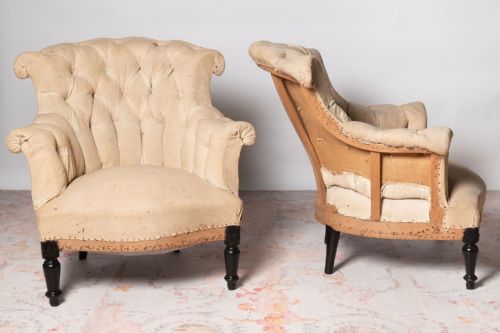
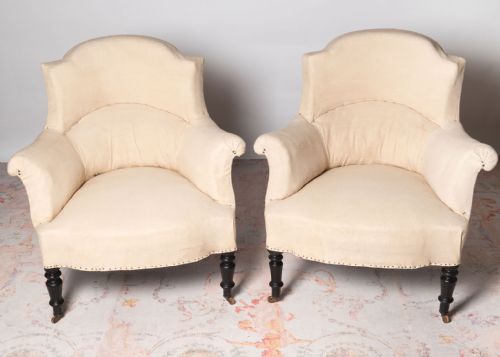
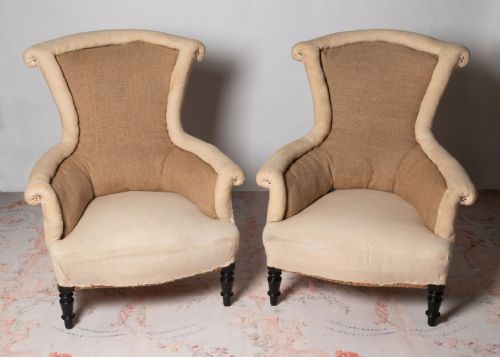


Black Leg Armchairs
Black leg armchairs bring together dark wood supports and varied upholstery from the eighteenth, nineteenth, and twentieth centuries.
Black Leg Armchairs
When you search for black leg armchairs, you encounter seating resting on ebonised wood or dark frames spanning several historic periods. The listings here contain nineteenth century library chairs, Victorian salon seats, and Regency pieces alongside twentieth century traditional armchairs.
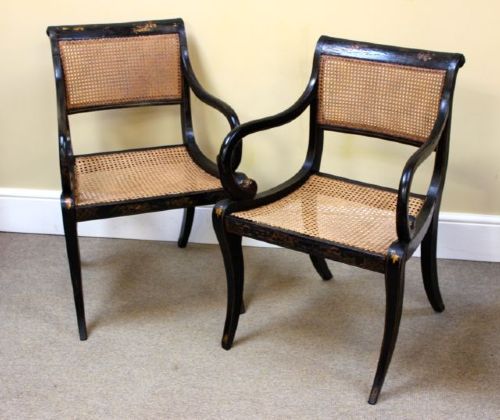
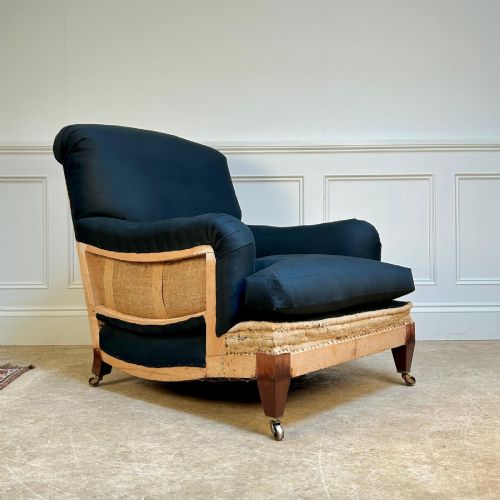
Most examples you meet on this page lean towards nineteenth century Victorian and Regency origins, frequently constructed with ebonised or dark timber legs beneath leather, calico, or cane. These range from library armchairs and nursing chairs to pairs of carvers.
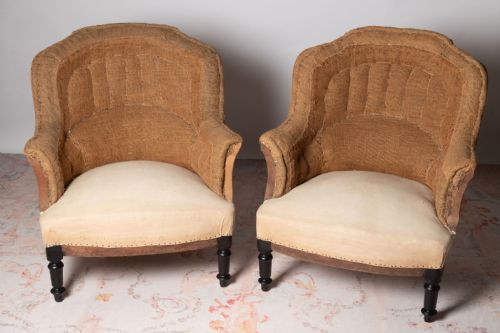
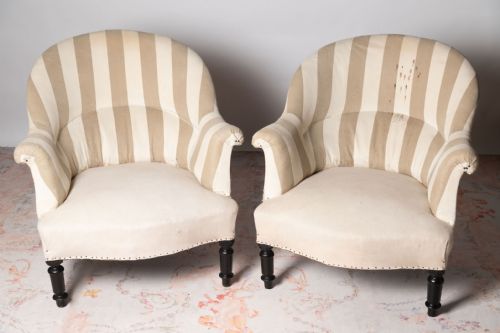
The styles shift across French Napoleon III, Victorian hunting lodge, and Chinoiserie aesthetics, showing how makers applied dark supports to diverse forms. Buyers select these chairs for their grounding dark legs that anchor varied upholstery.
How they were made
Makers utilised mahogany, oak, and ebonised wood to build the foundational frames and legs of these chairs. Ebonisation involved treating timber to achieve a deep black finish that contrasted with lighter materials.
Upholstery methods combined leather, hessian, cane, and calico, often secured with studded detailing along the seat edges. Brass castors and gilding appeared on select Regency and Victorian frames to add functional or decorative highlights.
Stags antler finds a surprising home as structural support in at least one Victorian armchair.
What varies in quality
The refinement of the carved wood details and the crispness of the ebonised finish separate standard chairs from finer workshop examples. Attribution to known makers such as Gillows elevates the standing of a piece within the nineteenth century range.
The integrity of the structural frame and the execution of original elements like brass mounts or cane panels dictate the overall character. Material selection, from solid mahogany to standard timber, governs the lasting weight and presence of the armchair.
Gillows·W Williamson And Sons
The Black Leg Armchairs Glossary
- Ebonised wood
- Timber treated or stained to imitate ebony, producing a dense black surface seen on nineteenth century legs. This finish offered a sleek alternative to natural mahogany or oak.
- Bergère
- An enclosed upholstered armchair with wooden framing, often featuring cane work on the back and sides. Regency examples frequently employed this form.
- Carver chair
- An armchair designed to match a set of dining chairs, typically featuring open arms and a sturdy wooden frame. These appear in mahogany and ebonised variations.
- Japanned
- European imitation of East Asian lacquerwork, applied to furniture frames to create decorative dark surfaces. This technique appears on Chinoiserie armchairs.
- Nursing chair
- A low-seated Victorian armchair designed for comfort, often upholstered in fabric or leather above dark legs. They provide a compact seating profile.
Black Leg Armchairs: Frequently Asked Questions
What periods do these armchairs come from?
The listings span from the eighteenth century through the Regency and Victorian eras up to the nineteen thirties. You will find pieces shaped by nineteenth century French and English cabinet makers.
Each period brings distinct stylistic traits, from Regency ebonisation to Victorian aesthetic movement designs and later traditional forms.
What materials make up the frames and legs?
Frames and legs utilise mahogany, oak, and ebonised wood, sometimes accented with brass or gilding. Upholstery materials include leather, calico, hessian, and cane.
Dark timber legs provide the unifying visual element across these diverse structural materials and seating forms.
Are these chairs sold in pairs or singles?
You will encounter both individual armchairs and matched pairs across the listings. Salon chairs sometimes appear in sets of four.
Singles include library armchairs and nursing chairs, while pairs often feature matching carver or caned designs.
Where were these armchairs used historically?
They served multiple domestic functions in libraries, drawing rooms, and salons. Library armchairs provided sturdy seating for reading, while nursing chairs offered lower profiles for nurseries or bedrooms.
Dining carvers sat at the heads of tables, and salon armchairs furnished formal reception spaces.