
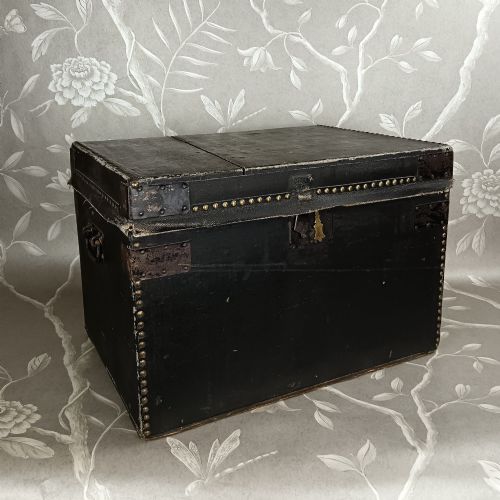
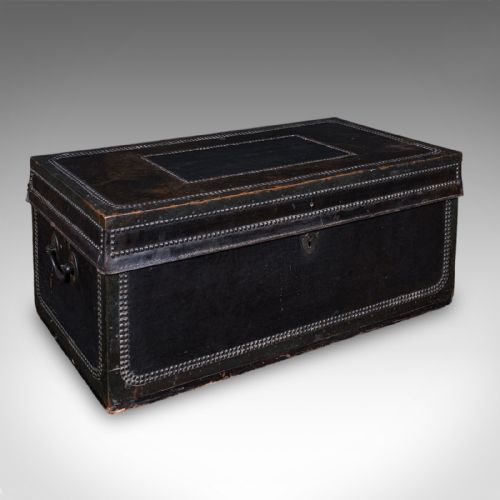


Black Leather Trunk
When you search for a black leather trunk, you are looking for a robust antique chest designed for travel and utility during the nineteenth century.
What a black leather trunk is
A black leather trunk is a sturdy receptacle originally built to accompany travellers on coaches or extended journeys. These pieces date from the nineteenth century, including the Regency and Victorian periods, with styles encompassing campaign and coaching designs.
The forms vary from simple studded examples to elaborate brass-bound travelling chests. Their historical function involved protecting clothes and belongings during horse-drawn transit and early rail travel.
How they were made
These trunks utilise timber structures, frequently incorporating camphorwood for internal construction to deter insects. The exterior is covered in leather and secured with metal tacks, studs, and iron or brass hardware.
Makers reinforced corners and edges with brass strapping and corner plates to withstand the rigours of transit. Heavy-duty metal carrying handles are fitted to the sides for lifting.
Retail Price Guide 2026
Typical UK retail prices for black leather trunk, calculated from the Sellingantiques database of over a million retail prices indexed since 2003. This retail price guide relies exclusively on Sellingantiques data; no external sources or auction records are used, so the figures do not describe the wider market.
Camphorwood was chosen for travel chests because its sharp, medicinal scent kept Victorian moths far away from expensive wool waistcoats.
What varies in quality
The standard of materials dictates the standing of the piece, with select examples featuring camphorwood interiors and heavy brass bounding rather than plain iron. The craftsmanship of the leatherwork and the robustness of the original brass hardware separate ordinary containers from finer travelling pieces.
Named makers or established firms elevate the standing of a trunk significantly. Pieces carrying identifiable maker stamps show superior attention to structural joinery and finishing detail.
Wm. Insall of Bristol
The Black Leather Trunk Glossary
- Coaching trunk
- A sturdy chest designed specifically to be strapped to the top or boot of a stagecoach for travel. These pieces have reinforced corners to endure constant movement.
- Campaign
- A style of portable furniture and luggage made for military officers and travellers on the move during the eighteenth and nineteenth centuries. Such items often feature recessed handles and protective brass corners.
- Camphorwood
- An aromatic timber prized for cabinet and trunk interiors because its natural scent repels moths and insects. It is frequently found lining travel chests from this era.
- Brassbound
- A descriptor for trunks strengthened with brass strips and corner brackets along the exterior edges. This reinforcement protected the wooden and leather structure from heavy impact.
Frequently Asked Questions
What were these trunks used for?
These trunks served as durable luggage for transporting clothing and personal possessions during nineteenth century travel. Travellers loaded them onto coaches, ships, and trains.
Inside, the timber and camphorwood protected fabrics from dampness and pests during long journeys away from home.
How do I date a black leather trunk?
Dating relies on examining the construction methods, materials, and hardware styles. Nineteenth century pieces often display specific brass corner designs and lock mechanisms typical of the Regency and Victorian eras.
Makers' stamps or labels provide the most precise chronological indicators when present on the interior.
How should I live with one?
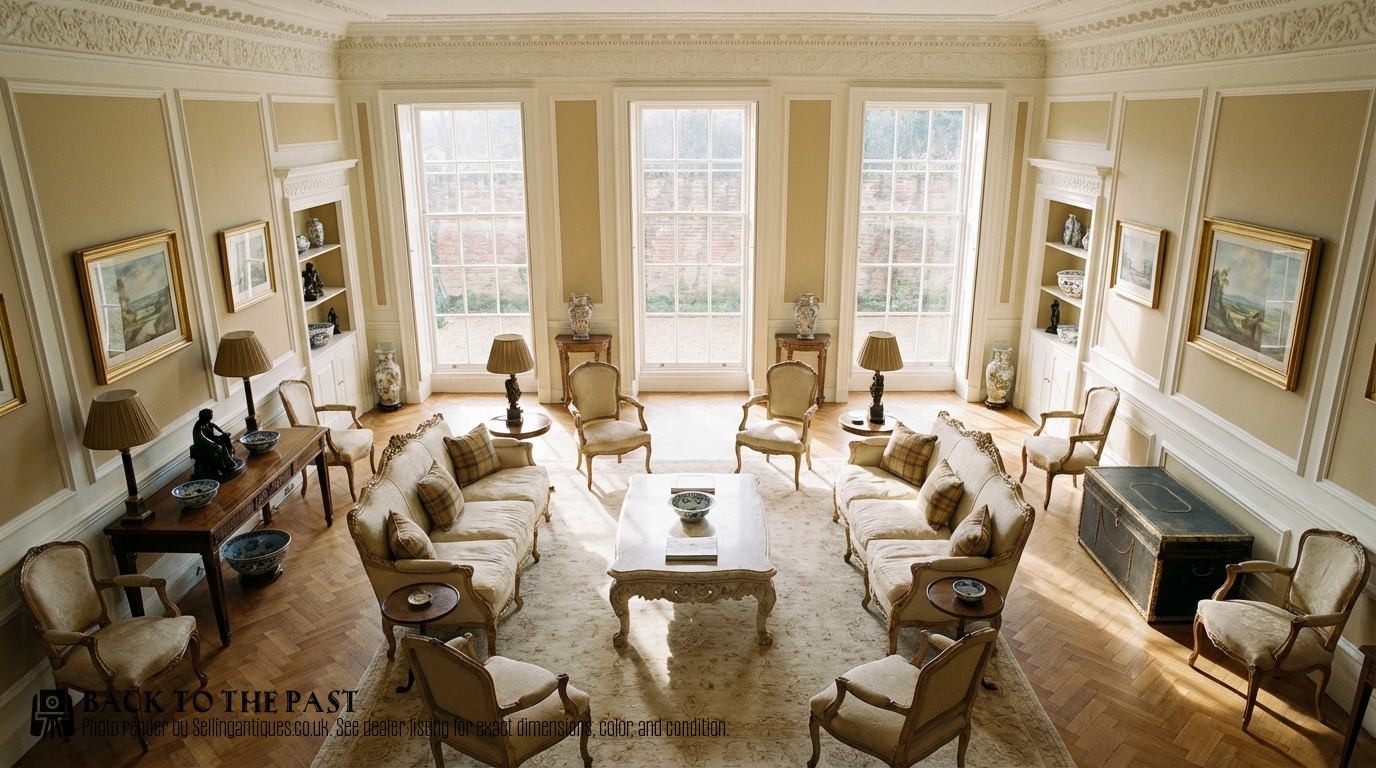
A black leather trunk functions well as a coffee table or a storage chest in a living space. Its flat top allows it to hold books or decorative objects while concealing items inside.
Keep the leather conditioned and place the trunk away from direct heat sources to preserve the hide and metal fittings.
What is a camphorwood chest?
A camphorwood chest is a storage box lined or built with fragrant wood native to Asia, utilised to keep garments safe from insects. In nineteenth century trunks, this timber provided a durable and pleasant-smelling interior.
Such chests were frequently brought back by travellers returning from overseas voyages.