






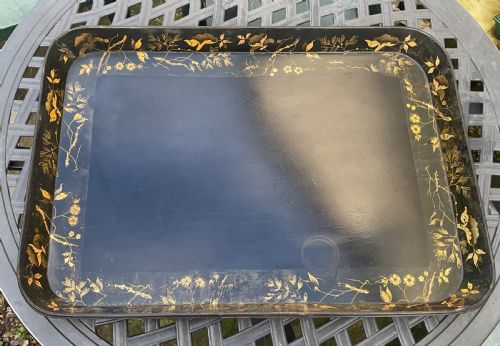


Black Lacquered Tea Tray
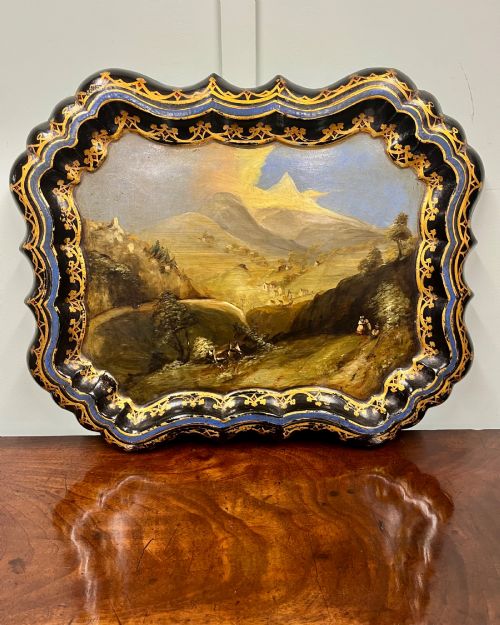
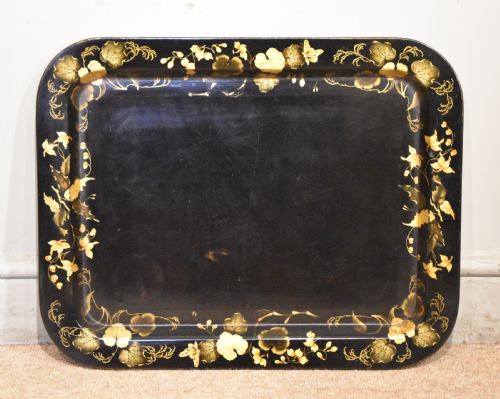
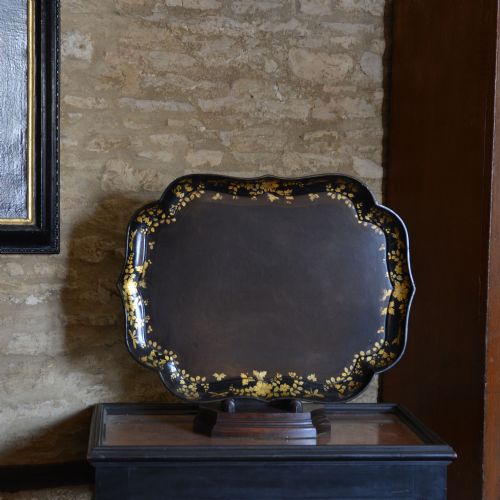
A black lacquered tea tray brings rich dark surfaces and gilded detail to the room, operating just as well set upon a stand as it does resting flat.
Black Lacquered Tea Tray
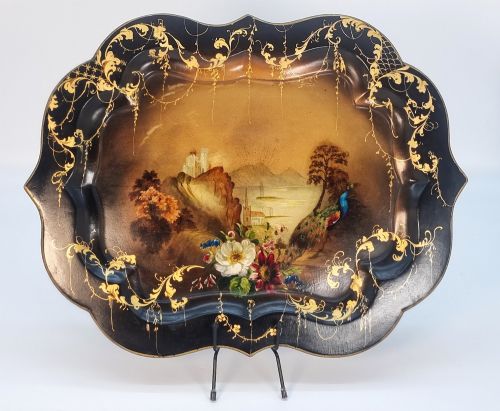
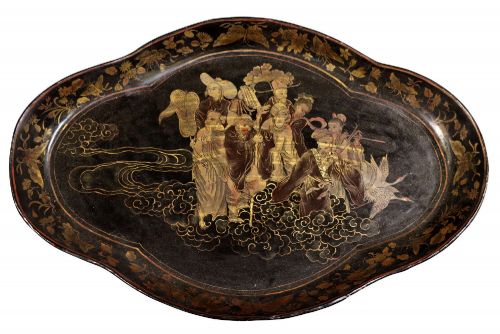
A black lacquered tea tray takes various forms across the periods, appearing as flat serving pieces, deep oval dishes, and kidney-shaped servers. When you search this phrase, the pieces you meet most often date from the Georgian, Regency, and Victorian eras.
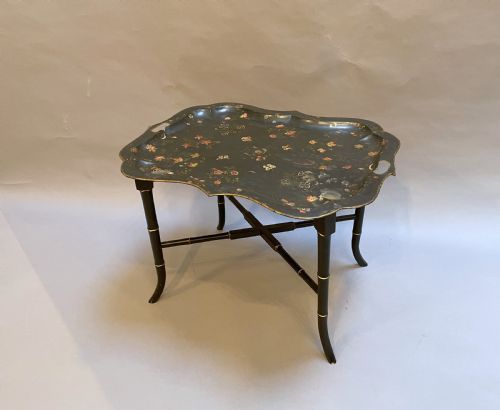
Many examples arrive mounted onto later stands to function as coffee tables, occasional tables, or drinks butlers. These functional pieces range from large rectangular formats to circular tray tables finished with Chinoiserie scenes.
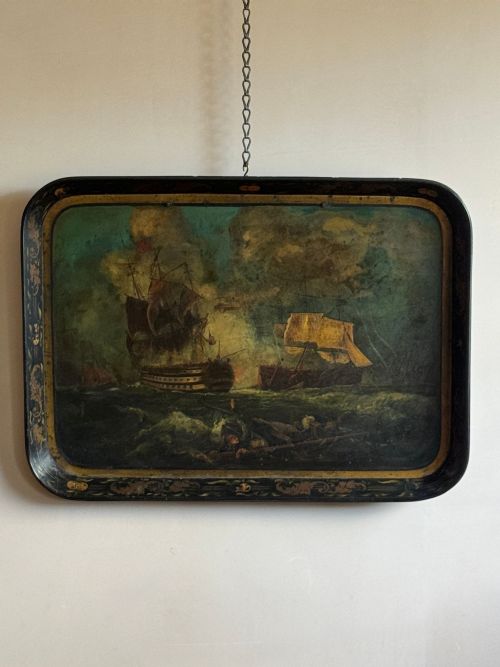
The origins span English workshops, Swedish makers, and Japanese export ventures, showing both formal classical painting and naive pictorial subjects such as fishing and hunting.
Materials and Construction
Makers built the foundation of a black lacquered tea tray using layered papier-mâché, wood, or toleware iron. This substrate provided a rigid, smooth base capable of holding heavy silver or porcelain service without warping.
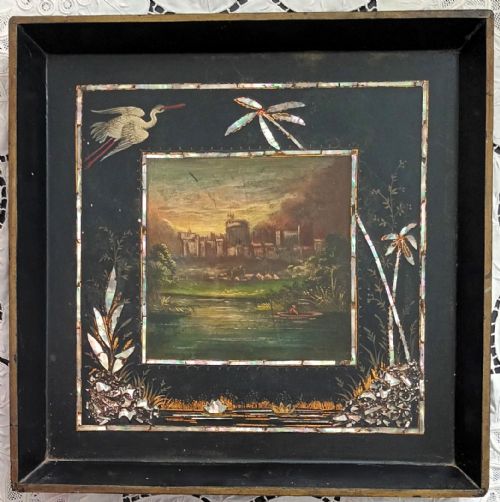
Workshops applied deep layers of lacquer and paint to create the signature dark finish, embellishing the surface with gold leaf, gilt highlights, and intricate silver plate. Hand-painted Chinoiserie motifs, floral arrangements, and scenic vignettes were then sealed into the top layer.
Black Lacquered Tea Tray Retail Price Guide 2026
Typical asking prices for black lacquered tea tray among the pieces listed under this phrase on Sellingantiques today, from the lower quarter to the upper quarter. They describe what is for sale here now, not the wider market.
Assessing Quality and Execution
The distinction between a standard tray and an exceptional piece rests in the crispness of the hand-painted decoration and the depth of the lacquer finish. Master workshops applied multiple polished coats that created a deep, lustrous ground for the gold leaf.
Structural integrity also separates the output, with superior papier-mâché examples retaining rigid edges and firm bases even when mounted onto later tables. Maker attribution significantly elevates certain pieces, particularly those bearing stamps from recognised houses.
Henry Clay·Jennens & Bettridge
The Black Lacquered Tea Tray Glossary
- Papier-mâché
- A composite material made from paper pulp or layers of paper mixed with glue and resin, pressed and dried into a rigid form. It served as the primary lightweight base for many fine serving trays.
- Chinoiserie
- European interpretations of Chinese and East Asian artistic traditions, featuring imaginary landscapes, figures, and pavilions. This style dominated the painted decoration on many black lacquered tea tray surfaces.
- Toleware
- Enamelled or lacquered sheet metal utensils and decorative objects produced in Britain and Europe. These iron trays offered durability alongside a smooth dark painted surface.
- Japanned
- European work mimicking Asian lacquerware by applying successive coats of dark varnish and curing them. This technique gave standard woods and metals an exotic sheen.
- Gallery tray
- A tray featuring a raised border or pierced metal gallery around the edge to prevent items from sliding off. These rims were often cast in brass or silver plate.
Black Lacquered Tea Tray: Frequently Asked Questions
How are these trays cleaned?
Dust the surface gently with a soft, dry microfibre cloth to remove particles without scratching the delicate lacquer.
Avoid using liquid cleaners, abrasive pads, or chemical polishes, as these will permanently damage the historic painted finish and gold leaf.
Can I use a tray table for serving?
Trays mounted onto stable stands function securely as drinks butlers or coffee tables for daily entertaining and holding books.
For original flat serving trays, place them on firm surfaces or use them purely as decorative focal points to protect the antique base.
How do I identify a Regency piece?
Regency examples often feature bold classical motifs, crisp gilded borders, and deep oval papier-mâché construction dating from the early nineteenth century.
Look for maker stamps on the underside or structural cues like heavy, uniform moulding that typify the period's output.
What is Chinoiserie decoration?
Chinoiserie is a European decorative style that mimics traditional East Asian art through painted scenes of figures, exotic birds, and pagodas.
On these trays, the designs appear in gilt or vibrant colours contrasting sharply against the black lacquered background.