



Black Lacquered Side Cabinet
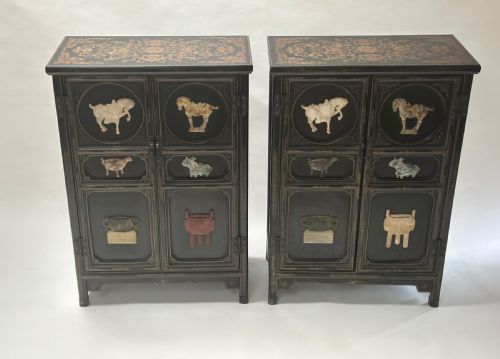
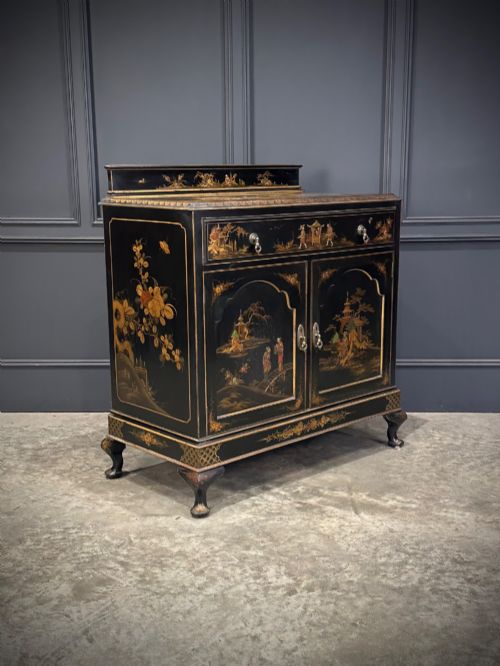
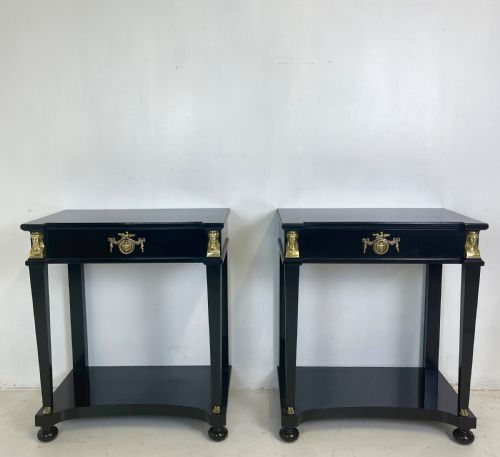
These black lacquered side cabinet examples bring striking Chinoiserie and Art Deco presence into a room, offering both display space and deep dark finishes.
Black Lacquered Side Cabinet
A black lacquered side cabinet brings together bold dark surfaces and intricate Chinoiserie or Art Deco styling, serving as a focal point in a reception room or hallway. When searching for a black lacquered side cabinet, buyers encounter forms ranging from 19th century Regency japanned pieces to 1920s cocktail cabinets and 1930s cupboards.
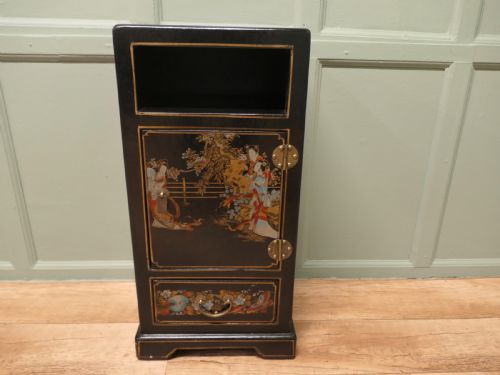
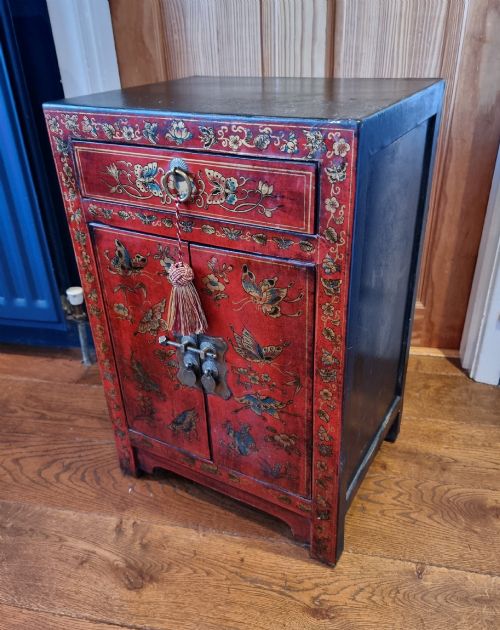
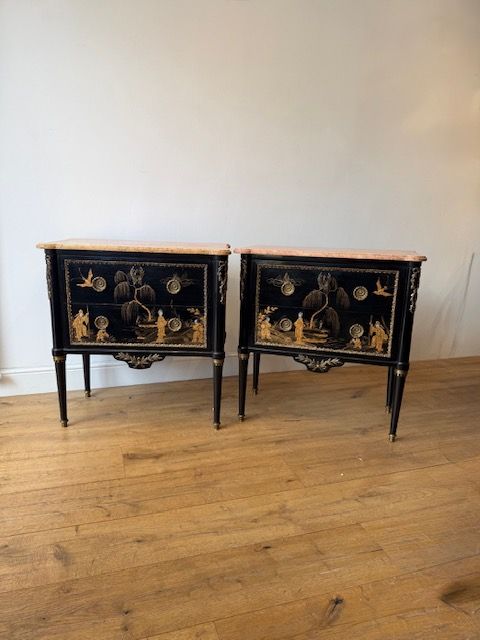
The selection includes specific variations such as cabinets on stands, two-door cupboards, and commodes, spanning periods from the Regency era through the Edwardian years and into the 1920s and 1930s. These pieces often feature painted oriental scenes, gilt highlights, and contrasting interior shelving.
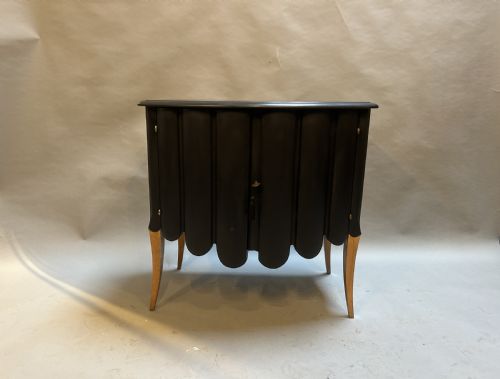
Originating from diverse stylistic traditions including Louis XVI Chinoiserie and French Art Deco, each black lacquered side cabinet offers practical storage alongside decorative painted narratives.
Construction and materials
Makers built these cabinets using timber substrates finished with layers of dark lacquer, ebonised wood, and occasionally pen-work or painted decoration. Gilt and gold leaf applications provided contrast against the deep black ground.
Mounts and hardware frequently incorporated brass and ormolu, securing doors and framing panels on stands and commodes. The application of lacquer demanded meticulous building and polishing of successive coats to achieve a smooth finish.
Several pieces combine stern ebonised wood with whimsical painted scenes of tiny bridges and distant pagodas.
Distinctions in quality
The refinement of the painted Chinoiserie motifs and the depth of the lacquer finish distinguish the upper tier of pieces from simpler workshop productions. Hand-applied gold leaf and delicate pen-work demonstrate greater artisan skill than standard painted surfaces.
The integration of decorative mounts, such as cast ormolu or chased brass details, alongside the structural integrity of the timber carcass and stands, defines the execution of each piece.
The Black Lacquered Side Cabinet Glossary
- Chinoiserie
- European decorative style reflecting Chinese artistic influences, commonly featuring painted landscapes, figures, and pavilions on lacquered furniture.
- Japanning
- European imitation of East Asian lacquerwork, created by applying layers of varnish and heat-drying them before adding gilt decoration.
- Ormolu
- Gilded bronze mounts used decoratively on furniture frames, doors, and legs during the 19th century and earlier periods.
- Chiffonier
- A small sideboard or tall cabinet with shelves and doors, frequently adapted for display and storage in 19th-century interiors.
- Pen-work
- Detailed decorative technique using ink applied to wood surfaces, often creating fine linear patterns resembling engraving.
Black Lacquered Side Cabinet: Frequently Asked Questions
Where should I place a black lacquered cabinet?
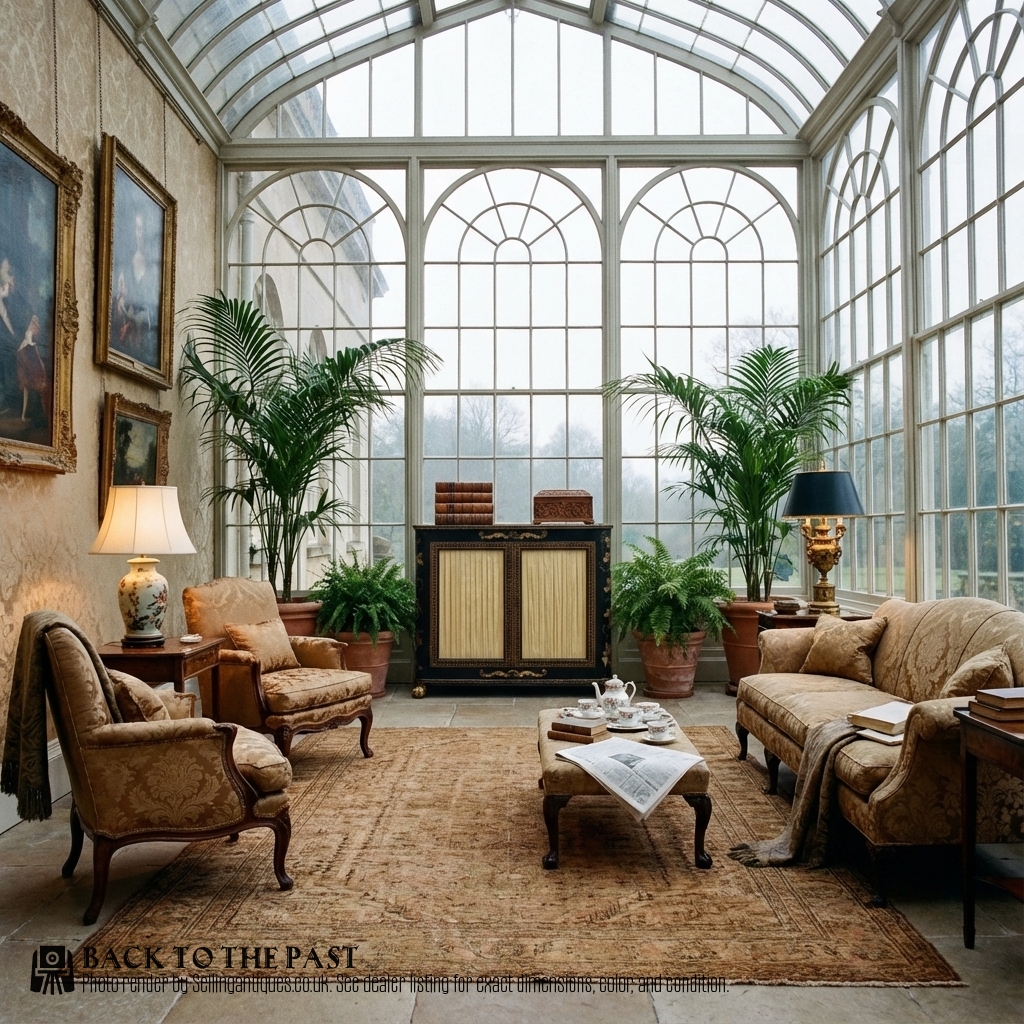
These cabinets suit dining rooms, hallways, or living spaces where their dark finishes and painted surfaces can contrast against lighter walls.
They function well as serving surfaces, cocktail stations, or focal points for displaying decorative objects.
How do I date a Chinoiserie cabinet?
Dating relies on examining the structural timber, hardware, and stylistic traits such as the geometric lines of Art Deco or the curved forms of Regency and Victorian designs.
Changes in lacquer techniques and hinge types also help place pieces within specific decades like the 1920s or 1930s.
What is the difference between japanning and lacquer?
True Asian lacquer uses sap from specific trees native to East Asia, applied in numerous cured coats.
Japanning is the European adaptation, typically using shellac or varnishes over a wood base to simulate the oriental finish.
How do I care for a lacquered surface?
Maintain the finish by dusting gently with a soft, dry cloth and avoiding direct sunlight that can fade the painted details.
Keep the room at a stable humidity to protect both the timber carcass and the layered lacquer coating.