
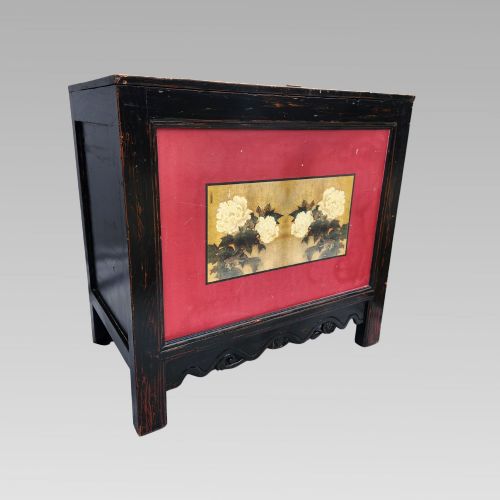


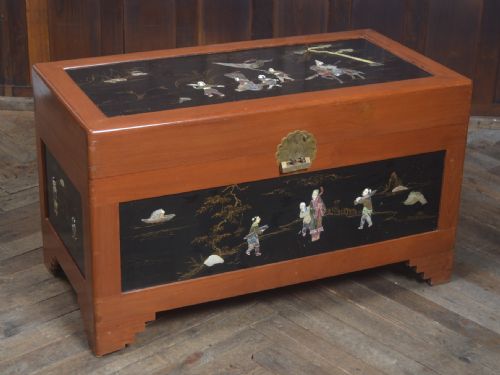


Black Lacquer Coffer
A black lacquer coffer brings together deep dark finishes and oriental decoration, offering a striking storage trunk for any room.
Black Lacquer Coffer
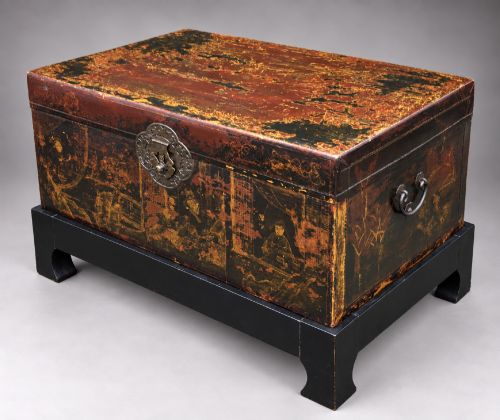
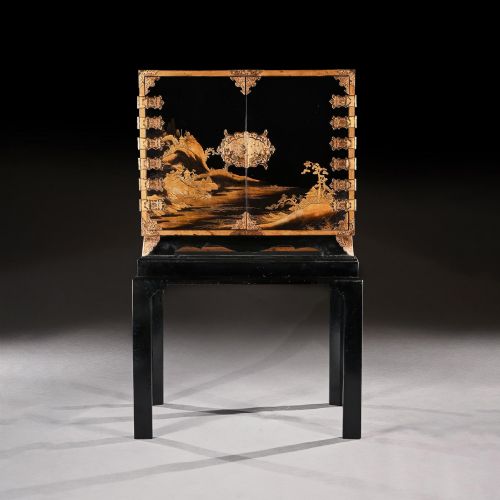
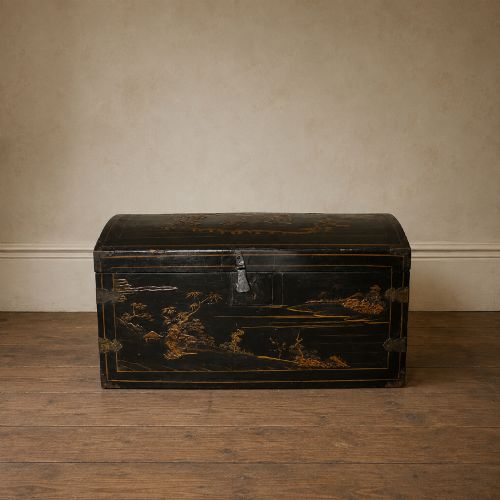
When you search for a black lacquer coffer, you are looking at substantial storage pieces finished in dark resinous coatings, often highlighted with gilt decoration or painted scenes. These items take forms such as domed chests, storage trunks, and blanket boxes resting on dedicated stands.
The examples you will most commonly encounter on this page date from the seventeenth century through to the early twentieth century, originating from Chinese export workshops, Japan, and Anglo-Indian makers. They serve as practical containers that double as decorative focal points.
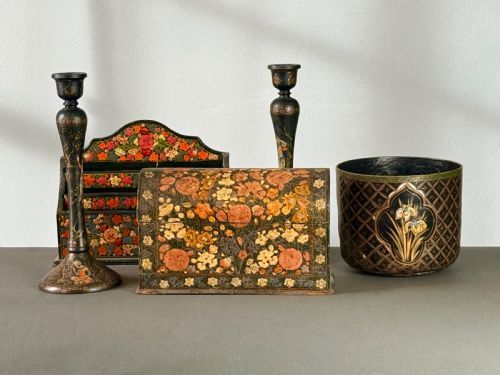
Traditional versions display Chinoiserie motifs or floral patterns, while regional variations include leather and pig skin finishes over wooden frames. Each piece provides deep interior space originally intended for garments, documents, or valuables.
Materials and construction
These pieces are built upon timber carcases, frequently utilising wood such as camphor wood for its insect-repellent properties. The primary finish relies upon repeated applications of lacquer, which creates a durable and lustrous dark surface.
Decoration is achieved through the application of gold leaf, pigment, and gilt detailing, often depicting traditional oriental landscapes and flora. Structural support is reinforced with brass, iron, or carved wooden stands depending on the specific regional origin.
Some trunks were lined with old newspapers in Chinese characters, turning the inside of the lid into a hidden reading puzzle.
Assessing quality and craftsmanship
Quality in these items rests upon the depth and resilience of the lacquer finish and the intricacy of the painted or gilded decoration. Finer pieces display crisp pictorial detail and smooth surfaces that have endured centuries of handling without extensive loss.
The underlying carpentry and the preservation of original stands also determine the desirability of a piece. Trunks retaining their original hardware, pigment, and structural integrity stand apart from those with later alterations.
The Black Lacquer Coffer Glossary
- Coffer
- A heavy wooden chest used for storing valuables, linens, or documents. These storage boxes often feature hinged lids and sturdy construction.
- Chinoiserie
- European interpretations and adaptations of Chinese and East Asian artistic traditions. This style became prominent in decorative arts during the seventeenth and eighteenth centuries.
- Lacquer
- A durable resinous coating applied in successive layers to wood and other substrates. It produces a smooth, glossy surface resistant to moisture.
- Gilt
- Gold leaf or powdered gold applied to surfaces for ornamentation. It provides the bright metallic highlights seen against dark lacquer grounds.
- Camphor wood
- An aromatic timber traditionally used for furniture and storage chests. Its natural scent helps protect stored textiles from insects.
Black Lacquer Coffer: Frequently Asked Questions
What were black lacquer coffers used for?
These chests served primarily for the secure storage of valuable garments, important documents, and household linens. Their dense construction and fitted lids protected contents from dust, dampness, and pests.
Over time, larger examples functioned both as storage units and as display surfaces within grand interiors. Their decorative exteriors meant they were often placed in reception rooms rather than hidden away in bedchambers.
How do I care for lacquer furniture?
Keep these pieces away from direct sunlight and sources of extreme heat to prevent the lacquer from cracking or fading. Dust gently with a soft, dry cloth and avoid chemical polishes.
Maintain a stable room humidity to protect the underlying wood carcase from expanding or contracting. Careful handling ensures the delicate gilt and pigment decoration remains intact.
How can I tell the period of a chest?
Dating relies upon examining the construction methods of the wooden carcase, the formulation of the lacquer, and the style of decoration. Earlier pieces from the seventeenth century often show distinct hand-carved elements and specific regional joinery.
Twentieth-century interpretations frequently incorporate different base materials, such as pig skin or leather over timber. Comparing the hardware hinges and lock plates with known period examples also aids attribution.
Where were these pieces manufactured?
Many items originated in Chinese export workshops catering to international markets, as well as distinct regions in Japan and India. Craftsmen adapted local timber and finishing techniques to create pieces for export to Western buyers.
Japanese examples from the Edo period and Anglo-Indian trunks reflect the blending of Asian decorative traditions with forms demanded by European households. Each region utilised characteristic woods and painting styles.