


Black Japanned Clock
A black japanned clock brings depth and decorative drama to a room, offering the layered motifs of Chinoiserie across tall longcase or compact mantel forms.
Black Japanned Clock
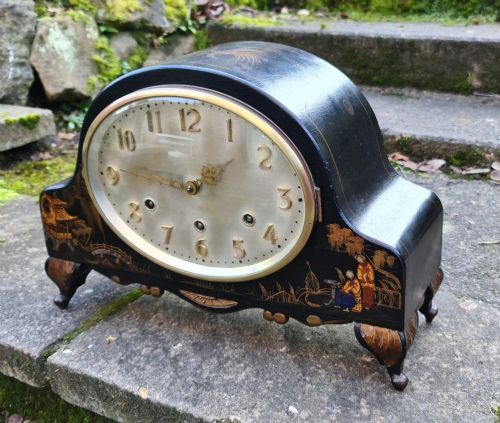
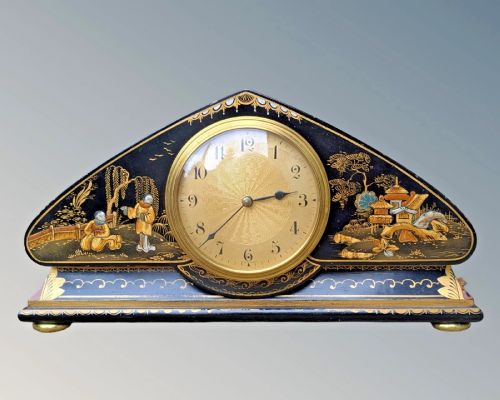
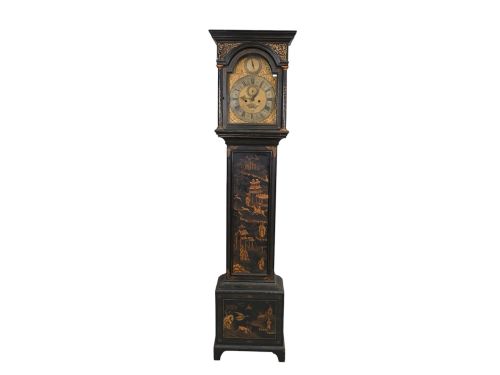
A black japanned clock is defined by its dark lacquered finish, appearing in forms ranging from grand 18th century longcase clocks to 1930 mantel timepieces. These pieces primarily showcase Chinoiserie decoration, which interprets Eastern aesthetic traditions through a distinctly Georgian or later Edwardian lens.
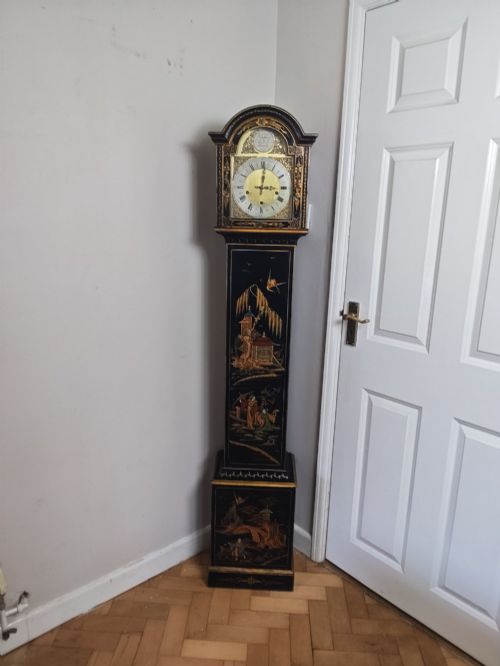
Buyers will encounter tall grandfather and grandmother longcase clocks alongside smaller bracket and mantel clocks. The heavier tall case examples dominate the historical record, often housing eight day movements within their decorated wooden housings.
Materials and construction
These clocks are built from wood, finished with lacquer and japanned surfaces that provide the dark backdrop for decorative schemes. The applied ornamentation often incorporates gilt details, creating contrast against the dark background of the case.
Dial work typically integrates brass and silvered brass components to house the mechanical movements. Makers combined these metallic elements with glass dial covers and protective wooden cabinetry to complete each timepiece.
Listings span from early Georgian and 18th century longcase examples up to 20th century mantel clocks in lacquered wood.
Assessing quality and execution
Quality reveals itself in the intricacy and depth of the Chinoiserie decoration applied to the japanned wood surface. Finer examples display meticulous pictorial narratives with layered gilding, whereas simpler versions show more restrained ornamentation.
The sophistication of the internal movement further separates the tiers of production, particularly when comparing standard timepieces to musical or chiming longcase clocks. Maker attribution also influences distinction, as signed works by known regional and metropolitan horologists carry additional historical weight.
Wise of Reading·Thomas Utting of Yarmouth·Gardner of London·Robert Berry
The Black Japanned Clock Glossary
- Japanned wood
- Wood finished with a European imitation of East Asian lacquer work. This technique creates a hard, glossy surface that accepts gilt and painted decoration.
- Chinoiserie
- The European interpretation and imitation of Chinese and East Asian artistic traditions. It appears frequently on furniture and clock cases through pictorial motifs of figures, landscapes, and pavilions.
- Longcase clock
- A tall pendulum clock enclosed in a wooden case that stands directly on the floor. These are also historically referred to as grandfather or grandmother clocks depending on their height.
- Bracket clock
- A portable table or mantel clock originating from the period when clocks were placed upon wall brackets. Later examples often continue this nomenclature despite sitting directly on surfaces.
- Silvered brass
- Brass treated with a silver solution to create a bright, matte finish. This material is commonly utilised for clock dials to ensure high legibility of the numerals.
Black Japanned Clock: Frequently Asked Questions
What is a black japanned clock?
A black japanned clock is a timepiece housed in a wooden case finished with dark European lacquer and decorated with Chinoiserie motifs. These range from tall 18th century longcase clocks to compact 20th century mantel designs.
The style imitates Eastern lacquer techniques, using raised gilt painting to depict figures, landscapes, and architectural scenes across the surface of the case.
How do I tell an 18th century clock from later periods?
Eighteenth century examples, including Georgian pieces, generally feature traditional longcase proportions and hand painted Chinoiserie details applied over wood substrates. Movement construction and regional maker signatures also help establish this earlier origin.
Twentieth century pieces, such as those from around 1900 or 1930, often replicate these earlier styles or utilise alternative movement types like French mechanisms within an Edwardian Chinoiserie framework.
Where should I place a longcase clock?
Longcase clocks require a stable, level floor and a location away from direct sunlight and major sources of moisture or heat fluctuation. Hallways, landings, and principal reception rooms traditionally house these tall timepieces.
Because they measure height significantly, ensure the ceiling clearance is adequate and that the case can be properly secured to a wall if necessary for stability.
What is the difference between grandfather and grandmother clocks?
Grandfather clocks are the standard full sized longcase clocks, typically standing over six feet tall and housing substantial eight day movements. Grandmother clocks are smaller, more slender versions produced in reduced proportions.
Both forms share the characteristic japanned wood and Chinoiserie decoration, but the grandmother clock suits smaller rooms or lower ceiling heights.