


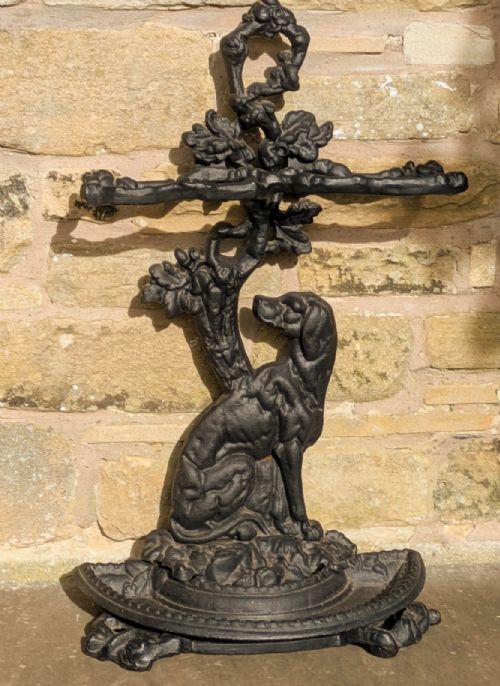
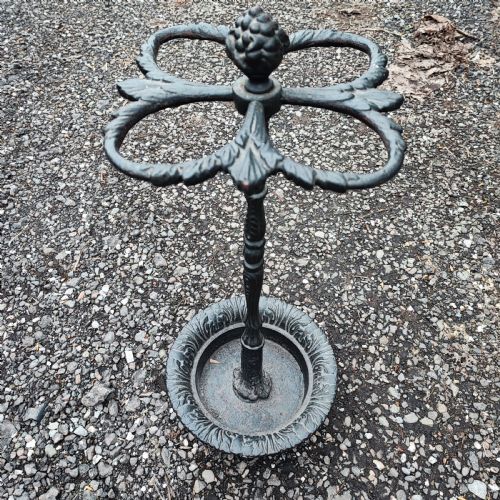


Black Iron Umbrella Stand
A black iron umbrella stand brings sturdy structure to an entrance hall, offering heavy metal framing designed to catch dripping rainwater from wet sticks and canes.
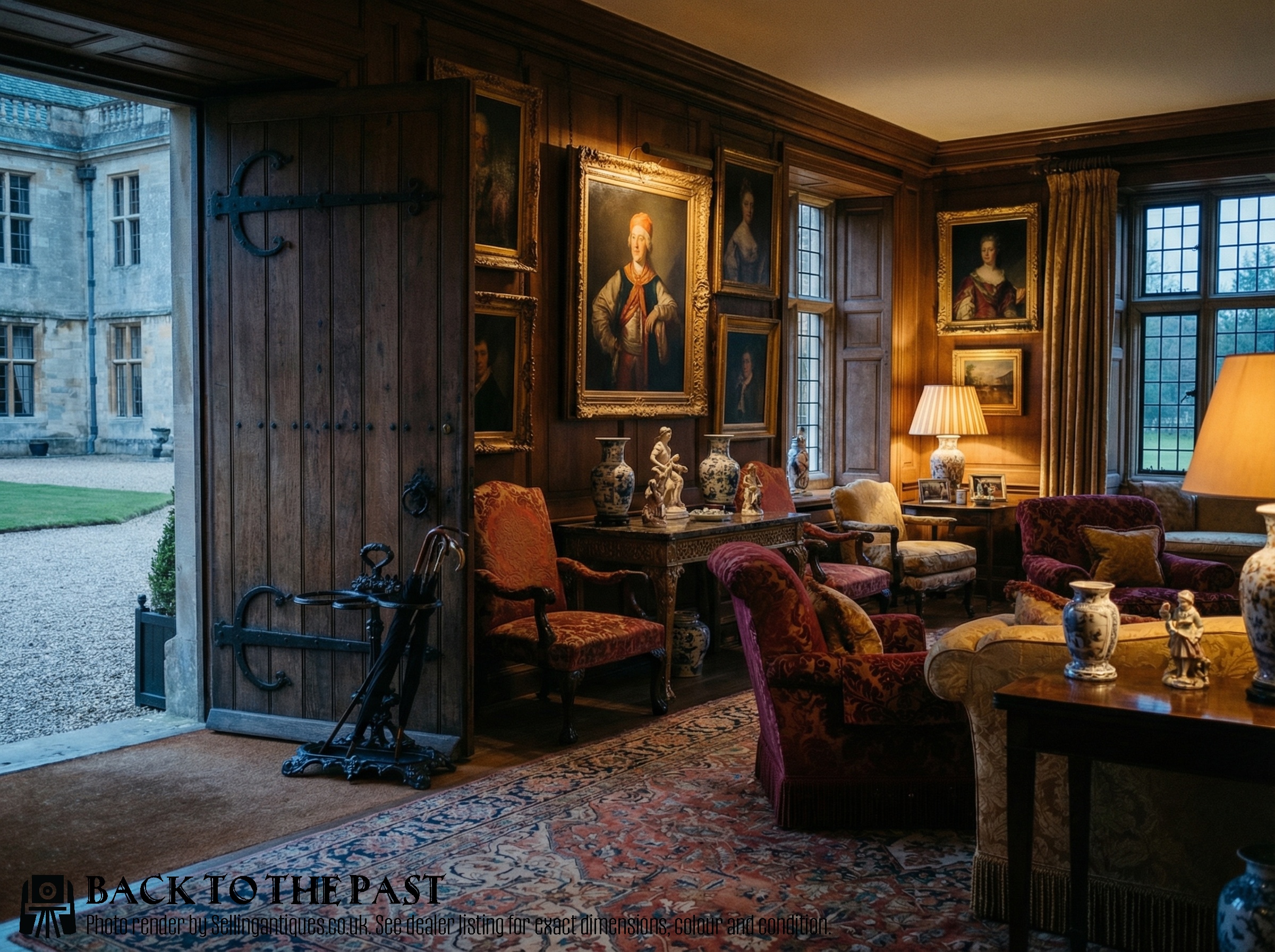
Black Iron Umbrella Stand
A black iron umbrella stand serves as a functional hallway accessory designed to hold walking sticks, canes, and wet umbrellas. You encounter these primarily in Victorian and Edwardian iterations, alongside later Art Deco forms dating up to 1930.
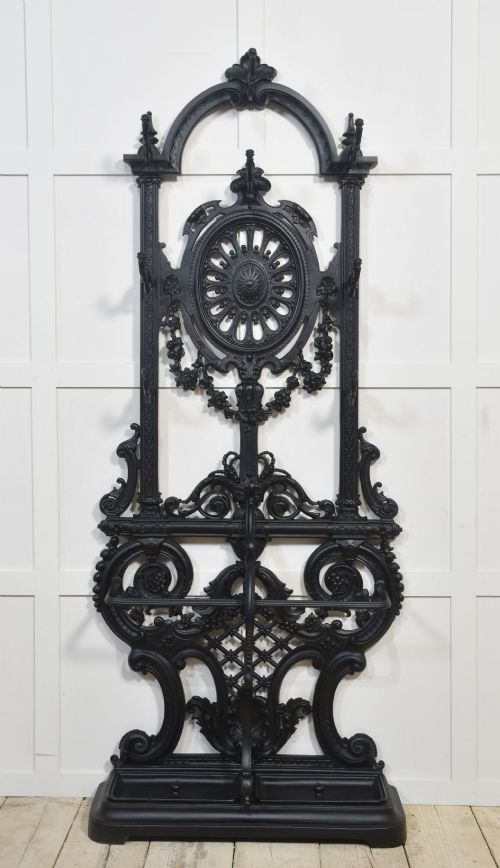
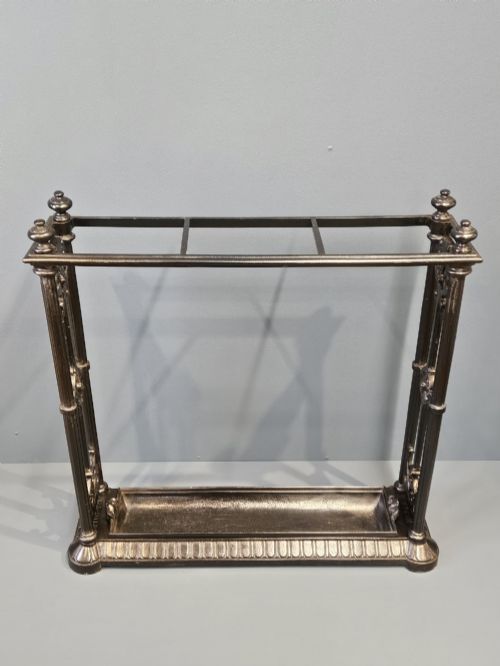
The dominant forms span dedicated umbrella stands, stick stands, and larger combined hall stands incorporating hat and coat hooks. Many examples take the shape of heavy floor-standing racks featuring multiple division rings or looped frames.
Origins stretch from English and French workshops to Belgian studios, capturing periods from the mid-nineteenth century through the turn of the twentieth century. The prevailing aesthetic leans heavily into Victorian Gothic, Gothic Revival, and Aesthetic Movement designs.
Materials and Construction
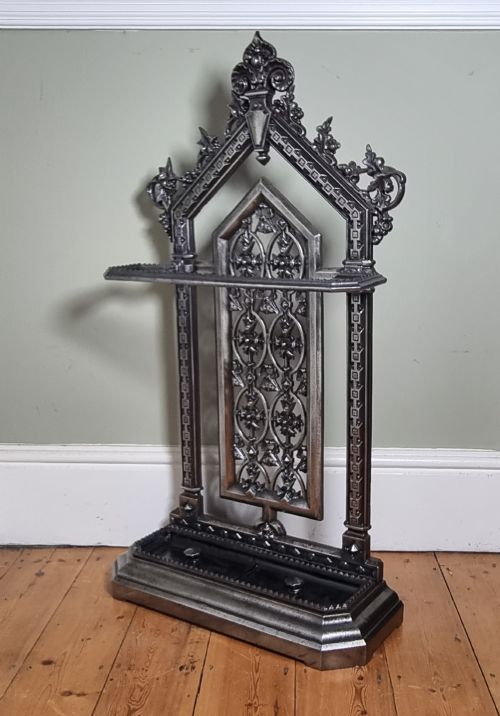
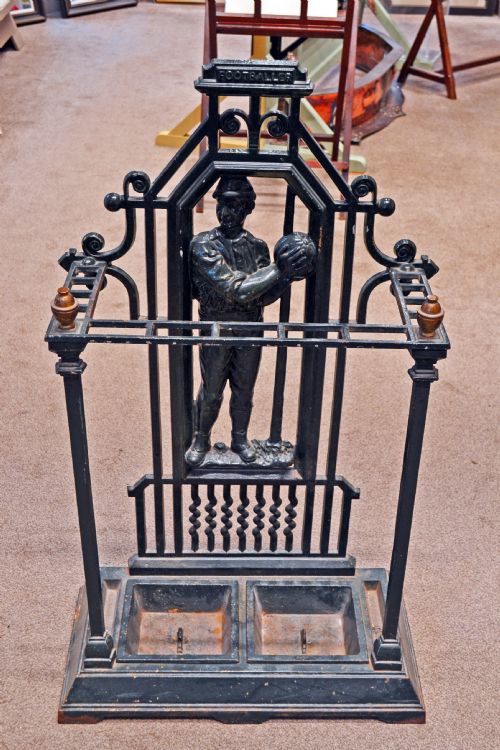
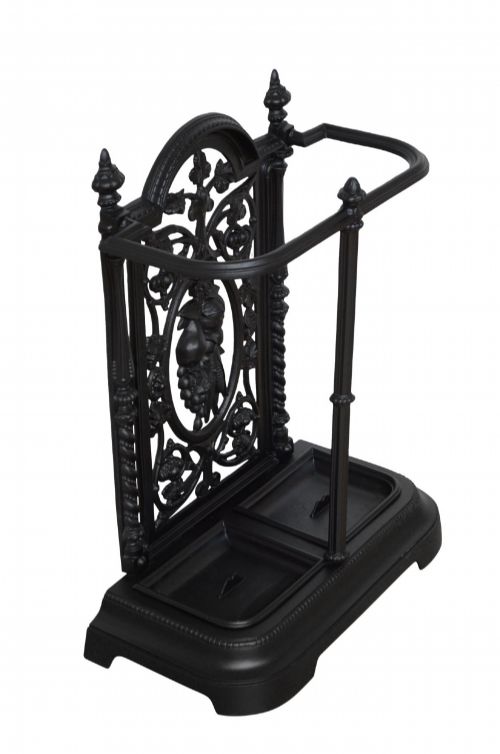
Foundries utilised cast iron and wrought iron as the primary structural metals, often finished with black paint or nickel plating to protect the surfaces from moisture. These heavy metal frames were frequently cast in moulds to achieve intricate pierced patterns, faux bamboo sections, or figurative motifs.
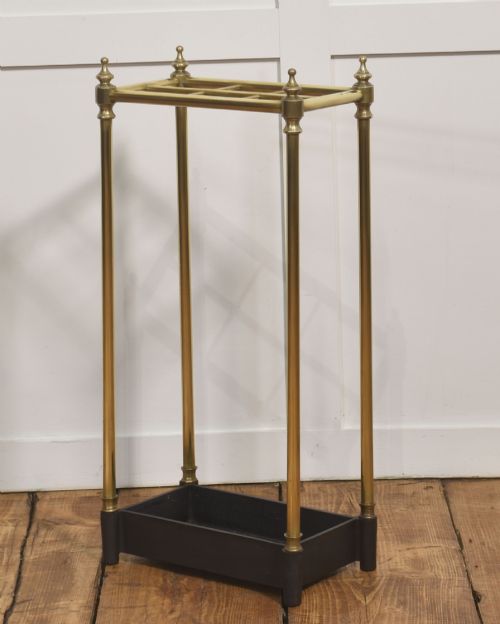
Secondary materials appear in specific components, incorporating brass for decorative details or drip trays, glass sections, and marble bases. Tubular metal and brass fittings also emerge in later Art Deco designs, complementing the core iron framework.
Current listings feature materials spanning cast iron, wrought iron, brass, nickel plating, tubular metal, glass, and marble across Victorian and Edwardian periods.
Evaluating the Pieces
Quality rests in the crispness of the casting detail and the complexity of the ironwork design, distinguishing standard utility items from decorative foundry pieces. Sharply defined figurative elements and botanical motifs indicate superior workmanship.
The presence of maker marks, foundry stamps, or registered design dates elevates a piece, as seen in examples from established foundries like Coalbrookdale and Falkirk. The integrity of the original structure, including associated drip trays and retaining loops, defines the preservation standard.
Coalbrookdale·Falkirk Foundry·Kenrick
The Black Iron Umbrella Stand Glossary
- Cast iron
- A strong, hard alloy of iron and carbon poured into moulds to create rigid forms. This material defines the heavy framework of nineteenth-century hallway stands.
- Stick stand
- A compact piece of hallway furniture designed specifically for holding walking sticks and riding crops. These items share a close lineage with larger umbrella racks.
- Hall stand
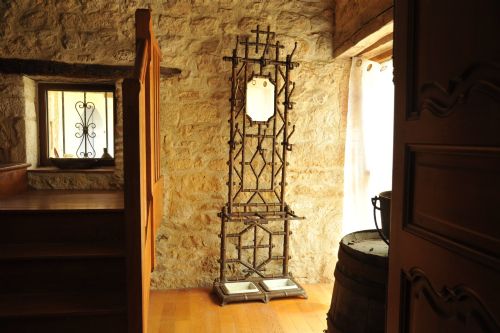
- A multi-functional hallway furnishing that combines an umbrella or stick stand with coat hooks, hat racks, and frequently a mirror. They dominate larger entrance spaces from the Victorian period.
- Faux bamboo
- A decorative moulding technique that mimics the segmented joints of natural bamboo. Foundries applied this style to iron frames during the Victorian era.
- Demi-lune
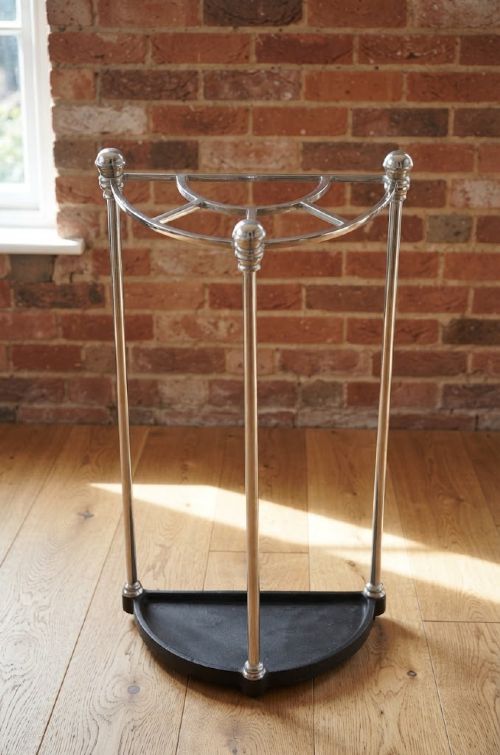
- A half-moon or semicircular shape utilised for furniture designed to sit flush against a hallway wall. This profile allows umbrella stands to occupy minimal floor space.
Black Iron Umbrella Stand: Frequently Asked Questions
How do I clean a cast iron umbrella stand?
Dust the iron framework regularly with a dry cloth to prevent moisture accumulation in the intricate recesses. Avoid harsh chemical cleaners that might strip the painted or plated surfaces.
For stubborn grime, apply a light coat of neutral wax using a soft brush. Buff gently to maintain the protective finish without altering the metal texture.
Where should I place a heavy stick stand?
Position the piece near your primary entrance hallway where wet umbrellas and walking sticks are deposited upon entry. Ensure the floor surface can support the substantial weight of cast iron.
Allow sufficient clearance around the stand so looped frames and division rings remain easily accessible for daily use.
How do I identify a Victorian iron stand?
Look for characteristic design elements such as Gothic Revival motifs, Aesthetic Movement patterns, or faux bamboo detailing. These stylistic markers typically point to mid-to-late nineteenth-century manufacturing.
Check the base for foundry marks, registration numbers, or maker stamps. These inscriptions provide definitive evidence of nineteenth-century origin.
What is the difference between a stick stand and a hall stand?
A stick stand functions exclusively as a rack for holding umbrellas, canes, and walking sticks. It occupies a smaller footprint on the hallway floor.
A hall stand incorporates an umbrella rack alongside coat hooks, hat pegs, and mirror panels, forming a complete entranceway furniture unit.