

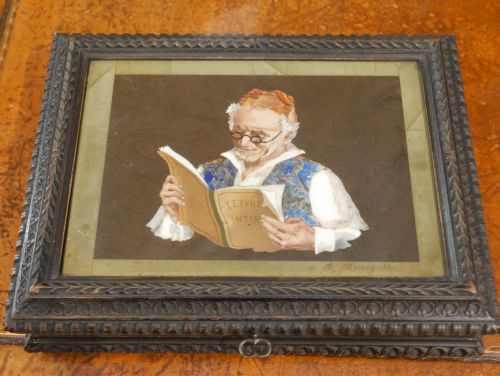
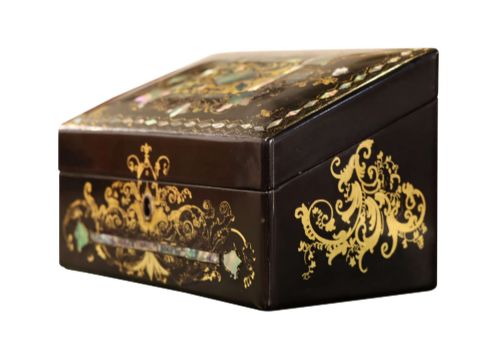
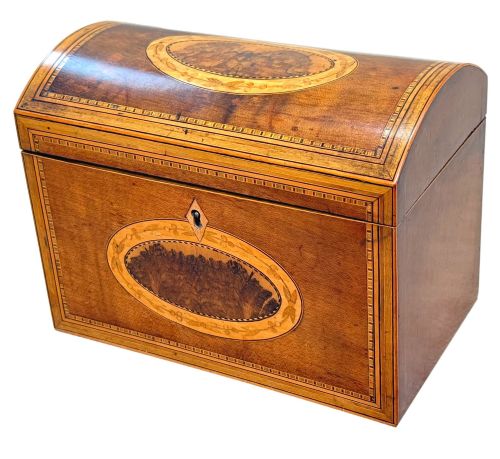
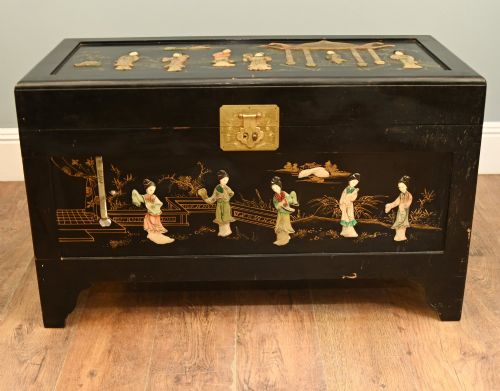


Black Inlaid Box
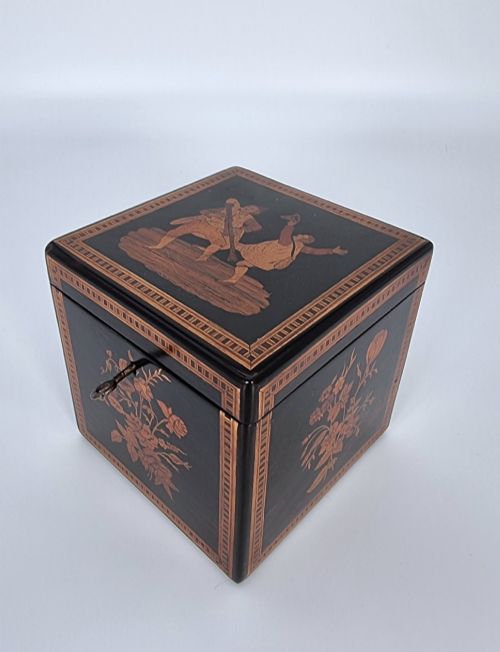
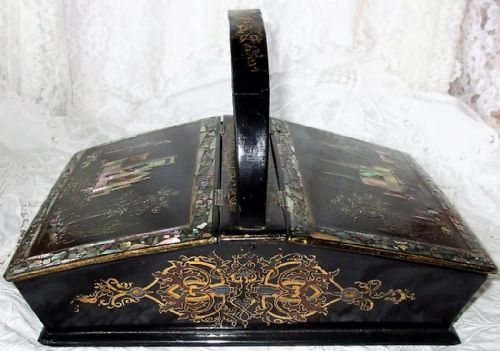
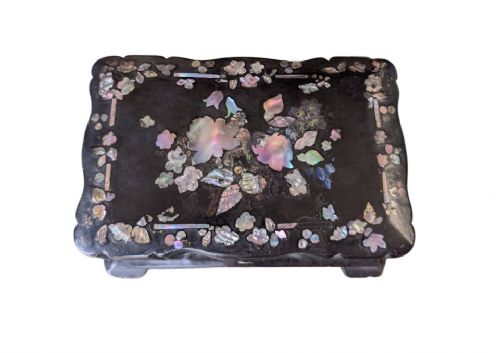
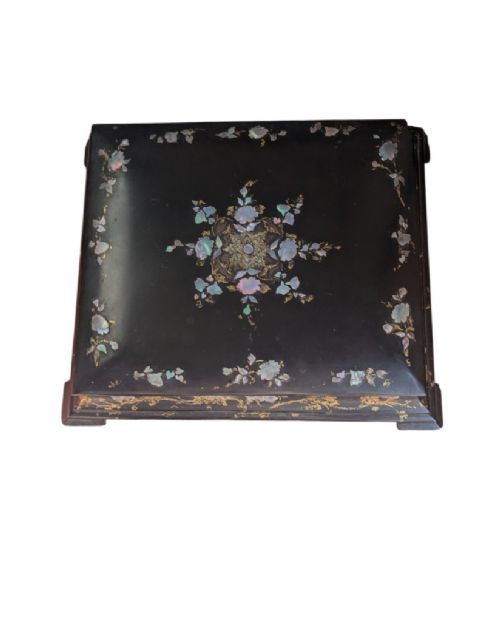
A black inlaid box brings together dark grounds and contrasting detail, spanning tea caddies, writing boxes, and needlework caskets.
Black Inlaid Box
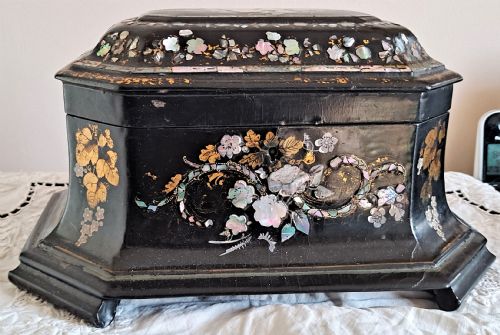
A black inlaid box is most frequently met here in Victorian papier-mâché, often formed as a tea caddy, jewellery casket, or writing box. These pieces utilise dark surfaces to frame contrasting decorative elements.
The selection ranges across the nineteenth century, taking in Regency and Edwardian examples alongside French Napoleon III and Italian pieces. Forms extend beyond tabletop caskets to include larger coffers, work tables, and occasional furniture.
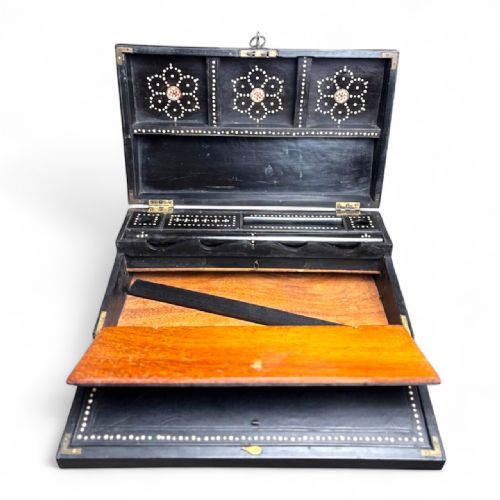
Makers utilised various dark foundations, from ebonised wood and coromandel to lacquered surfaces and walnut. The decorative scheme relies heavily on precise placement against the dark body.
How they were made
Papier-mâché serves as a primary vehicle for these pieces, built up from paper pulp or sheets pressed and lacquered to create a smooth, durable shell. Wood alternatives rely on ebonisation, coromandel, or walnut to achieve a deep, dark ground.
Inlay techniques incorporate mother-of-pearl, ivory, brass, and marquetry woods such as Tunbridge ware. These contrasting materials are set flush into the prepared surface, sometimes augmented with gold leaf or pietra dura mounts.
Black Inlaid Box Retail Price Guide 2026
Typical asking prices for black inlaid box among the pieces listed under this phrase on Sellingantiques today, from the lower quarter to the upper quarter. They describe what is for sale here now, not the wider market.
The listings show a strong representation of Victorian papier-mâché tea caddies alongside ebonised wood boxes featuring mother-of-pearl and ivory inlay.
What varies in quality
The precision of the inlay work marks the distinction between standard production and finer pieces. Clean junctions where contrasting materials meet the dark ground indicate careful hand execution.
Internal fittings and the preservation of original compartments dictate the standing of a box. Fitted interiors with working locks and complete trays elevate the piece above plain shells.
The Black Inlaid Box Glossary
- Papier-mâché
- A composite material made from paper pulp or layers of paper mixed with glue, pressed into moulds and finished with lacquer. It provides a stable base for mother-of-pearl and painted decoration.
- Ebonisation
- A chemical or staining process applied to ordinary timber to imitate genuine ebony. This treatment creates the dense dark finish seen on nineteenth-century boxes and furniture.
- Marquetry
- The art of applying small pieces of veneer to a structure to form decorative patterns or pictures. Craftsmen utilise different coloured woods to achieve tonal variation.
- Pietra dura
- An inlay technique using cut and fitted polished coloured stones to create images. It appears on Italian pieces mounted onto ebonised wood.
- Tunbridge ware
- A form of woodworking where small blocks of naturally coloured wood are assembled in mosaic patterns. This technique decorates the surfaces of Victorian boxes.
Black Inlaid Box: Frequently Asked Questions
What were black inlaid boxes used for?
These boxes served domestic functions for storing tea, stationery, sewing implements, and jewellery. Their decorative exteriors suited placement in public rooms.
Fitted interiors organised small personal valuables or writing tools, reflecting the refined domestic habits of the nineteenth century.
How do I care for papier-mâché boxes?
Keep these pieces away from direct sunlight and excessive moisture to protect the delicate lacquer and surface decoration. Gentle dusting with a dry cloth is sufficient for routine maintenance.
Avoid using liquid polishes or chemical cleaners, which can damage the dark finish and loosen inlaid mother-of-pearl or brass elements.
How can I tell the period of a box?
Dating relies on observing the combination of materials, construction methods, and internal paper linings. Victorian examples frequently employ papier-mâché with mother-of-pearl.
Earlier Regency or later Edwardian pieces show shifts in timber choice, hardware style, and the complexity of the internal compartments.
Are the keys usually original?
Original working keys are uncommon because small items were easily misplaced over generations of use. Many boxes retain their original locks even if a replacement key has been fitted later.
The presence of an original key adds interest for collectors, but its absence does not diminish the decorative quality of the exterior.