


Black Glass Jar
A black glass jar offers a distinct storage vessel, and here you will find display domes, bowls, and preserve dishes from Victorian to Art Deco periods.
Black Glass Jar
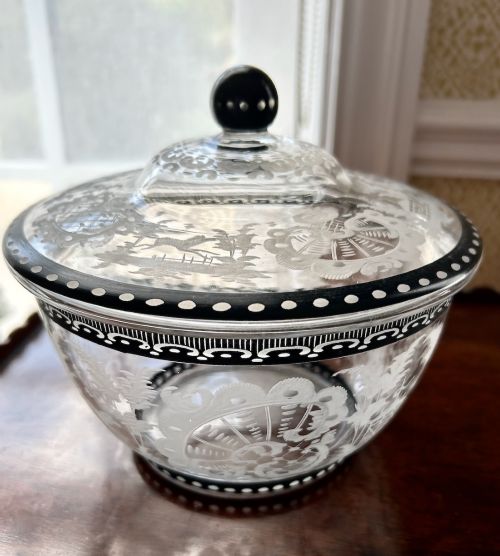
When you search for a black glass jar, you are looking at domestic and display vessels shaped from glass, often paired with wooden or ebonised bases. The pieces available include display domes, decorative bowls, vases, and preserve dishes.
You are most likely to meet Victorian and Edwardian examples on this page, alongside occasional 1930 pieces. These objects range from taxidermy showcases and clock cases to preserve dishes and engraved bowls.
How they were made
Makers utilised glass and timber, frequently pairing transparent or dark glass with ebonised wood bases, fabric, and felt. Silver plating and enamel also appear on select preserve dishes and bowls.
Construction techniques include glass blowing, cutting, and engraving, alongside wood carving for bases and display cases. Craftspeople assembled these vessels to house specimens, clocks, and food.
Previous archives reveal a carved wooden monkey with glass eyes doubling as a tobacco jar.
What varies in quality
The distinction between standard items and superior examples lies in the fineness of the glass cutting and the precision of the engraving. Heavier timber bases and well-fitted wooden components indicate better workshop standards.
The inclusion of secondary materials such as silver plating or detailed enamel work elevates certain bowls and dishes. Preservation of the original glass surface without heavy scratching separates finer specimens.
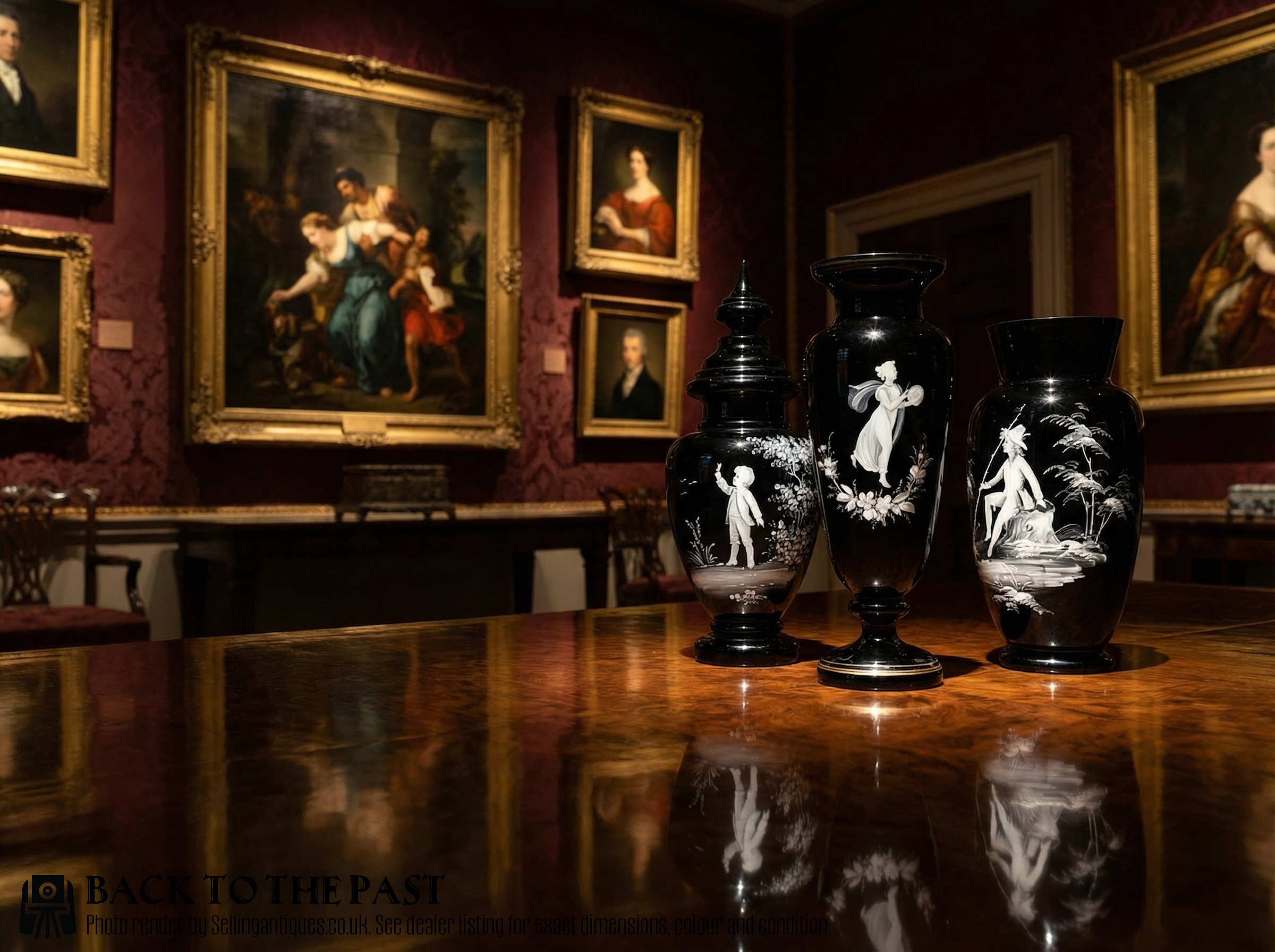
Mary Gregory
The Black Glass Jar Glossary
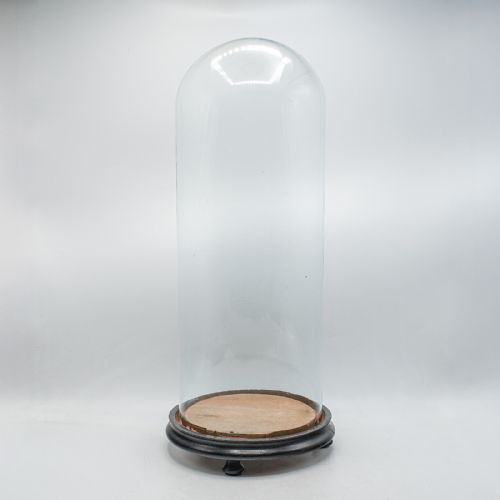
- Display dome
- A transparent glass cover used to protect delicate objects like taxidermy, clocks, or botanical specimens. These sit upon a fitted wooden or ebonised base.
- Preserve dish
- A table vessel intended for holding jams or preserves, often manufactured with cut glass and silver-plated metal elements.
- Ebonised wood
- Timber treated with a dark finish to resemble ebony, frequently utilised for the bases of display domes and cases.
- Taxidermy showcase
- A glass dome or case designed specifically to enclose and preserve mounted birds, animals, or botanical specimens.
- Cut glass
- Glass decorated by abrasive wheel cutting to produce geometric or linear patterns on bowls, jars, and dishes.
Black Glass Jar: Frequently Asked Questions
What were glass domes used for?
Victorian and Edwardian households utilised glass domes to cover taxidermy specimens, clocks, and delicate botanical displays. This kept dust away from fragile objects while allowing guests to view them clearly.
The wooden or ebonised bases anchored the glass securely, creating a sealed environment for the items kept inside.
How do I clean an antique glass dome?
Wipe the glass surface gently with a soft, lint-free cloth and mild soapy water if necessary. Avoid harsh chemicals that might damage aged glass or the surrounding wooden base.
Take care when lifting the dome from its base, as antique glass can be heavy and delicate at the rims.
Are these pieces from the Victorian era?
Many items listed originate from the Victorian and Edwardian periods, constructed around the late nineteenth and early twentieth centuries. Other examples extend into the Art Deco style of the 1930s.
Materials like ebonised wood, felt linings, and traditional glass-blowing methods help indicate these historical periods.
How do I style a glass jar or dome?
Place display domes on mantelpieces, sideboards, or console tables to showcase small collections, dried botanicals, or ornaments. Preserve dishes and bowls can sit on dining tables or in cabinets as decorative tableware.
Ensure the piece rests on a stable, level surface away from heavy foot traffic to protect the glass.