


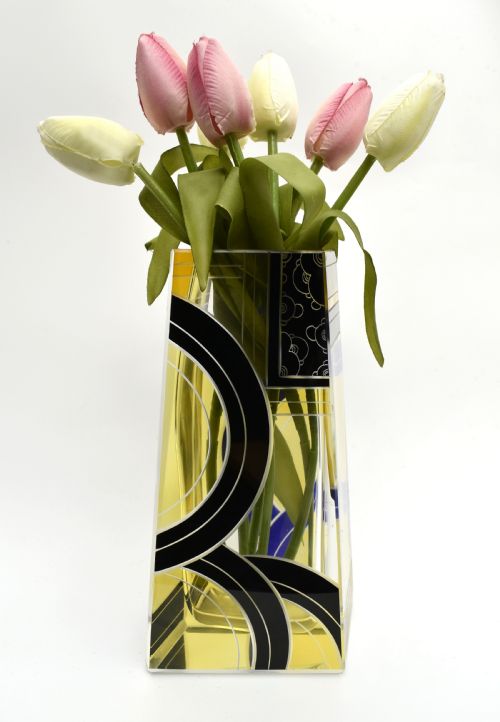


Bohemian Black Glass Vase
A bohemian black glass vase brings dark glamour to a room, offering deep opaque surfaces set with vibrant enamel and bright gold gilding.
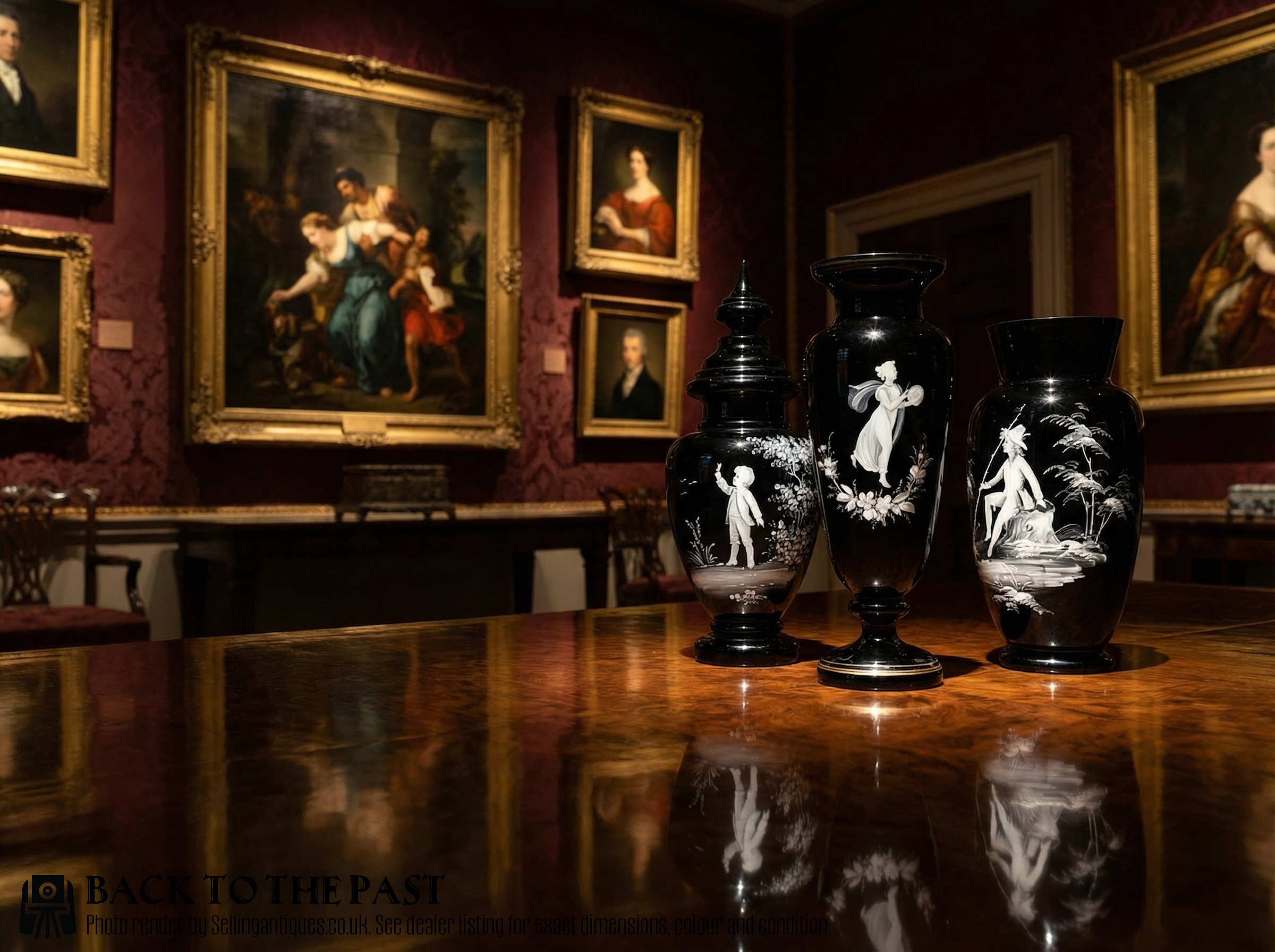
Bohemian Black Glass Vase
When you search for a bohemian black glass vase, you encounter striking vessels that draw heavily on Art Deco geometry and earlier Victorian traditions. The pieces appearing here span the Victorian era, the 1920s, and the 1930s, reflecting a rich history of Central European glassmaking.
The version you are most likely to meet on this page is an Art Deco piece originating from the Czech Republic, often tall or square in form. These designs frequently feature intricate enamel decoration and etched motifs applied over opaque black glass or black hyalite glass.
How they were made
Makers shaped opaque glass and black hyalite glass through traditional blowing and moulding techniques to achieve dense, light-absorbing bodies. Artisans then applied enamel colours and gold gilding directly to the surface.
Surface decoration frequently relied on etching to cut through layers or create textured panels that contrast with the smooth black background. Certain pieces incorporate uranium glass elements that react under ultraviolet light.
Certain pieces hide a luminous green secret under ultraviolet light, thanks to the uranium content woven into their glass.
What varies in quality
The distinction between standard production and finer work lies in the crispness of the etching and the precision of the enamel application. Master designers achieved cleaner geometric lines and more harmonious colour palettes.
Proportion and scale also separate ordinary examples from exceptional ones, particularly in taller or larger vessels where maintaining structural balance requires considerable skill.
Karl Palda·Paul Heller·Mary Gregory·Booms glass
The Bohemian Black Glass Vase Glossary
- Hyalite glass
- An opaque black or red glass developed in the nineteenth century to imitate jet and basalt. It provides a dense, glossy ground for enamel and gilt decoration.
- Enamel
- Opaque glass paints fused to the surface of a vessel through firing. It adds vibrant colour details to monochrome bodies.
- Uranium glass
- Glass containing a small percentage of uranium oxide, which glows green under ultraviolet light. It appears in various decorative accents.
- Gilding
- The application of gold leaf or gold paint to highlight etched patterns and rims. This technique enhances the contrast against dark glass.
- Etching
- A process using acid or mechanical tools to carve designs into the glass surface. It creates tactile frosted areas that contrast with polished sections.
Bohemian Black Glass Vase: Frequently Asked Questions
How do I identify Art Deco pieces?
Art Deco pieces typically display sharp geometric motifs, clean vertical lines, and stylised floral or abstract patterns. They often utilise opaque black glass paired with bright enamel colours.
Look for symmetrical forms such as squares and tall cylinders that define the aesthetic of the nineteen-thirties.
What is hyalite glass?
Hyalite glass is an opaque variety developed to create deep, light-absorbing surfaces resembling polished stone. It serves as a solid foundation for intricate enamel work and gold gilding.
This material gives nineteenth and twentieth-century vessels their signature heavy, glossy appearance.
How should I display these vases?
Place these dark vessels where adequate lighting can catch the polished surfaces and highlight the contrast of the enamel decoration. Their strong silhouettes work well on plain shelves or mantels.
Keep them away from direct edges where accidental knocks might occur, as antique glass requires careful placement.
Are all black glass vases Czech?
Not all pieces originate from the Czech Republic, though a significant portion of twentieth-century production centres there. Victorian examples also appear alongside continental works.
Checking the specific design characteristics helps determine the likely geographic origin and period.