
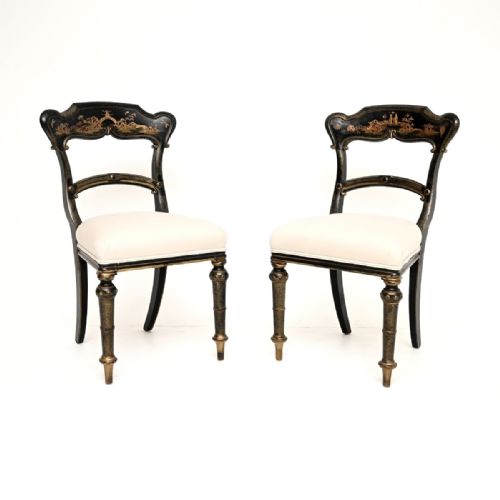
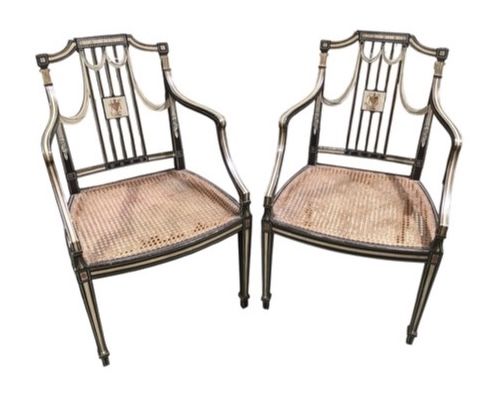


Black Gilt Side Chairs
Black gilt side chairs bring dark surfaces and bright highlights together, offering striking accent seating shaped across centuries of changing taste.
Black Gilt Side Chairs
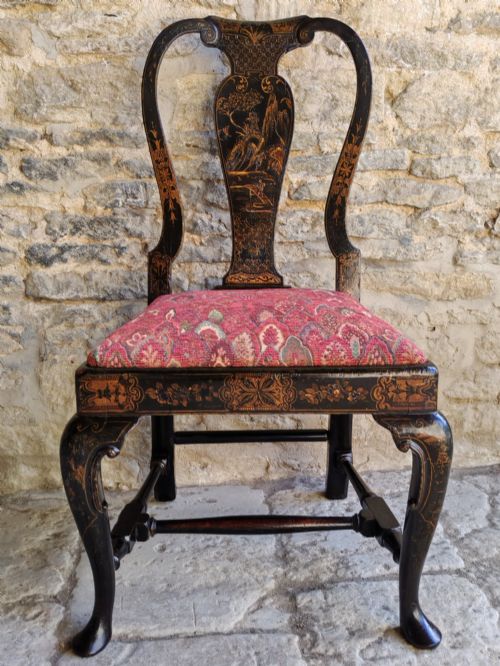
These black gilt side chairs encompass seating designed for dining rooms, bedrooms, and halls, spanning periods from seventeen hundred to the early twentieth century. The selection ranges from early eighteenth century chinoiserie examples to Victorian ebonised pieces and later revival styles.
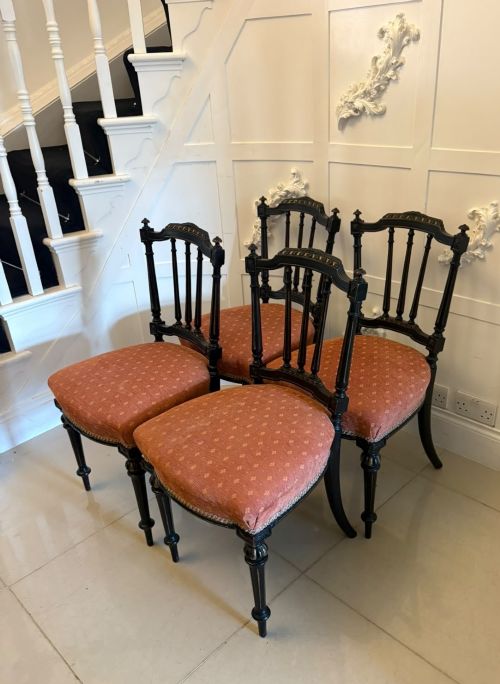
Buyers will most frequently encounter nineteenth century and Victorian interpretations alongside Regency and earlier seventeenth century forms. These pieces include dining chairs, hall chairs, child chairs, and nursing chairs finished in dark paint, lacquer, or ebonisation.
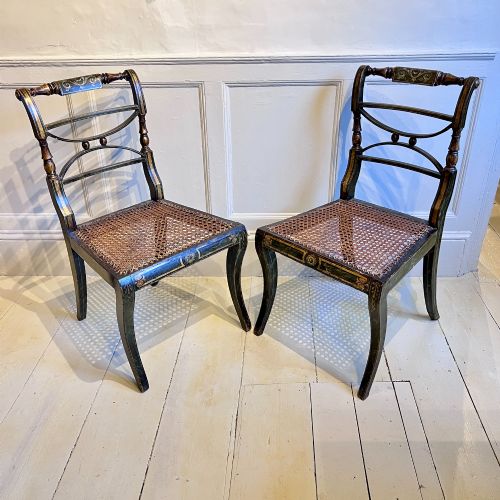
The core characteristic unifying these varied items is the combination of a dark ground with metallic gilding, creating a formal visual rhythm across the frame. Surviving examples often display distinct regional traits, such as Dutch lacquered work or English Regency painted finishes.
Materials and construction
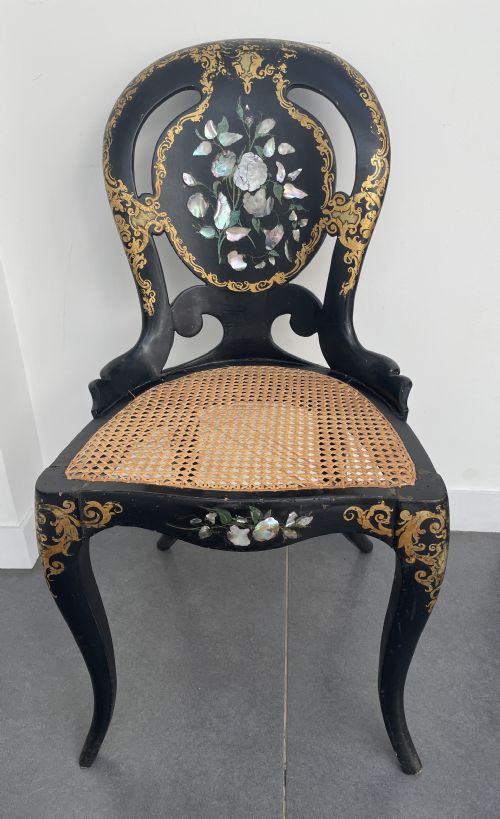
Wood serves as the primary structural material, frequently finished with ebonisation, black paint, or lacquer to achieve a dark, reflective surface. Gilt highlights, including parcel gilt details and gold leaf, are applied to carve work, mouldings, and decorative motifs.
Surface decoration frequently involves japanning or hand-painted chinoiserie scenes, complemented in some instances by mother of pearl inlay. Seating pads utilise materials such as cane, fabric, and traditional upholstery techniques suited to the period of manufacture.
Several small-scale chairs in the listings were made specifically for children, proving that past generations sat just as stylishly.
Assessing quality and craftsmanship
Quality rests upon the crispness of the carved details and the depth of the original dark finish, whether ebonised wood or black lacquer. Finer examples retain intact gilt decoration and carefully executed painted motifs rather than flat, uniform gilding.
The integrity of the underlying timber frame and the survival of original decorative elements, such as hand-painted chinoiserie or inlaid mother of pearl, distinguish superior pieces. The relative preservation of the surface finish against the passage of time dictates the character of each chair.
The Black Gilt Side Chairs Glossary
- Ebonised wood
- Timber treated to imitate ebony through staining or painting. This dark finish provides a high-contrast base for gilt highlights.
- Japanning
- European imitation of East Asian lacquerwork using resin varnishes. Artisans built up layers to create a glossy black ground.
- Parcel gilt
- The practice of gilding only specific portions of an object. This technique accentuates carved details against a contrasting background.
- Chinoiserie
- European decorative style reflecting Chinese artistic motifs. These designs appear frequently on lacquer and painted furniture frames.
Black Gilt Side Chairs: Frequently Asked Questions
How do I clean black gilt side chairs?
Dust surfaces gently with a soft, dry cloth to protect the delicate gilt highlights and dark finish. Avoid chemical polishes and moisture, which can damage aged lacquer or painted decoration.
Regular, careful maintenance preserves the original patination of the wood and the integrity of the metallic details over time.
Are these chairs sturdy enough for daily dining?
Many examples, particularly nineteenth century dining chairs and Regency sets, were built for practical use. However, older pieces from the seventeenth and eighteenth centuries require more considerate handling.
Evaluating the stability of the frame and joints helps determine whether a chair suits active daily seating or functions better as an accent piece.
How can I tell a Regency chair from a Victorian one?
Regency chairs typically feature classical lines, sabre legs, and restrained painted or parcel gilt decoration inspired by antiquity. Victorian pieces often display heavier proportions, ebonised surfaces, and ornate details like mother of pearl inlay or elaborate japanning.
Comparing the overall silhouette and decorative vocabulary clarifies the historical period of manufacture.
Can I mix different styles around a dining table?
Pairing chairs from different eras creates an eclectic interior while maintaining a cohesive aesthetic through the shared black and gilt palette. Sets of matching chairs offer formal uniformity, whereas single chairs or pairs introduce visual variety.
Matching the seat height and general scale ensures comfort and practical usability around the table.