

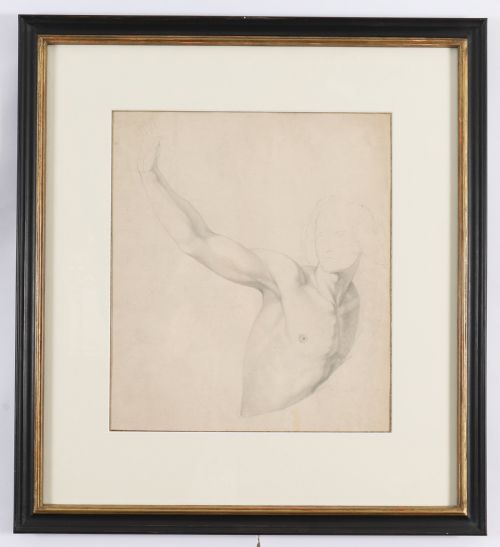


Black Framed Pencil Sketch
A black framed pencil sketch captures the immediate hand of the artist, preserved under glass in wood.
Black Framed Pencil Sketch
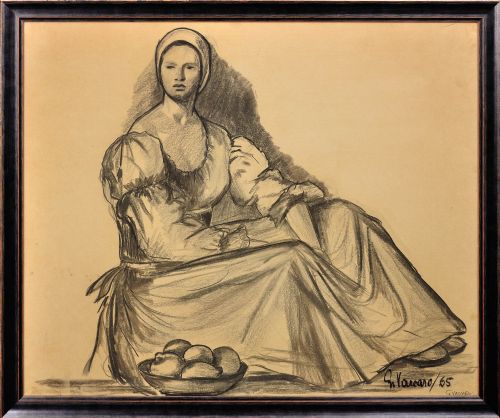
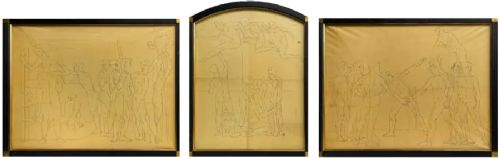
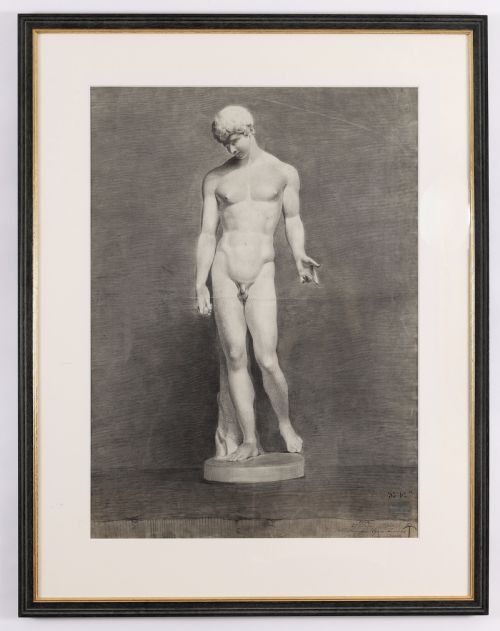
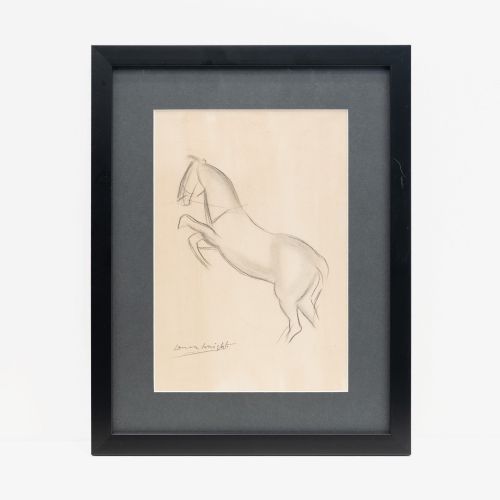
A black framed pencil sketch brings intimate works on paper into focus, spanning figures, landscapes, and studies from the eighteenth century to the mid-twentieth century. When searching for a black framed pencil sketch, collectors encounter academic figure studies, equine compositions, and portraiture housed within simple dark wooden borders.
The pieces on this page range from early nineteenth-century academic drawings and Renaissance revivals through to twentieth-century modernism and mid-century aeronautical sketches. These works utilise graphite, charcoal, and ink on paper, often protected behind glass in straightforward frames that direct the eye entirely to the draughtsmanship.
Materials and Technique
The foundation of these works is paper, upon which artists applied graphite, charcoal, chalk, or ink to build form through line and tone. Plumbago, a form of early graphite, alongside traditional pencil, creates subtle monochromatic gradations that record the artist's initial observations directly.
Presentation relies on wood frames combined with glass to protect the delicate surface of the drawing from atmospheric degradation. Some pieces incorporate additional media such as watercolour or gold leaf, while the framing provides a crisp perimeter that separates the monochrome study from its surroundings.
Black Framed Pencil Sketch Retail Price Guide 2026
Typical asking prices for black framed pencil sketch among the pieces listed under this phrase on Sellingantiques today, from the lower quarter to the upper quarter. They describe what is for sale here now, not the wider market.
Listings span from the eighteenth century through the nineteenth century and into the mid-twentieth century.
Judging Quality and Execution
Quality in these drawings rests upon the confidence of the line and the precision of the draughtsmanship, separating hasty preliminary scribbles from highly resolved studies. The handling of shadow and anatomical proportion reveals the artist's underlying training, whether executed in an academic style or an avant-garde idiom.
The integration between the artwork and its enclosure also determines the overall standard, where sympathetic framing complements the tone of the paper without overpowering the delicate medium. Works possessing clear attribution to established artists or documented provenance command greater attention from serious collectors.
Dame Laura Knight·Demetrios Galanis·J D Fergusson·Ernest Borough Johnson
The Black Framed Pencil Sketch Glossary
- Plumbago
- An early form of black lead or graphite used for delicate portrait drawings, particularly popular during the eighteenth century. These works are prized for their fine detail and silvery metallic sheen.
- Draughtsmanship
- The skill and technique of making drawings, particularly those involving precise lines and perspective. High-level draughtsmanship is the primary indicator of merit in monochrome art.
- Study
- A preparatory drawing made by an artist to explore a composition, figure, or lighting effect prior to executing a larger finished work. Studies offer direct insight into the creative process.
- Renaissance Revival
- A nineteenth-century artistic movement that sought to emulate the style, techniques, and humanist themes of the fifteenth and sixteenth-century Italian Renaissance.
Black Framed Pencil Sketch: Frequently Asked Questions
What is the difference between a sketch and a study?
A sketch is typically a quick, spontaneous record of a scene or idea, capturing movement and general composition. It prioritises immediacy over fine detail.
A study is a more deliberate, focused examination of a specific element, such as a hand, a drape of fabric, or an anatomical feature. Studies often involve careful shading and precise measurements.
How can I tell the age of a paper drawing?
Examine the texture, weight, and colour of the paper stock, as older papers often display natural ageing characteristics and watermarks. Handmade papers from the eighteenth and nineteenth centuries differ significantly in fibre content from twentieth-century machine-made sheets.
Look at the framing techniques, backing boards, and any inscriptions or dates left by the artist. Stylistic conventions of the period also provide strong clues to the date of execution.
Are these works original or reproductions?
The pieces listed here are original hand-drawn works on paper, executed directly by the artist using graphite, charcoal, or ink. Each line is physically applied to the surface rather than printed.
Close inspection under magnification reveals the accumulation of graphite particles and pressure variations unique to manual drawing. Prints and mechanical reproductions lack this tactile depth.