

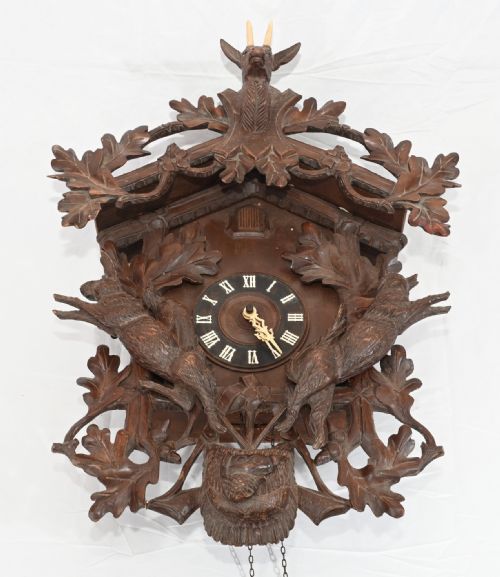


Black Forest Stag
These black forest stag carvings and furniture pieces bring the atmospheric weight of a nineteenth-century hunting lodge directly into a modern room.
Black Forest Stag
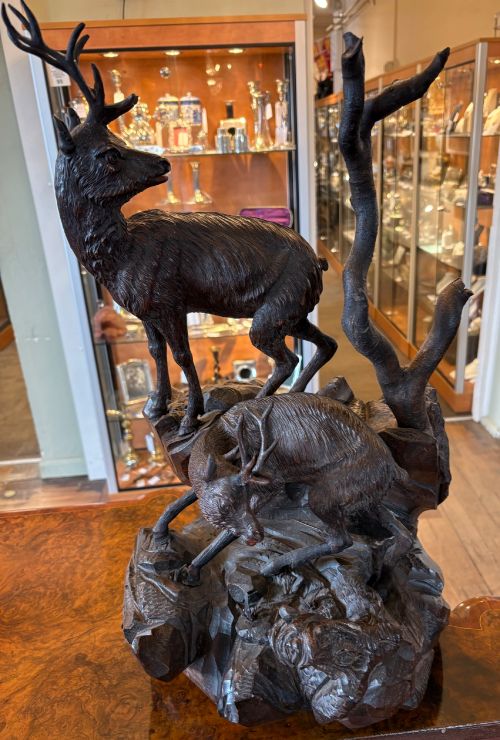
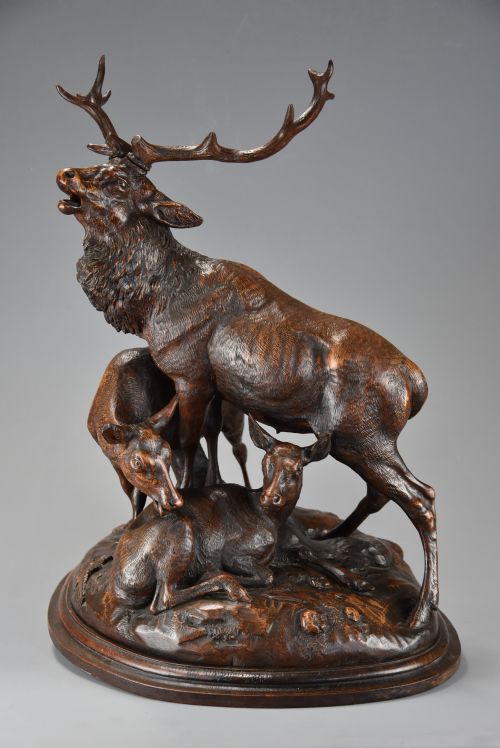
When you search for black forest stag, you encounter a distinct genre of European wood carving and taxidermy mounting that flourished during the nineteenth century. These objects range from monumental wall sculptures and trophy mounts with real antlers to practical furnishings such as armchairs, occasional tables, and cuckoo clocks.
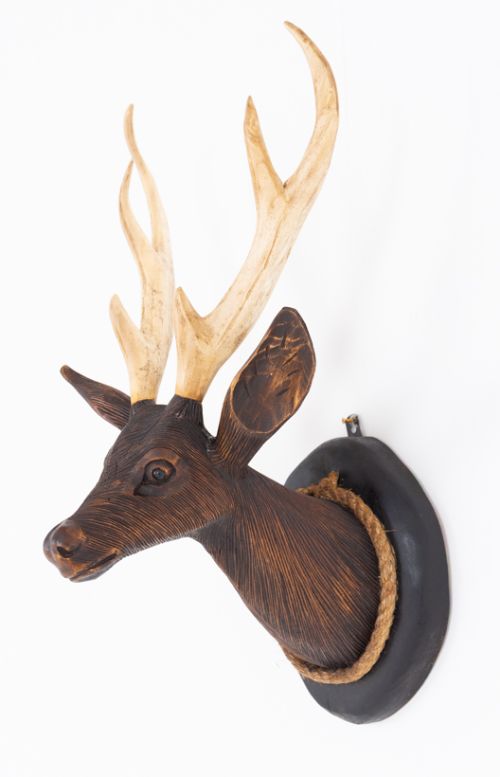
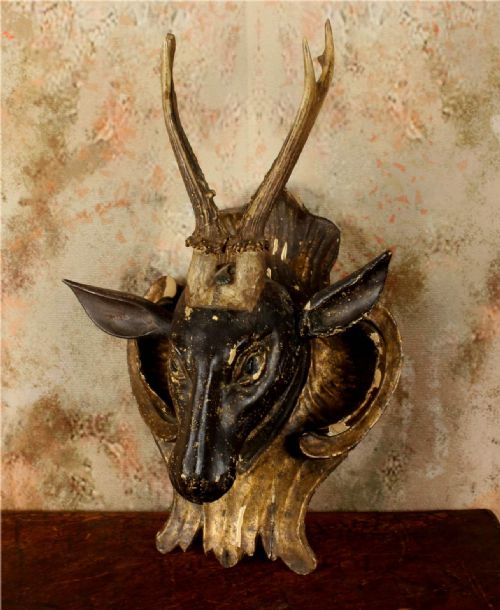
You are most likely to meet walnut or linden wood pieces shaped into detailed deer heads, pediment panels, and figural groupings. The tradition leans heavily into folk art and Victorian hunting lodge aesthetics, capturing naturalistic animal forms with considerable anatomical precision.
How they were made
The makers relied primarily on lime wood, walnut, and carved wood, utilising hand chisels and gouges to build up deep relief panels and three-dimensional animal sculptures. Natural materials like real stags' antler and bone were frequently integrated into the wooden structures, particularly for armchairs, wall trophies, and skull mounts.
Surfaces were typically finished with dark wax or polish to highlight the grain of the timber and give the carved fur and musculature a lifelike depth. Glass eyes were often inserted into carved heads and taxidermy mounts to heighten the realism of the animals.
The material record for this phrase spans carved wood, lime wood, walnut, bone, rope, and real antler.
What varies in quality
The distinction between ordinary and exceptional work lies in the anatomical accuracy and the depth of the carving. Master carvers captured the tension in a stag's neck muscles and the delicate texture of the hair, whereas lesser pieces appear stiff and formulaic.
Construction methods also set pieces apart, such as whether a cuckoo clock case or armchair is built from solid walnut with integrated structural carving or merely assembled from simpler moulded elements.
J HUGGLER
The Black Forest Stag Glossary
- Linden wood
- A pale, fine-grained timber favoured by nineteenth-century carvers for its ability to hold intricate detail without splitting. It accepts deep undercutting exceptionally well.
- Pediment panel
- An architectural or decorative carved wooden board designed to sit above a doorway, mirror, or furniture crest. These often feature stags' heads flanked by foliage and game.
- Trophy mount
- A taxidermy skull or carved wooden head mounted on a shield-shaped wooden plaque. These pieces often incorporate genuine antlers.
- Undercutting
- A carving technique where the wood is cut away beneath a form to make it stand free from the background. This creates deep shadows and high relief.
Black Forest Stag: Frequently Asked Questions
What periods do these pieces come from?
The vast majority originate from the nineteenth century, aligning with the Victorian period and the height of the European hunting lodge style.
Some later interpretations and clocks extend into the early and mid-twentieth century, continuing traditional carving methods.
How do I care for carved wood and antler?
Keep the wood nourished with a light microcrystalline wax and avoid placing pieces near direct heat sources that could dry out the timber.
Antlers benefit from gentle dusting with a soft dry brush to prevent accumulation in the natural grooves.
Are the antlers real?
Many pieces incorporate genuine red deer antlers mounted onto carved wooden shields or integrated directly into furniture.
Other examples feature entirely hand-carved wooden antlers shaped to mimic natural horn.
How were these items used originally?
They served as decorative furnishings and functional items in country houses, hunting lodges, and domestic interiors.
Items ranged from large wall sculptures and clocks to occasional tables and ink pots designed for studies and libraries.