

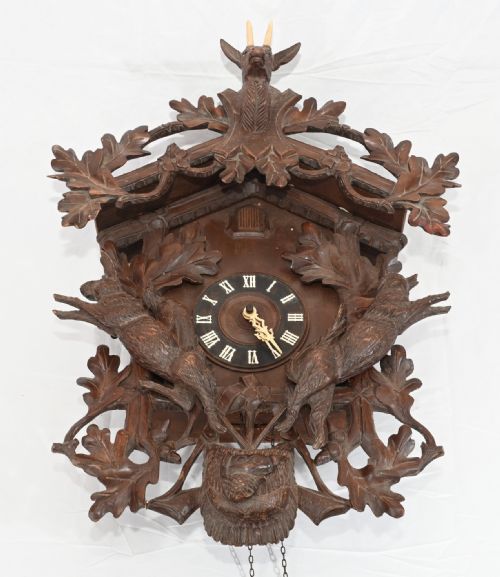


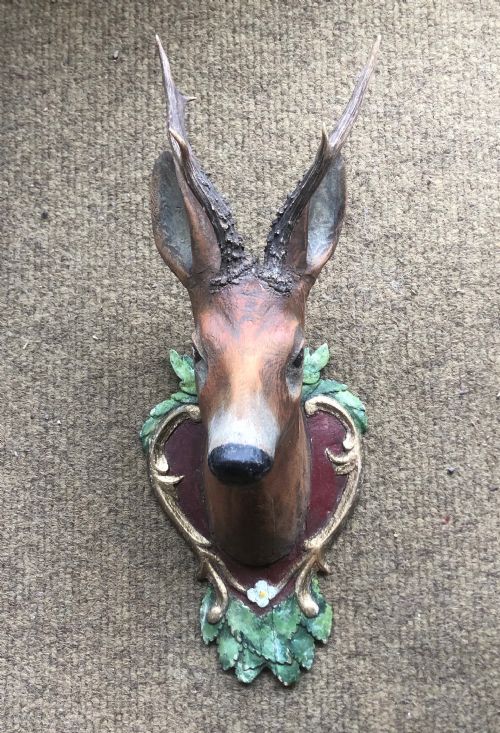

Carved Wooden Stag
A carved wooden stag brings the presence of the forest directly into the room, combining naturalism with traditional craftsmanship.
Carved Wooden Stag
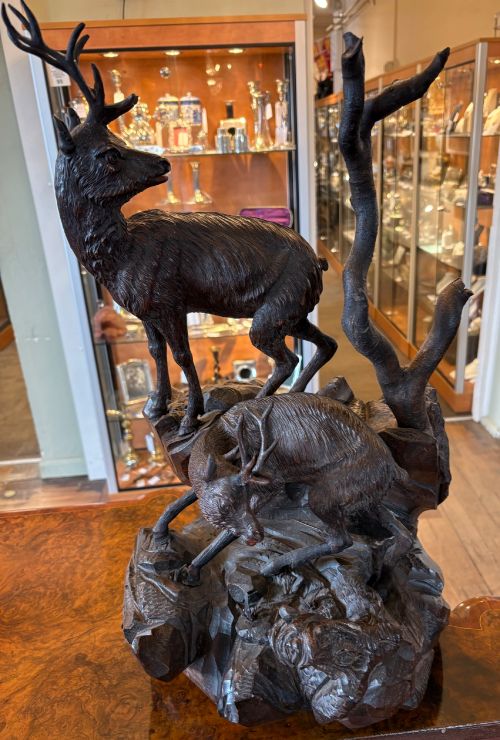
A carved wooden stag covers sculptural studies, wall-mounted heads, and functional objects incorporating natural antlers or carved timber forms. These items emerge primarily from nineteenth-century European traditions, particularly the Black Forest region, alongside British, French, and Scandinavian folk art workshops.
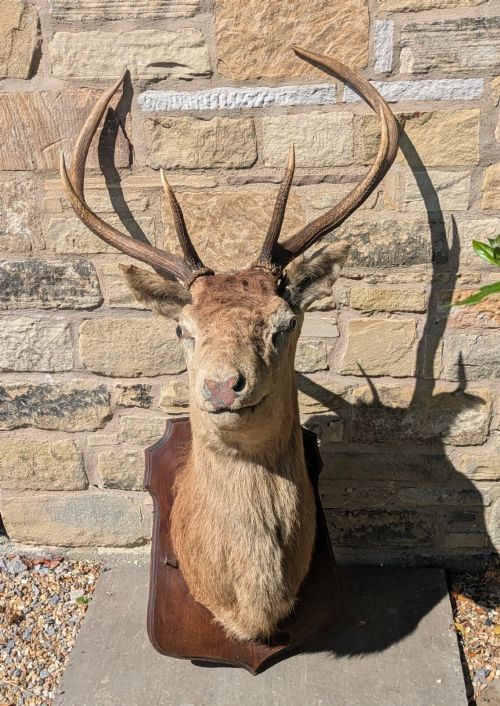
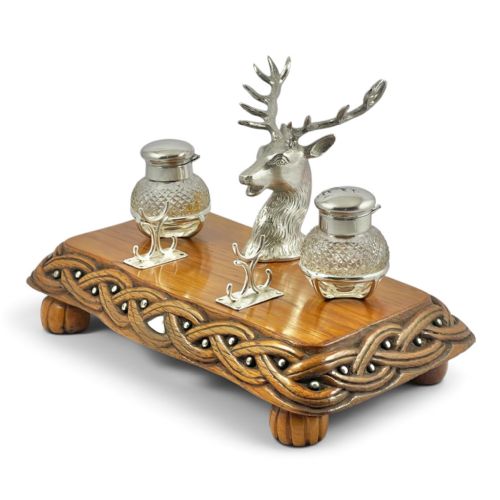
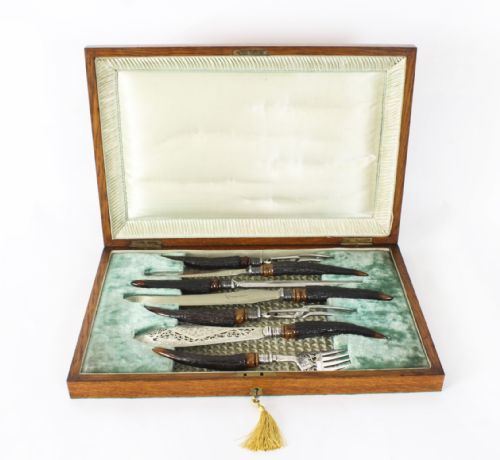
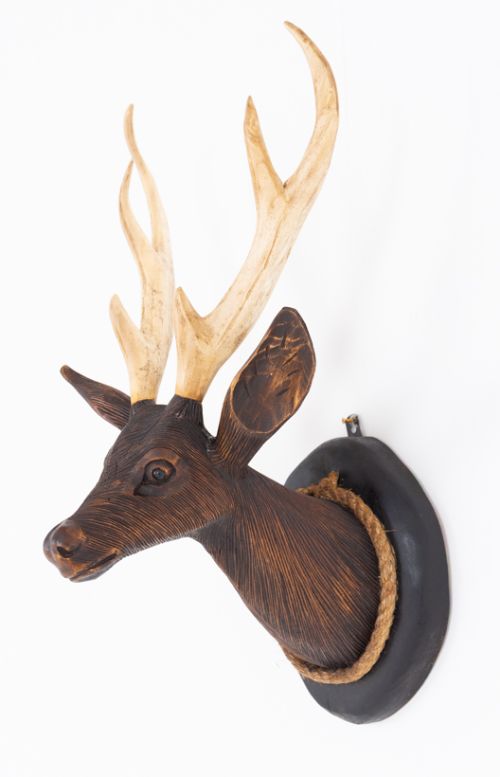
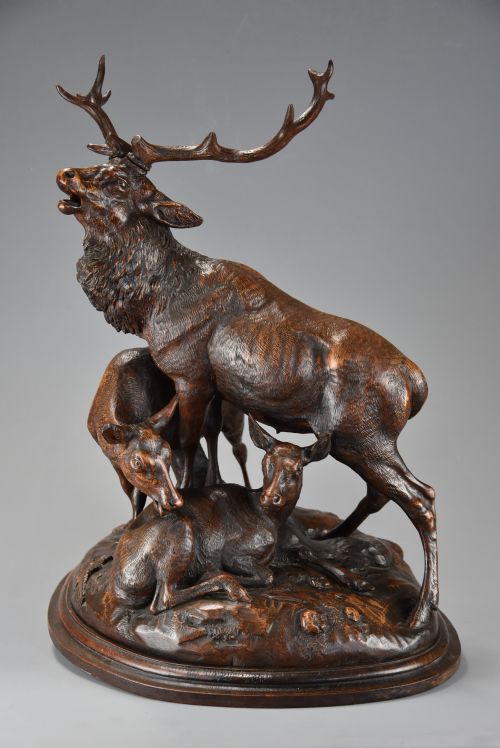
The most frequent examples found here are wall-mounted stag heads and sculptural studies, often rendered in walnut or linden wood with realistic anatomical detail. Buyers also encounter domestic items such as inkstands, cuckoo clocks, and carving sets that utilise carved timber alongside real antlers.
Dating ranges across the nineteenth and early twentieth centuries, capturing periods from the Victorian era up to the mid-twentieth century. Pieces vary from finely detailed academic carvings to robust folk art interpretations.
Materials and construction methods
Carvers utilised European hardwoods such as walnut, oak, and linden wood, chosen for their grain and suitability for intricate chisel work. Linden wood, frequently associated with Black Forest production, allowed artisans to achieve deep undercut foliage and realistic musculature.
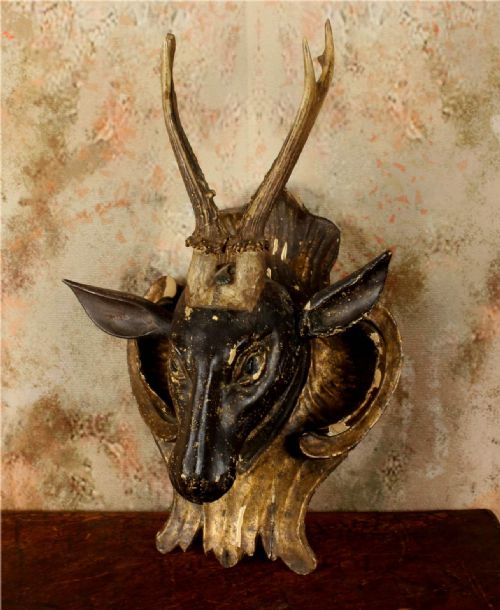
Natural materials like real red deer antlers are frequently combined with carved wooden shields or heads to create taxidermy mounts and trophies. Secondary elements incorporate painted surfaces, silver plating, and metal fittings, particularly in domestic accessories like inkstands and cutlery sets.
The inventory spans the nineteenth and twentieth centuries, encompassing Victorian, Folk Art, and Black Forest traditions.
Distinctions in quality
Quality rests upon the anatomical accuracy and depth of the carving, distinguishing sensitive hand-tooled musculature from stiffer, mechanical production. Superior examples display careful attention to the texture of the coat and the natural contours of the antlers.
The integrity of the timber and the preservation of the original surface finish dictate the standing of a piece. Finer works retain crisp chisel marks and rich patination without excessive restoration or later alterations to the antlers.
The Carved Wooden Stag Glossary
- Black Forest
- A style of wood carving originating from the mountain region of central Europe during the nineteenth century. These items typically depict local fauna in naturalistic poses.
- Linden wood
- A pale, fine-grained timber favoured by nineteenth-century carvers for its softness and lack of prominent grain. It permits intricate detailing without splitting.
- Folk art
- Objects created by self-taught or traditional artisans outside academic workshops. These pieces prioritise functional utility and rustic charm over strict anatomical precision.
- Antler mount
- Real deer antlers attached to a carved wooden backing plate or shield. This form served both as a hunting trophy and decorative wall art.
- Patina
- The surface sheen and colour developed by wood through age, handling, and exposure to light. A natural patina indicates uncompromised historical depth.
Carved Wooden Stag: Frequently Asked Questions
Where were carved wooden stag pieces originally displayed?
These items traditionally decorated nineteenth-century shooting lodges, country houses, and domestic studies as symbols of the hunt and the wilderness.
Over time, they moved into wider domestic interiors, placed above mantels or on library walls to bring a rustic character to the room.
How do I care for antique carved wood?
Maintain the timber by keeping pieces away from direct heat sources and rapid temperature fluctuations that cause wood to split. Dust gently with a dry cloth and avoid harsh chemical polishes that damage the aged surface.
Natural wax applied sparingly preserves the historic sheen of the wood without building up heavy residue.
Are the antlers real on these carvings?
Many wall mounts and trophies combine carved wooden heads or shields with genuine red deer antlers sourced from nature. Some decorative items and clocks feature antlers carved entirely from wood to match the body.
Examining the base where the antler meets the head reveals whether the material is natural bone or carved timber.
What defines Black Forest style?
Black Forest carvings are distinguished by their realistic depiction of animals, particularly stags, bears, and dogs, rendered in rich brown woods. The carving often incorporates naturalistic elements like oak leaves, ferns, and tree trunks.
This tradition flourished during the Victorian era to satisfy demand from travellers touring European mountain regions.