


Antique Carved Wildlife
Antique carved wildlife brings the natural world indoors through masterful woodwork, offering character and history to collectors of animal sculpture.
Antique Carved Wildlife
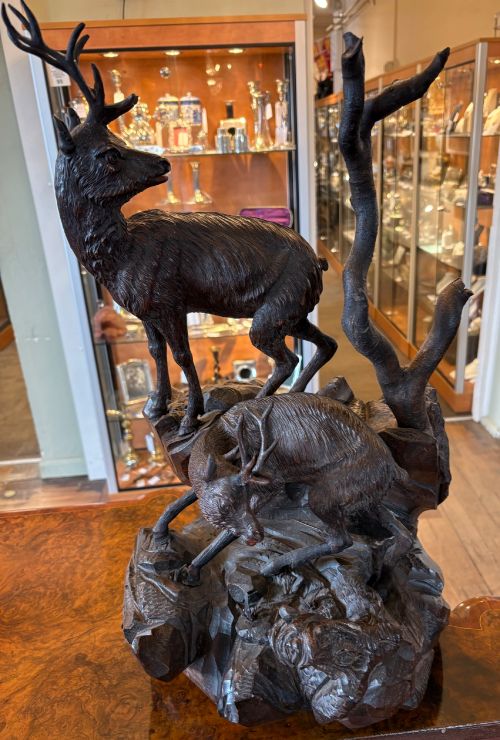
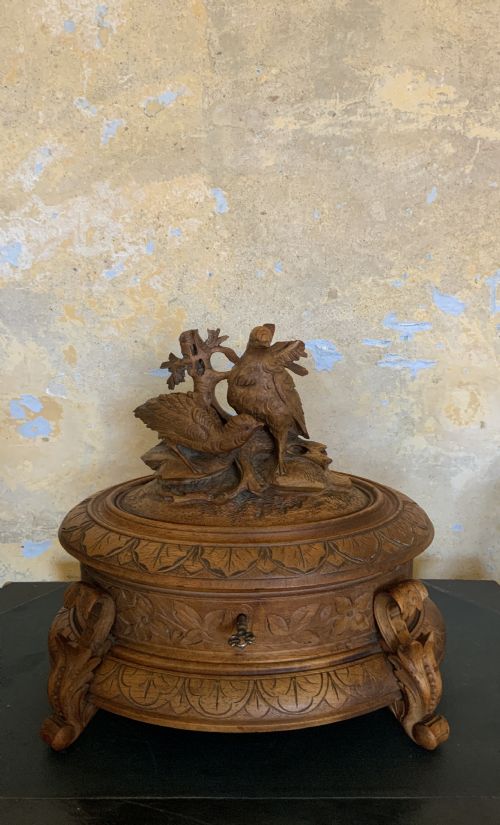
Antique carved wildlife encompasses sculptures, barometers, wall mirrors, boxes, and hall stands depicting animals from various eras. You will frequently encounter Black Forest pieces alongside French Country, English Country, and African Tribal Art examples.
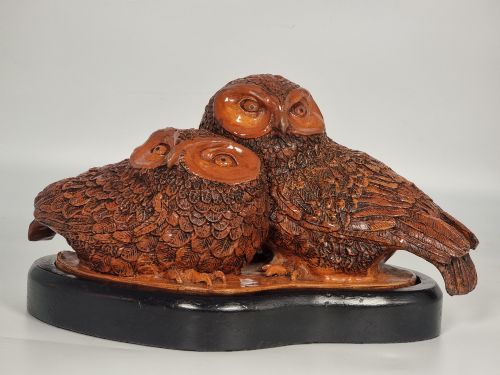
The objects range from large red deer and ibex studies to eagles, foxes, and hippopotamuses fashioned from wood, bone, and ceramic. These pieces capture naturalistic forms or functional items adorned with animal figures.
Originating predominantly from the nineteenth and early twentieth centuries, these items showcase diverse regional carving traditions. The selection includes everything from tabletop boxes to lifesize antelope figures.
Materials and construction methods
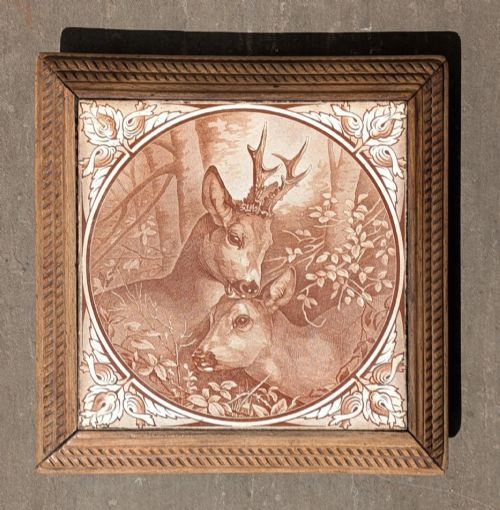
Certain pieces integrate mixed media, combining carved hardwood with bone or incorporating glass eyes and painted surfaces to heighten realism. Architectural elements like wooden stands and ceramic tiles are frequently built into functional items such as barometers and mirrors.
Listings span from the nineteenth century through the nineteen thirties, featuring materials like lime wood, walnut, oak, glass, and bone.
Judging the quality of carvings
The ambition of the design dictates the upper tier of the range, such as complex multi-animal compositions on hall stands versus singular static figures. Condition of the wood and the integrity of integrated components like glass or bone also separate standard items from exceptional ones.
The Antique Carved Wildlife Glossary
- Black Forest
- A style of wood carving originating from the mountainous region of central Europe, celebrated for realistic depictions of animals and foliage. These works often manifest as wall mirrors, barometers, and intricate boxes.
- Lime Wood
- A soft, pale hardwood favoured by carvers for its fine, even grain and ease of cutting detailed subjects without splitting. It allows for the intricate undercutting seen in nineteenth century animal studies.
- Aneroid Barometer
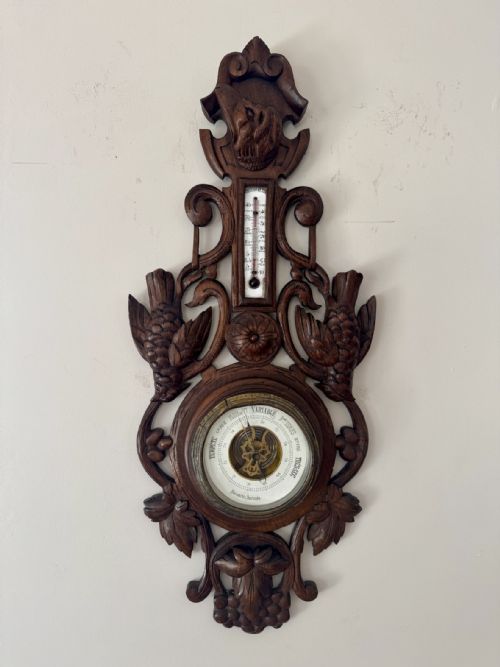
- A device for measuring atmospheric pressure without liquid, frequently housed within elaborate carved wooden animal frames during the Victorian era. These combine utility with decorative wildlife artistry.
- Hall Stand
- A large piece of entrance furniture designed for coats and umbrellas, occasionally embellished with dramatic wildlife carvings like birds of prey and foxes.
Antique Carved Wildlife: Frequently Asked Questions
What animals appear most often?
Deer, ibex, eagles, and foxes dominate the Black Forest and European pieces, reflecting regional fauna. African items introduce subjects like hippopotamuses carved from hardwood and bone.
Other variations include panthers, antelopes, and birds, showing a broad fascination with domestic and exotic wildlife across different periods.
How were these items used?
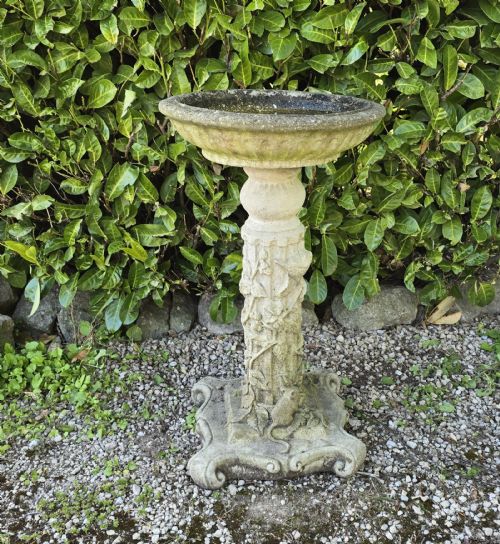
Many pieces served practical functions in domestic interiors, operating as wall mirrors, barometers, hall stands, and boxes for storage. Trivets and bird baths also brought carved animal motifs into everyday utility.
Purely sculptural studies functioned as tabletop ornaments or freestanding figures, designed solely to display artistic skill and a love of nature.
How do I date a piece?
Dating relies on stylistic clues, wood types, and period markers such as nineteenth century Victorian aesthetics or early twentieth century regional carving traditions. The tools and finishing techniques visible on the timber often point to a specific decade.
Documentation or inscribed dates on mounts and stands can also help confirm the era of origin, ranging from the eighteen eighties to the nineteen thirties.
Where were they made?
European workshops, particularly within the Black Forest region, produced a significant share of the carved wood animals, mirrors, and furniture. French and English country workshops also contributed distinct regional interpretations.
Other pieces originate from African traditions, utilising native hardwoods and bone to create distinct sculptural forms that contrast with European styles.