



Black Folding Screen
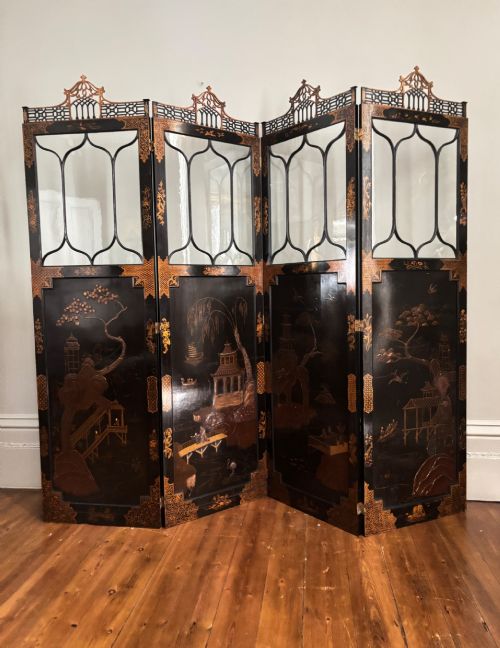
A black folding screen divides a room with dark lacquer and gilt detail, offering instant privacy and historic character.
Black Folding Screen
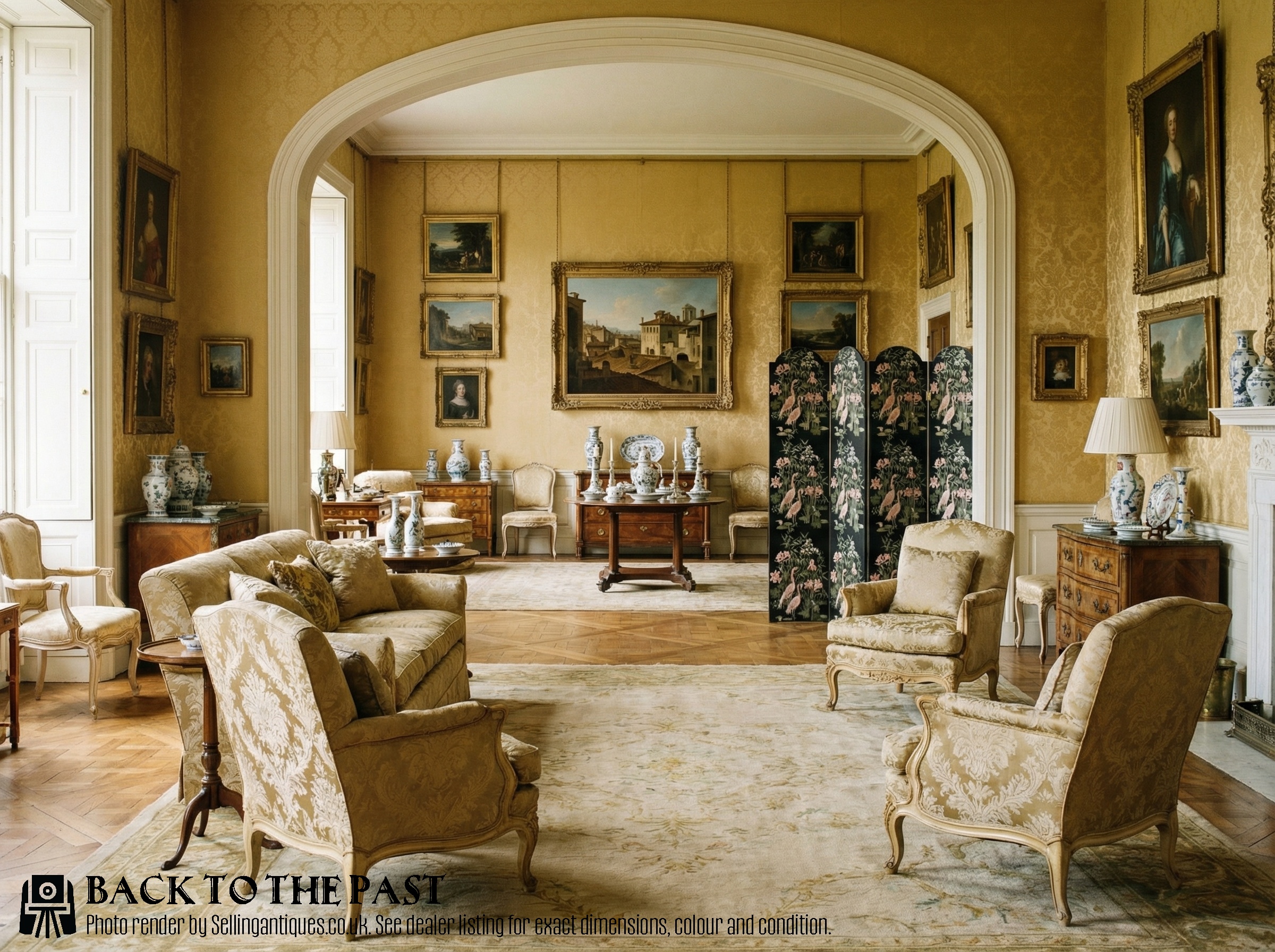
A black folding screen organises interior space through multiple hinged panels that fold easily to suit different rooms. These pieces appear in forms ranging from tall room dividers to dressing screens and lower fire screens.
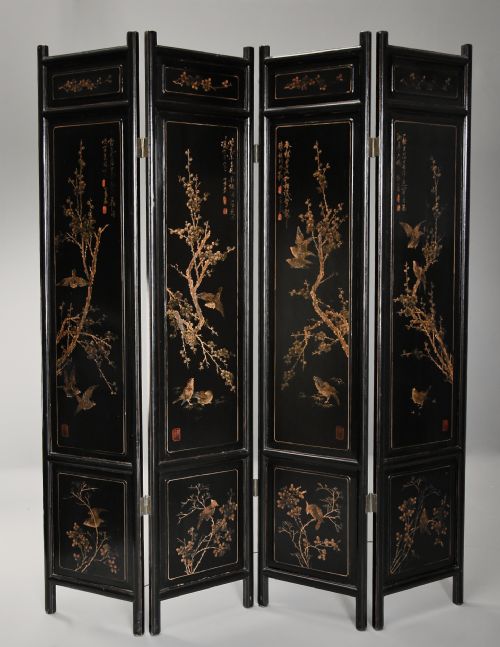
The selections span periods from the nineteenth century through the mid twentieth century, drawing on Chinoiserie, Japanese Meiji, Arts and Crafts, and Chinese Chippendale traditions. Lacquered wood panels dominate the selection, often arranged in four to eight folds.
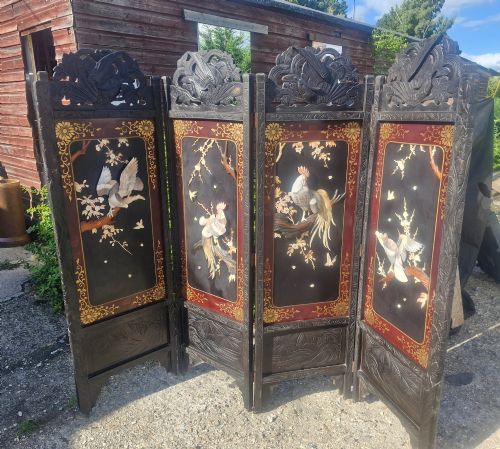
Buyers encounter both freestanding room dividers and hearth guards constructed from iron, brass, and ebonised oak. Many examples incorporate intricate surface decoration such as painted motifs, carved bone figures, and hardstone mounts.
Materials and Construction
Wood provides the structural core for most panels, frequently coated in deep black lacquer or ebonised finishes. Artisans built these frames using traditional joinery to support multiple hinged leaves that move fluidly.
Surface ornamentation relies on contrasting materials applied directly to the dark ground. Makers integrated bone, hardstone, glass, and painted textiles to create detailed pictorial scenes across the panels.
Metalwork appears in structural hinges as well as independent fire screens utilising brass, copper, and iron mesh. These metallic elements combine durability with decorative finishes suited to hearths and living spaces.
Bone figures peek out from behind dark lacquer, turning an ordinary divider into a silent crowd.
Quality and Craftsmanship
The depth and execution of surface carving define the upper tiers of these works. Panels featuring deep relief work in bone or layered lacquer display superior handwork compared to surface-painted alternatives.
The integrity of the hinges and the stability of the folding mechanism indicate the standard of original construction. Heavier multi-fold screens require robust joinery to support their span without sagging over time.
The Black Folding Screen Glossary
- Coromandel
- A type of Chinese carved lacquer work where the surface is incised, filled with coloured pigments, and finished with a dark ground. This technique creates a rich, textured pictorial effect across the panels.
- Chinoiserie
- European artistic styles reflecting Chinese motifs and decorative techniques, popular across various periods. These designs often feature stylised landscapes, figures, and pavilions rendered in gilt and lacquer.
- Papier Mâché
- A composite material made of paper pulp mixed with glue and oil, pressed and dried into rigid forms. It provided a smooth, lightweight base for black lacquer and painted decoration on dressing screens.
Black Folding Screen: Frequently Asked Questions
How do I use a black folding screen?
These screens function primarily as room dividers to segment large living areas or create private dressing spaces. They stand independently and move easily to alter room layouts as needed.
Smaller versions operate as fire screens placed in front of hearths when not in use. Their folding design allows them to sit flat against a wall or angle around furniture.
What is coromandel lacquer?
Coromandel lacquer is an ancient Chinese technique where multiple layers of dark lacquer are applied to a wood base and carved in shallow relief. Artisans then fill the incisions with colours and gold leaf.
This method produces a durable surface filled with intricate figures, foliage, and landscapes. It remains a defining feature of many large nineteenth and early twentieth century screens.
How do I care for lacquered wood?
Dust the surface regularly with a soft, dry cloth to prevent particulate buildup on the delicate finish. Avoid liquid cleaners and harsh chemicals that can damage aged lacquer.
Keep these pieces away from direct sunlight and strong heat sources to prevent the wood from warping and the lacquer from cracking. Stable indoor humidity helps preserve both the frame and the surface decoration.
How do I distinguish Japanese from Chinese screens?
Japanese panels from the Meiji era often emphasise naturalistic textile panels, painted flora, and subtle metal accents. Their aesthetic aligns with traditional Japanese artistic conventions of balance and restraint.
Chinese screens frequently employ heavier lacquer, coromandel carving, and applied hardstone or bone figures depicting court scenes and folklore. Examining the style of the figures and the application of the lacquer helps identify the origin.