


Vintage Fabric Screen
These vintage fabric screen designs offer clever spatial division, combining timber frames with rich textiles to shape interior rooms.
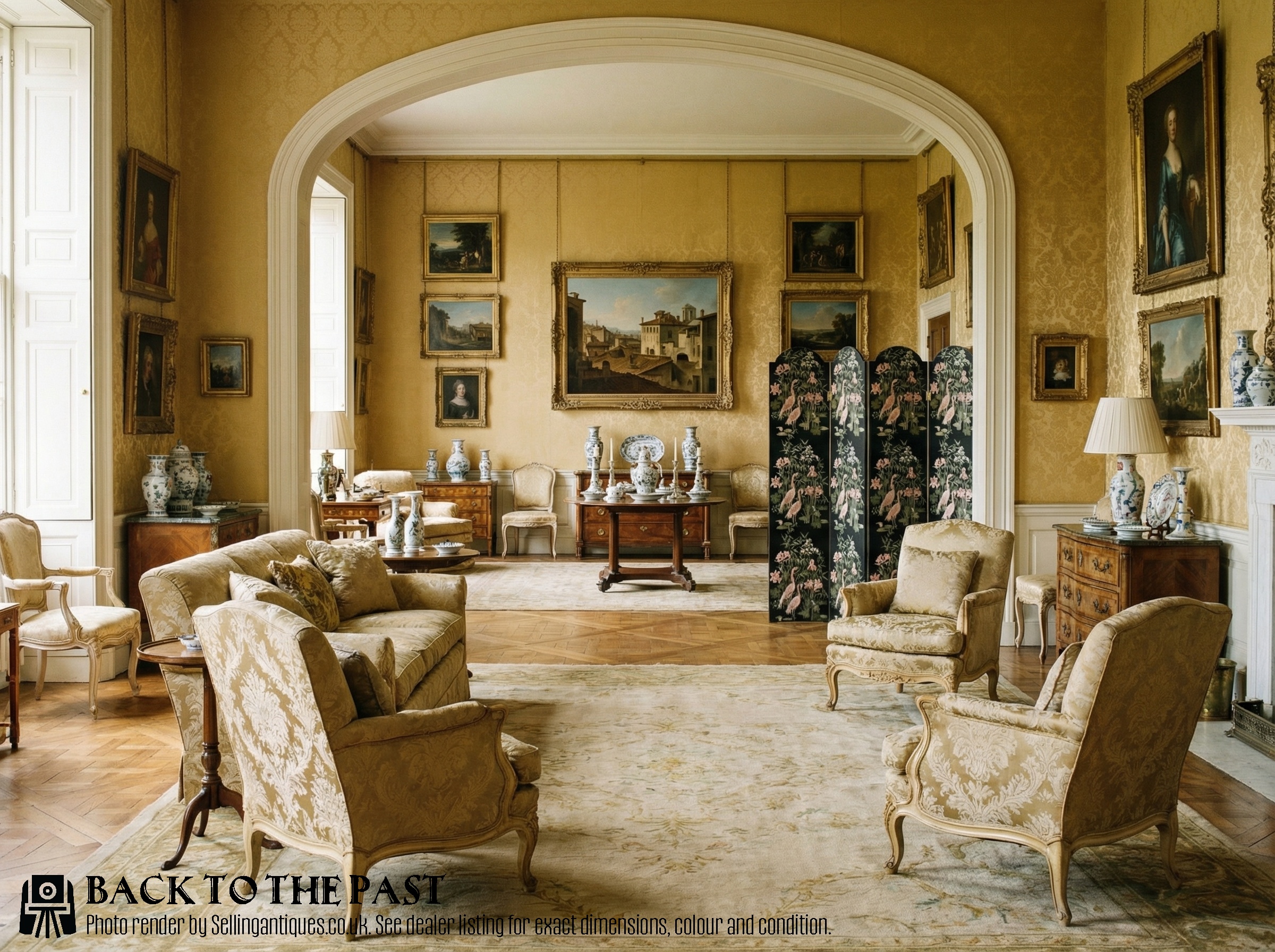
Vintage Fabric Screen
A vintage fabric screen acts as a portable room divider, providing privacy and partitioning large spaces within a home. These panels appear across multiple eras, including Victorian, Edwardian, and the early twentieth century.
The selection ranges from three-fold mahogany frames to grander five-fold designs. Many examples incorporate distinct textile patterns, including notable William Morris prints.
Makers utilised various structural approaches, creating folding arrangements with glass inserts or fully reversible panels. The forms serve both decorative and practical functions in domestic settings.
Materials and construction methods
Frames rely on sturdy timbers such as mahogany, oak, walnut, and ebonised wood, often shaped into multiple hinged leaves. Carved giltwood and brass also appear in the structural detailing.
Panels integrate textiles, linen, and velvet fabrics, sometimes paired with upper glazed sections to allow light passage while maintaining privacy. Inlays and gilt finishes enhance the wooden framework.
Listings feature periods from the nineteenth century up to nineteen thirty, utilising brass, glass, mahogany, and various textiles.
Distinctions in craftsmanship
Superior examples demonstrate meticulous timber joinery and solid wood framing that supports multiple folding panels securely over time. The choice of decorative textile, from printed linen to velvet, influences the overall character.
Refined carving work on giltwood or mahogany frames separates standard utility items from more ambitious decorative pieces. Original hardware and smooth folding mechanisms also indicate higher execution standards.
The Vintage Fabric Screen Glossary
- Folding screen
- A piece of furniture consisting of two or more panels that are connected by hinges. They allow users to alter the layout of a room or block sightlines.
- Three-fold screen
- A division unit constructed from three distinct panels hinged together. This format provides stable configuration options for corners or straight runs.
- Giltwood
- Wood that has been coated with a thin layer of gold leaf or gilt paint. This finish creates a reflective, decorative surface on the frame.
- Ebonised oak
- Oak timber that has been chemically treated or stained to resemble ebony. The dark finish gives the wood a formal, uniform appearance.
Vintage Fabric Screen: Frequently Asked Questions
How do you place a folding screen?
Position the panels at slight angles to ensure the structure remains stable while standing upright on the floor. This angled arrangement prevents the screen from tipping over and allows the hinges to bear the weight evenly.
Screens work effectively in corners, behind seating areas, or to create a designated dressing space within a bedroom. Adjust the folds to match the scale of the room and the length of the wall they occupy.
What periods do these screens come from?
The available pieces span from the nineteenth century through the Edwardian era and into nineteen thirty. Common periods include Victorian, Edwardian, and Art Nouveau designs.
Each era brought distinct decorative preferences, from heavy carved giltwood to Arts and Crafts fabric selections. Checking the woodwork style helps identify the period of origin.
How many panels do they usually have?
Most examples feature three panels, though options with four or five folds also exist. Multi-fold configurations provide greater coverage and flexibility for dividing larger spaces.
Each additional panel increases the overall span and allows for more complex geometric arrangements in the room. The hinge construction ensures smooth movement between the connected sections.
What fabrics are used on the panels?
Textiles range from standard linen and woven materials to patterned velvet designs. Notable examples feature printed fabrics associated with the Arts and Crafts movement.
These textiles are stretched tightly across the wooden frames to form solid or partially transparent barriers. The choice of fabric often dictates the visual warmth the screen brings to an interior.