

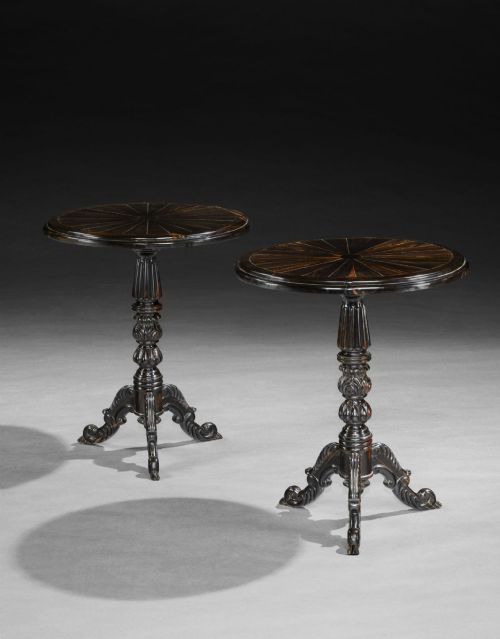
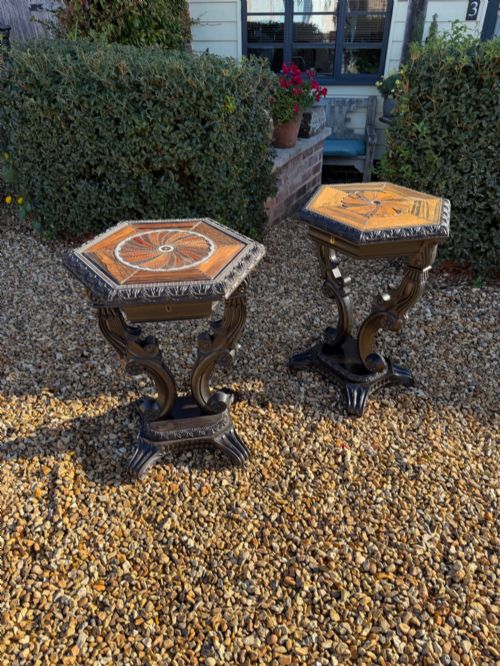


Black Ebony Side Table
A black ebony side table brings a dark, dense presence to a room, offering rich grain and striking contrast.
Black Ebony Side Table
A black ebony side table encompasses solid timber examples alongside ebonised wood surfaces, dating from the eighteenth century through to the art deco period. These items appear in forms such as tray tables, coffee tables, writing tables, and occasional tables.
Origins span across Ceylonese, Dutch, French, and English workshops, demonstrating diverse cultural influences in their manufacture.
How they were made
Construction relies heavily on dense exotic timbers, frequently paired with contrasting materials such as brass, satinwood, marble, and bone inlay. Cabinetmakers utilised solid ebony or applied ebonised finishes to alternative hardwoods to achieve a uniform dark tone.
Decorative techniques incorporate intricate hardwood inlay and parcel gilding, highlighting the structural geometry of tripod, octagonal, round, and square formats.
Black Ebony Side Table Retail Price Guide 2026
Typical asking prices for black ebony side table among the pieces listed under this phrase on Sellingantiques today, from the lower quarter to the upper quarter. They describe what is for sale here now, not the wider market.
Listings feature items spanning the eighteenth century, the Victorian era, and the 1930s.
What varies in quality
The distinction between tiers rests upon the choice of material, separating solid ebony construction from ebonised alternatives. The precision of inlay work and the integration of secondary elements like brass mounts and marble tops further define the grade of each piece.
Stylistic execution dictates value, where specialised colonial carving or defined aesthetic movement design elevates the craftsmanship beyond standard utilitarian production.
The Black Ebony Side Table Glossary
- Ebonised wood
- Timber treated with stain or paint to imitate the dark, heavy appearance of true ebony. This technique allowed cabinetmakers to utilise alternative domestic woods while retaining a formal dark aesthetic.
- Parcel gilt
- The practice of applying gold leaf selectively to specific carved details or raised elements of a wooden surface. It creates a sharp visual contrast against the dark background of the timber.
- Specimen wood
- An assemblage of various decorative timbers arranged in geometric patterns or tabletops to showcase natural colour variations. These woods are typically sourced from different regions.
- Aesthetic movement
- A late nineteenth-century design style emphasising decorative arts for their own beauty rather than narrative or moral function. Pieces from this movement often incorporate contrasting light and dark materials.
Black Ebony Side Table: Frequently Asked Questions
What is a black ebony side table?
A black ebony side table is a compact surface constructed from dense tropical hardwood or ebonised timber. These items function as occasional, writing, or tray tables across various historical periods.
They serve as dark focal points within a room, combining utility with decorative inlay or brass details.
How do I date a black ebony side table?
Dating relies on identifying the underlying style, such as Georgian, Victorian, or Art Deco, alongside construction methods. Materials like satinwood inlay or marble tops also point to specific stylistic eras.
Examining regional characteristics helps distinguish nineteenth-century colonial pieces from earlier European examples.
Where were these tables made?
Production locations range across European workshops in France, England, and the Netherlands, alongside colonial centres in Ceylon and India. Each region brought distinct timber selections and carving traditions to the furniture.
Local timber availability heavily influenced whether makers used solid ebony or ebonised secondary woods.
How do I maintain an ebony table?
Maintenance involves keeping the timber away from direct sunlight and extreme temperature fluctuations to prevent splitting. Regular dusting with a soft, dry cloth preserves the dark finish.
Harsh chemical polishes should be avoided to protect both solid ebony and ebonised surfaces.