



Victorian Ebony Side Tables
Victorian ebony side tables bring dark woods and striking grain into a room, offering sturdy surfaces shaped by nineteenth-century cabinet makers.
Victorian Ebony Side Tables
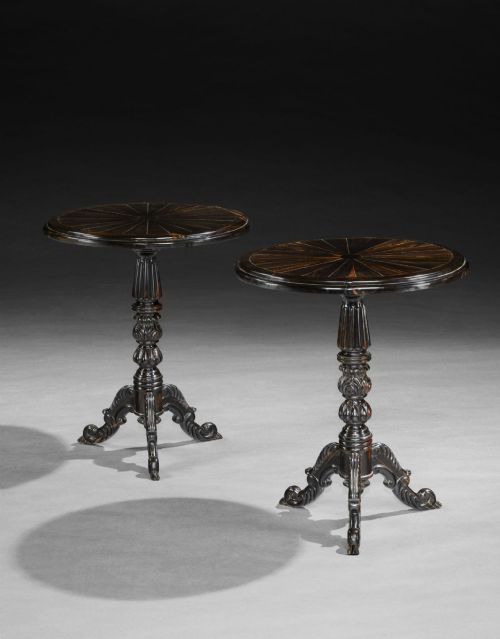
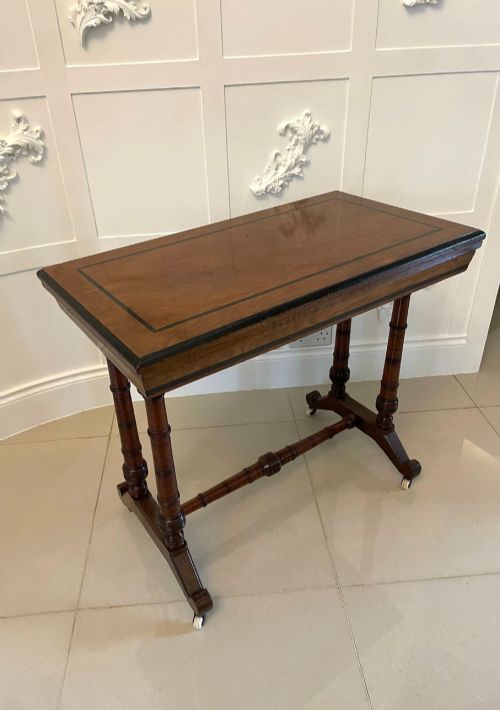
When you search for Victorian ebony side tables, you encounter nineteenth-century pieces ranging from solid ebony tripods to walnut tables with dark inlays. The selection includes occasional tables, card tables, and writing tables from various regional workshops.
The most common examples on this page are nineteenth-century pieces featuring ebonised wood or solid exotic timber. Makers often combined ebony with burr walnut, boxwood, or brass to create contrasting borders and panels.
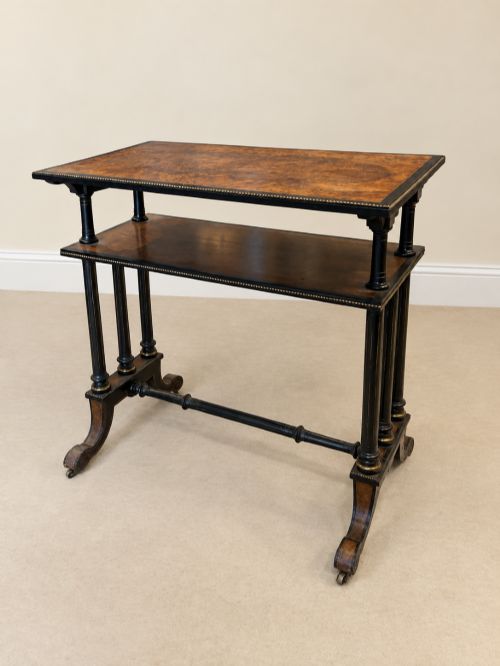
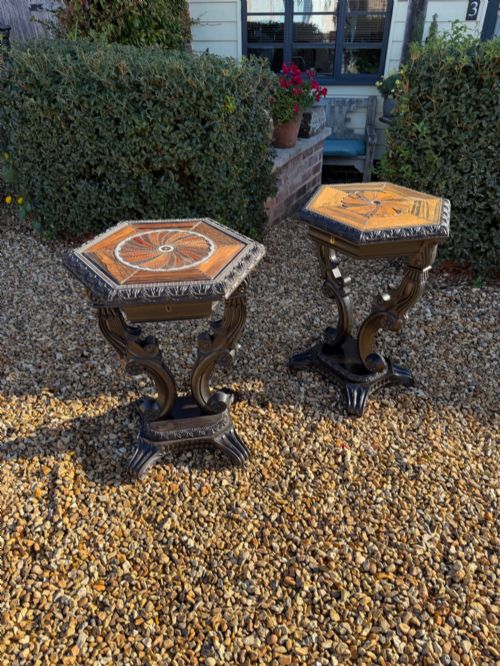
Forms vary from octagonal occasional tables to trifold handkerchief tables and étagères. Many pieces reflect Anglo-Indian, Anglo-Ceylonese, or Aesthetic Movement styles.
Materials and construction
Cabinet makers utilised solid ebony alongside ebonised hardwoods, pairing dense dark timber with lighter contrasting woods like boxwood. Workshops often incorporated burr walnut, burr thuya, and oak as foundational or secondary materials.
Construction techniques involved intricate hardwood inlay, parcel gilding, and detailed hand carving, particularly in Anglo-Indian and Ceylonese examples. Drop leaves, folding mechanisms, and trifold designs required precise joinery to ensure stability.
Victorian Ebony Side Tables Retail Price Guide 2026
Typical asking prices for victorian ebony side tables among the pieces listed under this phrase on Sellingantiques today, from the lower quarter to the upper quarter. They describe what is for sale here now, not the wider market.
Listings feature nineteenth-century pieces incorporating ebony, burr walnut, oak, and specimen woods across various colonial and European design movements.
Evaluating the pieces
The distinction between standard and finer examples rests on the depth of hand carving and the precision of the hardwood inlay. Finely executed pieces display sharp details in carved borders and seamless joints between contrasting timbers.
Condition of the polished surface and integrity of secondary woods like burr walnut or oak influence the overall standard. Pieces retaining their original brass fittings and stable folding mechanisms demonstrate superior original craftsmanship.
The Victorian Ebony Side Tables Glossary
- Ebonised
- Wood treated to imitate the dark, dense appearance of true ebony. This technique allowed makers to use domestic timbers like beech or oak while achieving a formal dark finish.
- Anglo-Indian
- Furniture produced in the Indian subcontinent during the British colonial period, often combining traditional local carving with European forms. These pieces frequently feature dense exotic hardwoods.
- Aesthetic Movement
- A late nineteenth-century design style emphasising visual beauty over narrative content. Furniture from this movement often highlights contrasting materials such as ebony and brass.
- Etgère
- A piece of furniture consisting of open shelves for displaying small objects. Victorian examples in ebony and burr walnut serve both decorative and functional purposes.
- Parcel Gilt
- Partially gilded with gold leaf or paint. This treatment highlights specific carved details or mouldings against a dark ebony background.
Victorian Ebony Side Tables: Frequently Asked Questions
What is an ebony side table?
An ebony side table is a nineteenth-century small table constructed from solid ebony or ebonised wood, designed for occasional use in a drawing room or parlour.
These pieces often feature inlaid borders, drop leaves, or carved supports reflecting Victorian, Aesthetic Movement, or colonial styles.
How do I identify Victorian styles?
Victorian furniture styles span from mid-century revival designs to late-period Aesthetic Movement and Arts and Crafts pieces. Look at the secondary woods, inlay patterns, and overall silhouette to place a table within the nineteenth century.
Anglo-Indian and Ceylonese examples display distinct hand-carved floral or geometric motifs not typically found in standard domestic British production.
Where were these tables used?
These tables served various functions in nineteenth-century homes, acting as surfaces for writing, holding lamps, or displaying ornaments. Folding card tables and trifold handkerchief tables were brought out for parlour games and entertaining guests.
Smaller occasional tables and étagères were easily moved around a room to suit the daily activities of the household.
How should I care for ebony wood?
Maintain ebony and ebonised surfaces by keeping them away from direct sunlight and extreme temperature fluctuations, which can cause timber to split or warp. Dust regularly with a soft, dry cloth and avoid applying modern silicone polishes.
Natural wax applied sparingly helps preserve the sheen of polished exotic hardwoods without building up a heavy residue.