
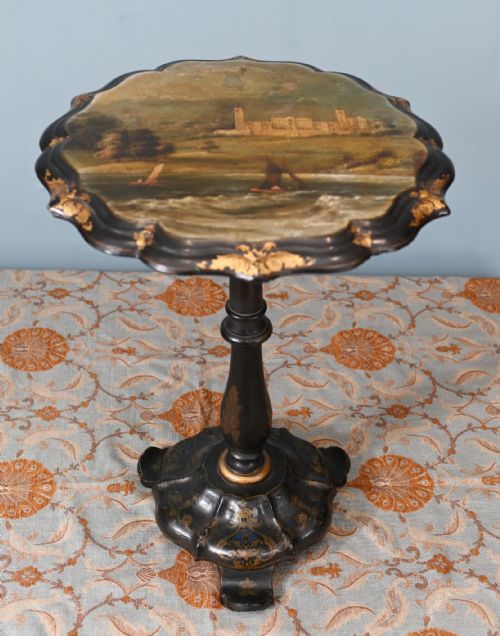
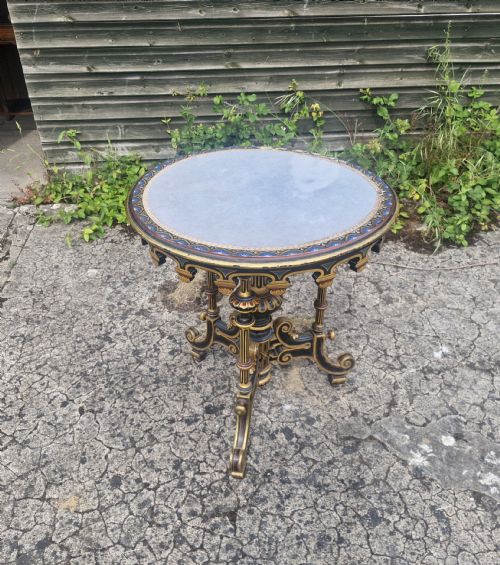


Black Ebonised Accent Table
A black ebonised accent table brings dark, striking contrast to a room through varied Victorian, Edwardian, and Art Deco forms.
Black Ebonised Accent Table
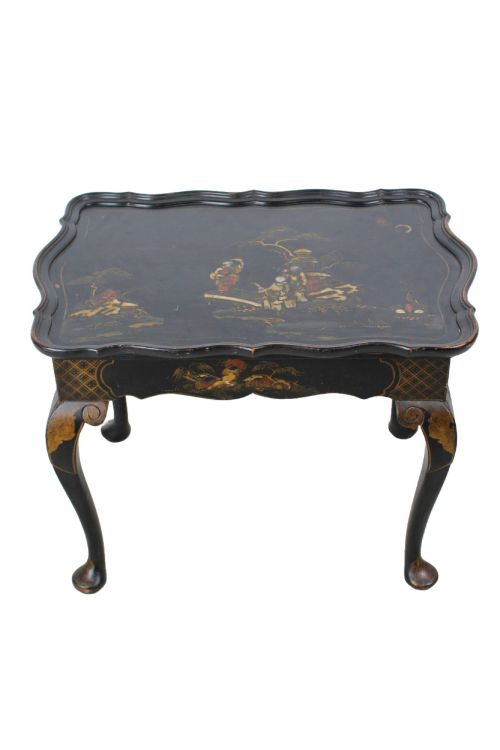
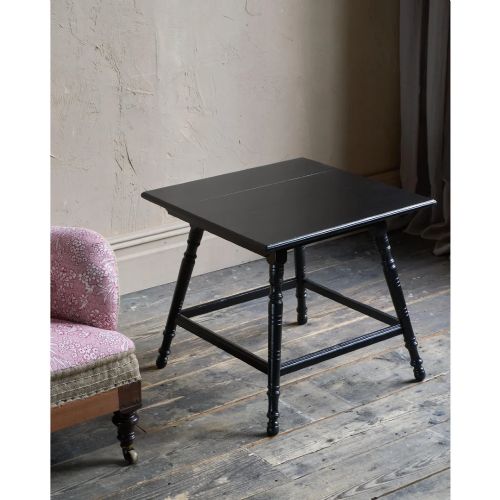
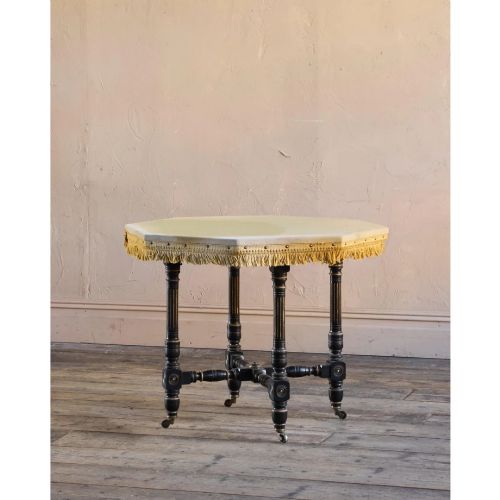
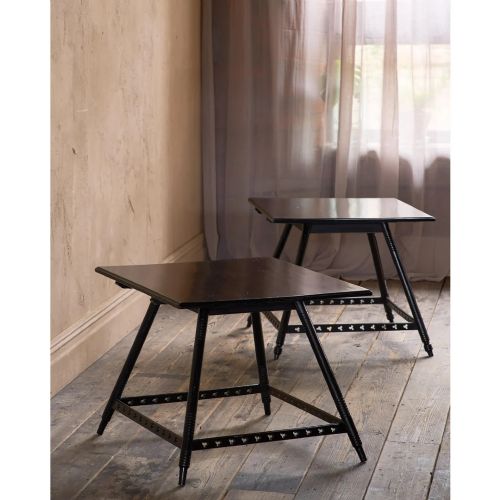
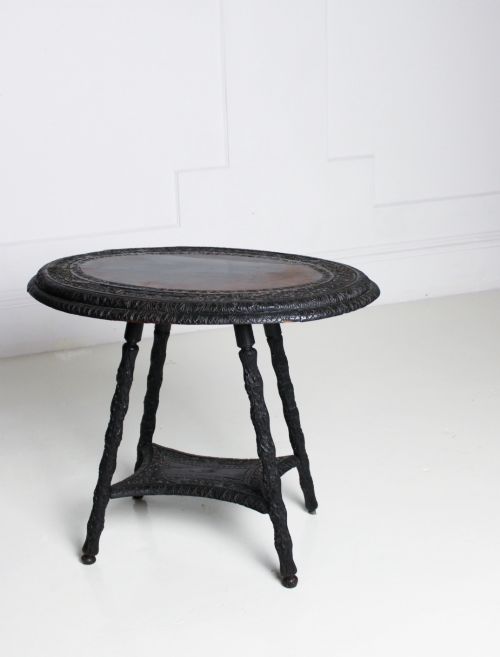
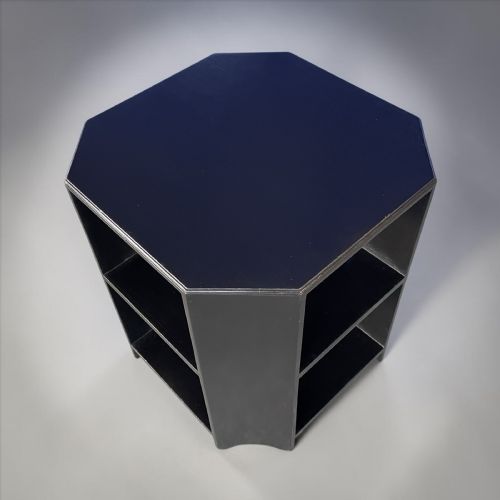
A black ebonised accent table encompasses occasional, side, console, and centre tables originating from the nineteenth and early twentieth centuries. These pieces emerge in diverse stylistic manifestations, including Victorian Aesthetic Movement designs, Edwardian Chinoiserie, and Art Deco interpretations.
Makers utilised these dark finishes across functional domestic formats ranging from two-tier rectangular surfaces and Sutherland tables to pedestal stands and tray top coffee tables. The selection here reflects varied international influences, incorporating French, Dutch, Anglo-Indian, and Japanese decorative vocabularies.
Materials and Construction
Wood surfaces receive an ebonised treatment to imitate costly ebony, frequently complemented by paint, lacquer, and parcel gilt highlights. Artisans combined ebonised hardwood and elm with contrasting decorative elements such as bone inlay, marquetry, and brass mounts.
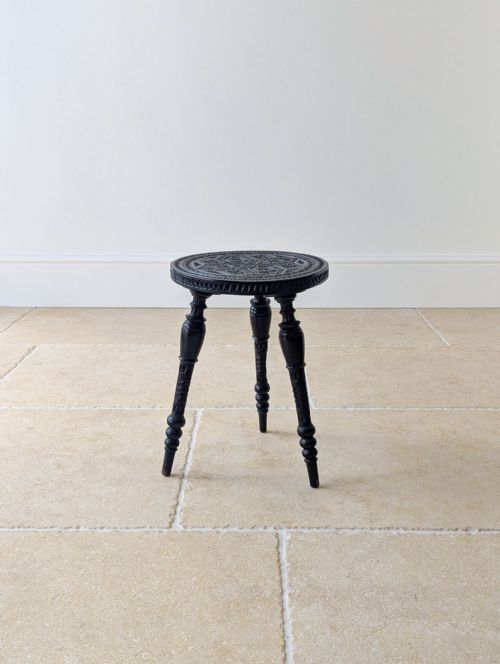
Construction techniques span from chip-carved geometric details to intricate hand-painted Chinoiserie and Boulle-work. Structural forms range from solid timber builds to multi-tiered occasional tables and tripartite bases.
Materials span ebonised hardwood, solid ebony, marble, brass, and hand-painted lacquer.
Design and Execution
Quality rests upon the crispness of the carving, the precision of the joinery, and the integrity of the ebonised finish. Pieces displaying documented workshop origins or sophisticated marquetry and bone inlay demonstrate superior craftsmanship.
The sophistication of surface decoration distinguishes finer examples, whether through delicate hand-painted motifs, gilt detailing, or complex lacquer work. Structural stability across multi-tiered surfaces and leg junctions further separates standard production from exceptional execution.
Hindley and Sons·Bertram and Son·Jenks and Woods
The Black Ebonised Accent Table Glossary
- Ebonised
- Wood treated with stain or paint to resemble solid ebony. This dark finish gained widespread popularity during the Victorian and Aesthetic periods.
- Aesthetic Movement
- A late nineteenth-century design style emphasising visual beauty over narrative content. Pieces from this movement often feature ebonised surfaces with minimalist or Japanese-inspired geometry.
- Chinoiserie
- European decorative style reflecting Chinese artistic traditions. These tables typically display hand-painted or lacquered motifs depicting figures, landscapes, or floral patterns.
- Sutherland table
- A narrow drop-leaf table with hinged leaves supported by swinging legs. This clever space-saving form folds flat when not in use.
- Boulle-work
- Elaborate marquetry incorporating tortoiseshell and brass. This technique appears on select decorative tables within the selection.
Black Ebonised Accent Table: Frequently Asked Questions
What is an ebonised table?
An ebonised table is a wooden item of furniture finished with a dark stain or black paint to emulate solid ebony. This technique provided a dramatic dark surface popular across the nineteenth and early twentieth centuries.
Such tables appear in numerous forms including occasional, side, and centre formats, often enriched with gilding, paint, or inlay.
How do I date a black table?
Dating relies upon observing construction methods, timber choices, and stylistic markers corresponding to periods like the Victorian era or the Art Deco movement. Aesthetic Movement examples often display specific geometric lines from the late nineteenth century.
Examining secondary woods, joinery, and surface wear helps clarify the manufacturing timeframe of each piece.
Where were these tables placed?
These accent pieces served versatile functions throughout historic homes as lamp tables, bedside surfaces, or plant stands. Smaller occasional and gypsy tables moved easily around drawing rooms to hold decorative objects or drinks.
Console and centre tables occupied more permanent positions against walls or in the middle of principal rooms.
How do I care for ebonised wood?
Maintenance requires gentle dusting with a soft, dry cloth to protect the dark finish and any delicate painted or gilded details. Avoiding moisture and direct sunlight preserves the integrity of the ebonised surface over time.
Occasional application of appropriate furniture wax keeps timber conditioned without harming historic polishes.