


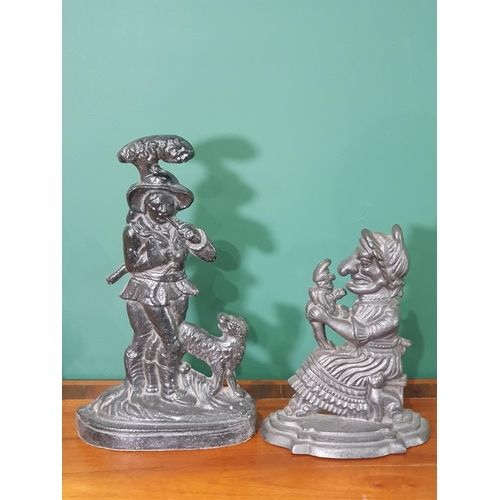


Black Door Porter
These black door porter pieces are heavy iron keeps designed to hold heavy doors open with authority.
Black Door Porter
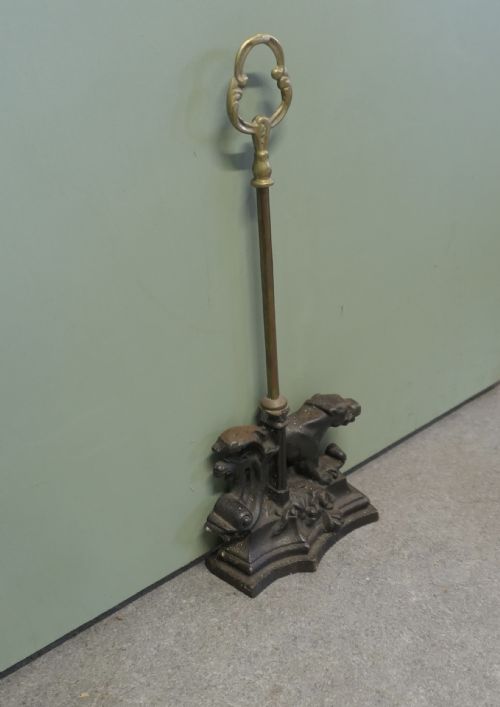
A black door porter is a heavy utilitarian weight designed to keep interior doors stationary in draughty hallways and reception rooms. Buyers searching this phrase encounter substantial iron pieces originating primarily from the Victorian and Edwardian eras, alongside earlier Regency examples.
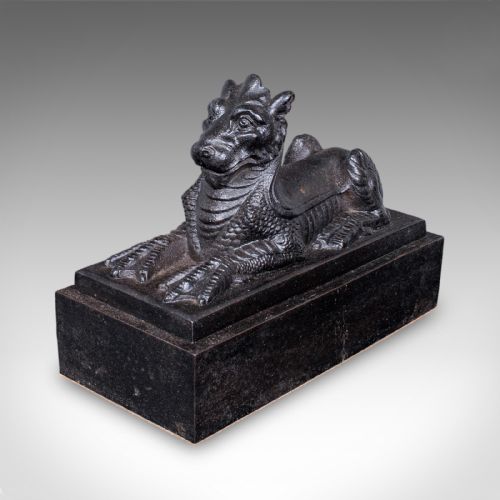
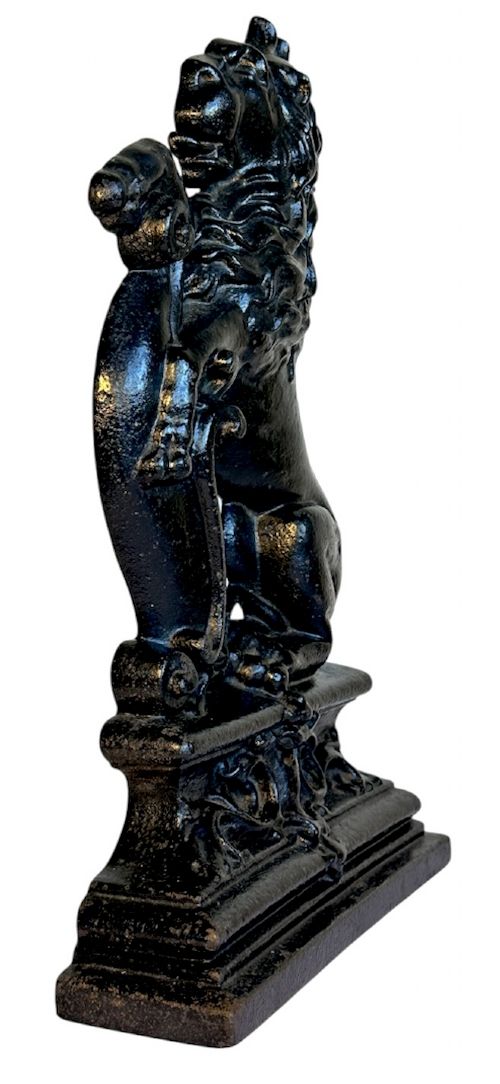
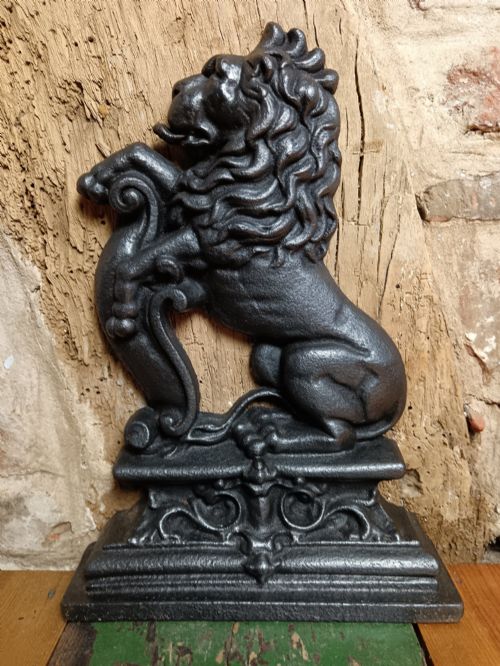
The forms span domestic animal subjects like retrievers, border collies and saddled horses, alongside heraldic guardian lions, mythological creatures and figures such as Lord Nelson or Mr Punch. Many survive in painted finishes or plain cast metal, reflecting English country house utility.
Most examples date from the nineteenth century, including specific periods around 1880 and 1890 to 1920, and function equally as robust door stops and decorative room accents.
What varies in quality
The crispness of the original casting separates simpler pieces from those with finely rendered facial expressions and detailed musculature on animal subjects such as lions and dogs. Sharper mould work ensures the character of figures like Mr Punch or Lord Nelson remains distinct.
The preservation of original painted surfaces contributes significantly to the character of a piece, while older Regency and Victorian examples demonstrate superior historical weight and casting depth compared to later Edwardian production.
Materials across these listings are strictly cast iron, often enhanced with paint, spanning the Regency, Victorian and Edwardian periods.
The Black Door Porter Glossary
- Cast iron
- A strong, heavy alloy of iron and carbon poured into moulds to create solid objects. It provides the essential weight needed for door porters.
- Egyptian revival
- A nineteenth-century design style incorporating motifs from ancient Egypt. Pieces in this style often depict figures like the sphinx.
- Regency
- A British architectural and decorative style period spanning the early nineteenth century. Pieces from this era often display classical restraint and formal detail.
- Victorian
- The period of the reign of Queen Victoria, spanning the mid to late nineteenth century. Most domestic door porters originate from this era of industrial casting.
Black Door Porter: Frequently Asked Questions
What is a door porter?
A door porter is a heavy metal weight used to prop interior doors open. These pieces rely on gravity and substantial mass to prevent doors from swinging shut in draughty rooms.
Historically positioned in hallways and grand reception rooms, they combined practical utility with decorative character ranging from domestic animals to heraldic figures.
How do I date a cast iron doorstop?
Dating relies upon stylistic cues, casting characteristics, and subject matter associated with periods like the Regency or Victorian eras. Examining the wear on the iron base also offers clues to age.
Earlier nineteenth-century examples often feature sharper casting details and heavier mass, while Edwardian pieces sometimes display refined domestic animal forms like retrievers.
Where were door porters used?
They were utilised throughout large English country houses and town residences to manage heavy wooden doors. Their primary function was keeping doors open in high-traffic corridors.
Because they sat directly on the floor in public spaces, makers designed them as decorative ornaments as well as functional tools.
Are these doorstops made of iron?
The pieces recorded here are constructed from cast iron, providing the dense weight necessary for holding doors. Some examples feature painted surfaces to highlight the figural details.
This material choice ensured durability across decades of daily domestic use in busy hallways.