
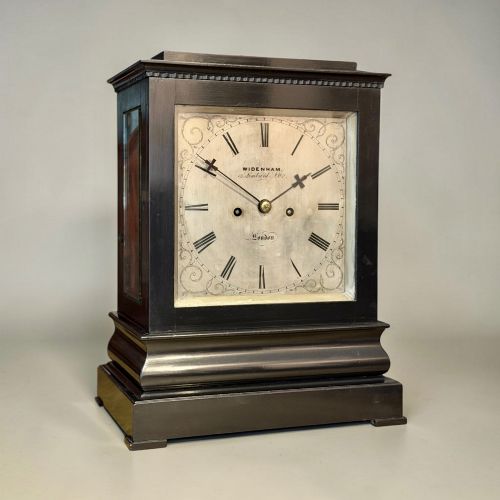
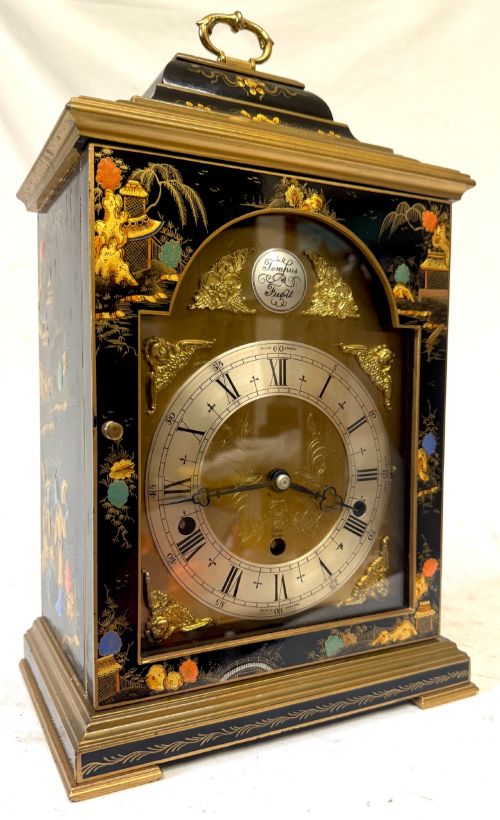
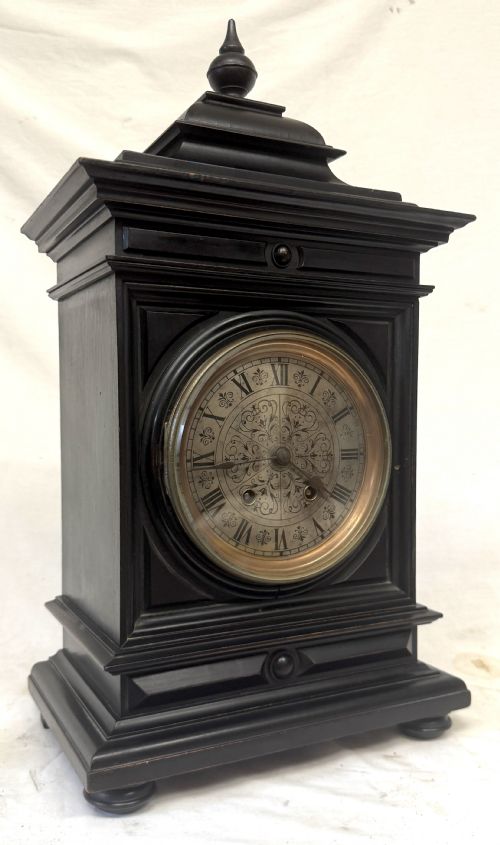
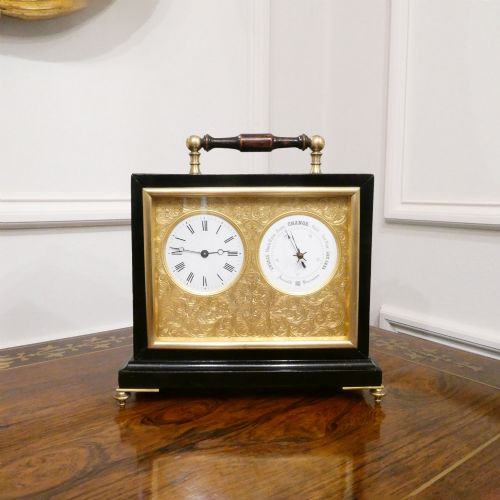
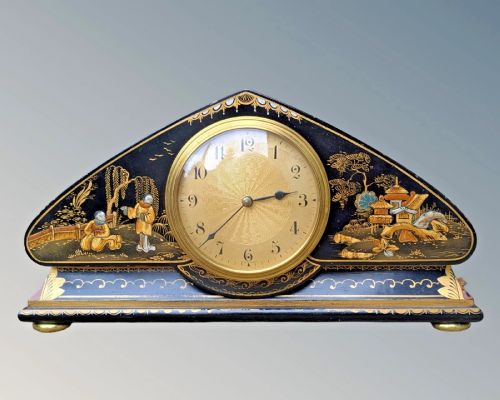
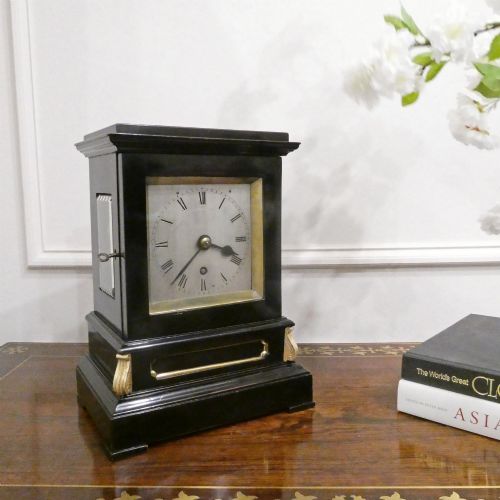
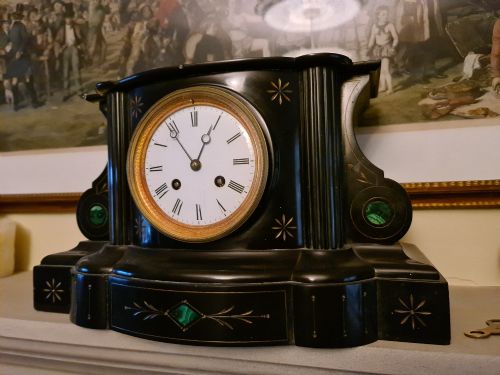


Black Dial Mantel Clock
A black dial mantel clock anchors a room with quiet authority, offering a traditional timepiece shaped from slate, marble, or ebonised wood.
Black Dial Mantel Clock
A black dial mantel clock brings together functional timekeeping and sculptural presence, appearing frequently in Victorian slate, marble, and ebonised wood forms. These pieces range from compact library clocks to large bracket clocks and architectural urn designs.
The selection centres on nineteenth-century examples alongside eighteenth-century bracket clocks and twentieth-century interpretations. Makers and retailers from London and the provinces shaped these objects across diverse stylistic movements.
Victorian marble and slate versions dominate the available forms, often featuring contrasting dial metals and classical proportions. Buyers encounter everything from simple drumhead clocks to elaborate musical and calendar movements.
How they were made
Cases combine heavy structural materials such as black slate, marble, and ebonised wood with polished brass, ormolu, and glass components. Masons and cabinetmakers shaped stone and timber into architectural pediments, columns, and break-arch profiles.
Dials employ enamel, silvered metal, or brass plates marked with Roman or Arabic numerals, framed by bevelled glass bezels. Movements utilise fusee, spring-driven, or pendulum mechanisms, occasionally incorporating striking trains, chimes, or perpetual calendars.
Listings feature periods spanning the seventeenth century through to the Art Deco era, with a strong presence of Victorian slate and marble designs.
What varies in quality
The sophistication of the movement and the integrity of the housing determine the standing of an individual clock. Heavier stone cases with crisp inlaid marble, undamaged brass mounts, and signed mechanical movements occupy the upper tier of the range.
Proportion and finishing separate standard production pieces from fine workshop examples. Original dials, well-executed ebonising, and balanced architectural detailing indicate superior craftsmanship.
Widenham of London·Lenzkirch·Sacre·Des Granges of London·D. Munsey of Cambridge·Richard Rooker·Payne & Co. London·Jaeger LeCoultre·Grimaldi and Johnson·William Withers·John Fletcher·Barraud & Lunds·John Taylor·William Smith London·Isaac Hurley
The Black Dial Mantel Clock Glossary
- Fusee
- A conical pulley used in spring-driven clocks to maintain even power as the mainspring unwinds. This mechanism ensures more accurate timekeeping throughout the running period.
- Ebonised
- Wood treated with a dark finish to imitate expensive ebony. It appears frequently on eighteenth and nineteenth-century bracket clock cases.
- Bracket clock
- A portable table clock originally designed to sit on a wall bracket or a table. These pieces often feature bell-top or inverted bell-top wooden cases.
- Verge escapement
- An early mechanical regulating device controlling the release of power in a clock movement. It works alongside a balance spring or pendulum.
- Ormolu
- Gilt bronze mounted onto furniture and clock cases for decorative contrast. The technique involves applying a gold amalgam to bronze.
Black Dial Mantel Clock: Frequently Asked Questions
Where should I place a heavy slate clock?
Heavy stone and marble clocks require a sturdy, level surface such as a mantelpiece, sideboard, or heavy chest of drawers. The substantial weight of slate and marble demands stable support to prevent vibration and ensure the pendulum swings truly.
Keep the clock away from direct heat sources and damp walls to protect the internal metal movement and the integrity of the stone or ebonised wood case.
What is the difference between a bracket clock and a mantel clock?
Bracket clocks originated as portable wooden timepieces with carrying handles, traditionally placed on dedicated wall brackets to project sound further. They typically feature ebonised or veneered cases with intricate striking or chiming trains.
Mantel clocks encompass a broader category that includes heavy Victorian slate, marble architectural forms, and desk models designed specifically to rest directly upon a fireplace shelf or piece of furniture.
How do I care for an ebonised wood case?
Dust the ebonised surface regularly with a soft, dry cloth to prevent dirt accumulation on the dark finish. Avoid using modern aerosol polishes, silicone sprays, or harsh chemical cleaners that can degrade the historic surface.
Maintain a stable room temperature and humidity level to prevent the underlying timber from expanding, contracting, or cracking over time.