


Black Desk Clock
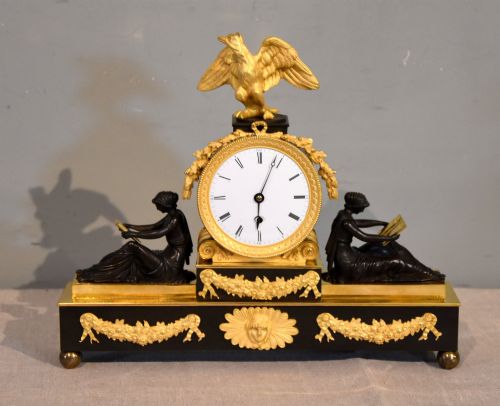
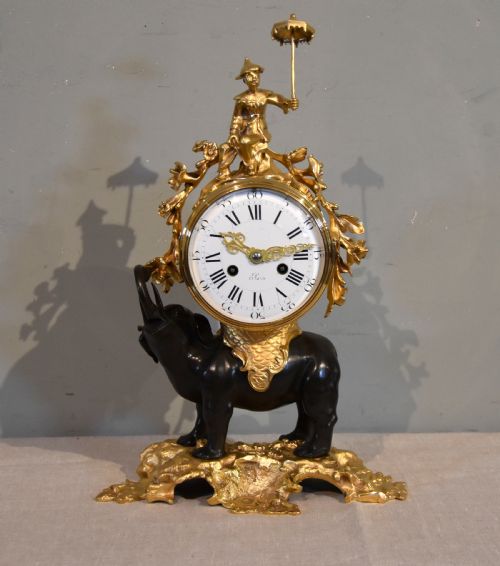
A black desk clock brings architectural weight and precision to a room, appearing in forms from heavy marble and slate to sleek chrome and bakelite.
Black Desk Clock
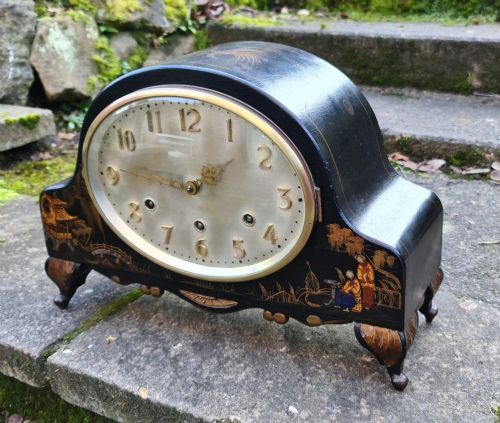
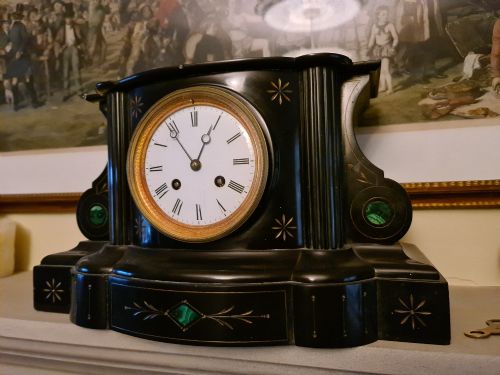
When you search for a black desk clock, you encounter timepieces designed for surfaces, ranging from compact desk versions to substantial mantel models that double as room ornaments. The examples on this page span several centuries and styles, taking shapes from severe Victorian block marble and slate drumheads to geometric Art Deco designs in chrome and bakelite.
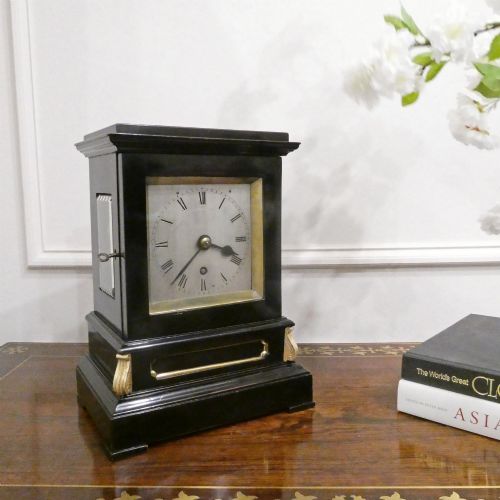
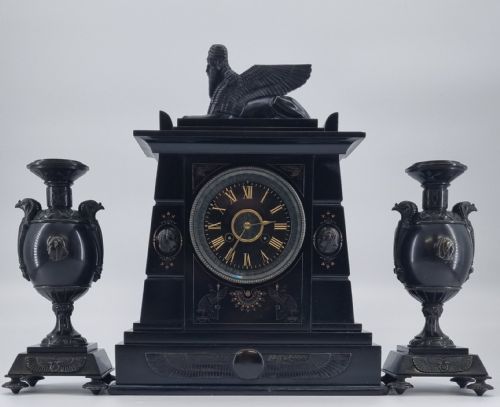
The most common iterations on this page belong to the Victorian era and the 1930s. Victorian pieces lean heavily on black slate, marble, and ebonised wood, often incorporating architectural details or Egyptian Revival motifs. In contrast, twentieth-century pieces utilise modern materials like chrome, glass, and vitrolite alongside electric or eight-day movements.
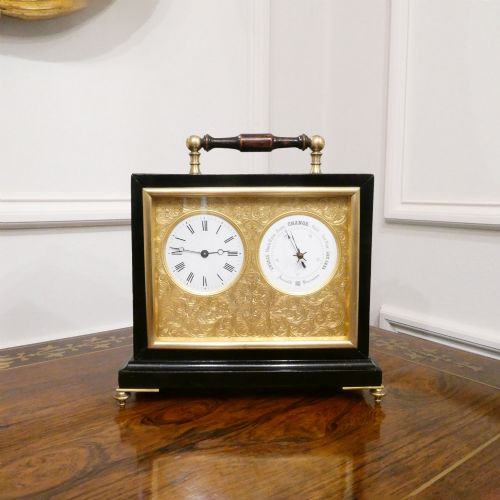
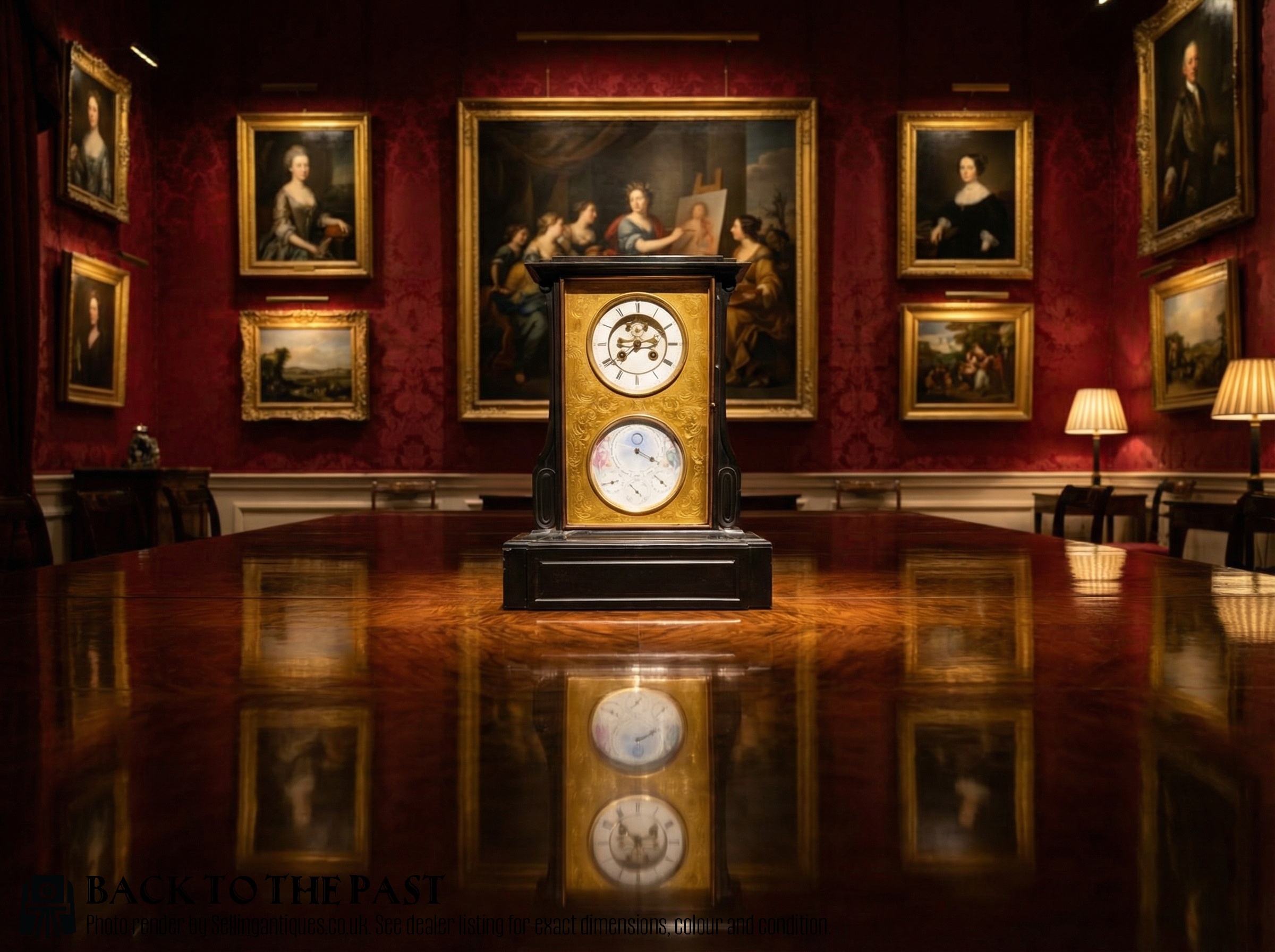
Makers and origins vary widely across the selection, featuring English, French, German, and Swiss workshops. You find domestic timepieces alongside specialised instruments such as library clocks, nautical timepieces, and desk clocks fitted with perpetual calendars or barometer combinations.
How they were made
The heavy bodies of these timepieces rely on dense quarried materials such as black slate and marble, shaped into architectural cases or drumhead silhouettes, sometimes inlaid with contrasting stones. Alternatively, makers utilised ebonised wood and carved linden wood, as seen in Black Forest examples, or cast bronze and ormolu mounts to frame the dial.
Twentieth-century production shifted toward industrial materials. Art Deco versions combine chrome plating and moulded bakelite with glass panels, creating transparent bodies or streamlined surrounds for visible mechanical and electric movements.
Certain models house electric moving ships that roll back and forth across the dial like miniature maritime voyagers.
What varies in quality
Quality rests in the material integrity of the case and the sophistication of the mechanism within. Heavy marble and slate examples demonstrate superior craftsmanship through crisp incisions, tight stone joints, and undamaged garniture sets, whereas lesser pieces show simple cast bodies with surface wear.
The movement dictates the standard of the piece, distinguishing basic thirty-hour timepieces from intricate eight-day movements, perpetual calendars, or specialised escapements. Signed dials and works by recorded makers elevate the standard far above unmarked utilitarian office clocks.
Berguer of the Strand·Achille Brocot·Sacre·P.M.Favre·Bergen and Co·Baby and Jannings·D. Munsey of Cambridge·Blangy Clockmakers·Baetens London
The Black Desk Clock Glossary
- Fusee
- A conical pulley used in clock movements to maintain even force on the gear train as the mainspring unwinds. This mechanism is typical of better quality older British clocks.
- Garniture
- A set of matching decorative ornaments, such as urns or side pieces, displayed alongside a central clock on a mantelpiece. They are frequently found in matching marble or slate.
- Escapement
- The mechanical linkage that controls the release of power in a clock and gives the tick. Different designs, such as the chaff-cutter escapement, indicate specific periods and maker preferences.
- Bakelite
- An early form of synthetic plastic used extensively in twentieth-century manufacturing. It allows for smooth, moulded cases common in Art Deco desk designs.
- Vitrolite
- An opaque pigmented structural glass used during the Art Deco period. It provides a glossy, reflective black surface for modern desk clocks.
Black Desk Clock: Frequently Asked Questions
Where should I place a heavy slate clock?
Due to their substantial weight, these clocks require a sturdy, level surface such as a heavy wooden desk, a sideboard, or a strong mantelpiece. Placing them on an uneven base can cause the pendulum to bind and the clock to stop ticking.
Ensure the furniture can support the dense marble or slate construction safely without sagging.
How do I tell a Victorian clock from an Art Deco one?
Victorian clocks are typically constructed from heavy black slate, marble, or ebonised wood, featuring classical architectural details, columns, or bronze mounts. They project a sense of nineteenth-century solidity and historical revival.
Art Deco clocks, by contrast, utilise modern materials like chrome, bakelite, and vitrolite with streamlined geometric shapes and minimal ornamentation.
Do these clocks keep accurate time?
Mechanical clocks from the nineteenth and early twentieth centuries can keep reasonable time when properly serviced and adjusted. However, variations in temperature and wear in the gear train mean they rarely match modern quartz precision.
Regular cleaning and oiling by a professional horologist are necessary to maintain their timing accuracy.