





Black Chinese Trunk
A black chinese trunk brings dark lacquer and brass hardware into a room, offering practical storage disguised as art.
Black Chinese Trunk
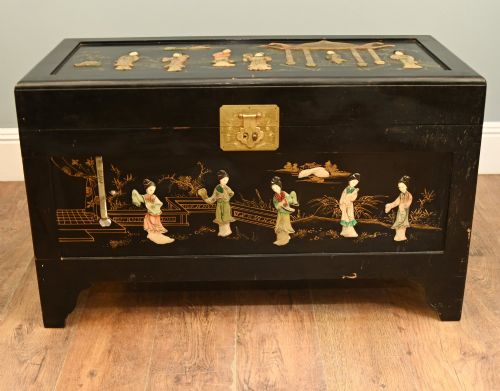
A black chinese trunk is a substantial storage piece, encompassing blanket boxes, wedding chests, and export coffers built for travel or domestic use. These items serve as functional furniture while introducing dark, decorative surfaces to an interior.
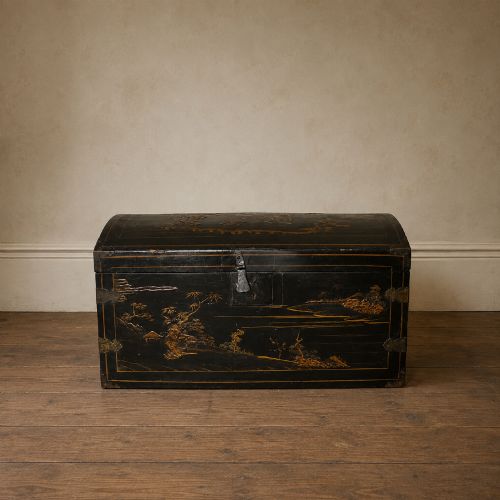
The versions most commonly met on this page span the eighteenth, nineteenth, and early twentieth centuries, including pieces made for export and those from regional Chinese traditions. Forms range from domed chests to flat-topped blanket boxes equipped with internal compartments and metal mountings.
Makers utilised various timbers and skins, applying lacquer finishes, pigment, and gilt decoration to create surfaces that withstand handling. The resulting objects function reliably as coffee tables at the foot of a bed or as standalone storage chests.
How they were made
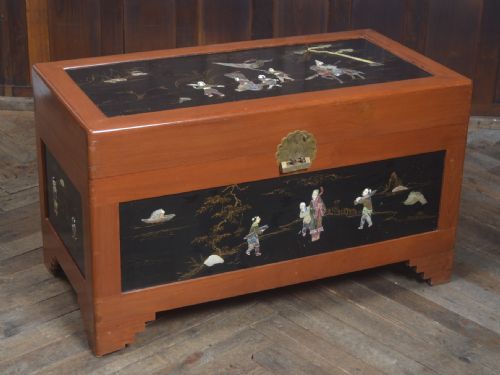
Construction relies on solid timbers and camphor wood, chosen for durability and insect resistance, joined to form rigid box structures. Artisans reinforced corners and edges with brass hardware and straps to protect the chests during transport and shipping.
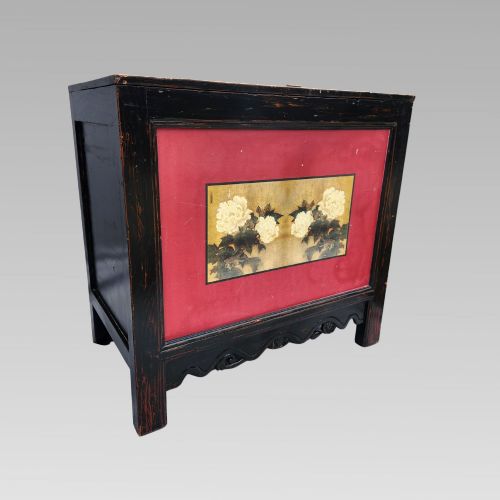
Surfaces received coats of black lacquer, sometimes paired with leather or pig skin, providing a smooth base for painted pigment and gilt decoration. Carved details and floral chinoiserie patterns were applied directly to the exterior panels, finished with protective layers.
Black Chinese Trunk Retail Price Guide 2026
Typical asking prices for black chinese trunk among the pieces listed under this phrase on Sellingantiques today, from the lower quarter to the upper quarter. They describe what is for sale here now, not the wider market.
Listings feature camphor wood, leather, and pig skin alongside traditional lacquer finishes.
What varies in quality
Quality rests in the execution of the surface decoration, where finely hand-painted gilt work and detailed chinoiserie distinguish superior examples from plain utility boxes. The crispness of carved woodwork and the weight of the brass mountings further separate standard chests from finer export commissions.
The integrity of the underlying lacquer and the preservation of original pigments determine the visual impact of each piece. Trunks retaining deep, lustrous black finishes and intact hardware hold greater presence than those with heavy modern intervention.
The Black Chinese Trunk Glossary
- Lacquer
- A durable resin finish applied in multiple layers to wood surfaces, yielding a hard, glossy black coating. This technique protects the timber beneath while offering a smooth ground for gilt and painted decoration.
- Chinoiserie
- European interpretations and adaptations of Chinese artistic traditions, often seen in painted floral and figurative motifs on furniture. Artisans in export workshops frequently incorporated these aesthetic elements to appeal to Western buyers.
- Coffer
- A heavy box or chest traditionally used for storing valuables, linens, or documents. These pieces typically feature hinged lids and sturdy structural reinforcement.
- Camphor wood
- A fragrant timber native to Asia, frequently utilised for internal storage boxes to repel moths and insects. Its characteristic scent remains detectable decades after manufacture.
- Gilt
- Application of gold leaf or powdered gold onto a surface to create decorative highlights. This technique illuminates dark lacquer panels with metallic contrast.
Black Chinese Trunk: Frequently Asked Questions
Where should I place a black chinese trunk?
These chests work well at the foot of a bed, in a hallway, or acting as a coffee table in a living room. Their dark surfaces anchor a room while providing concealed storage for bulky items.
Ensure the space allows the lid to open fully if you plan to utilise the interior storage on a daily basis.
How do I clean a lacquer trunk?
Dust the exterior gently with a soft, dry microfibre cloth to prevent scratching the delicate black finish. Avoid harsh chemical cleaners, alcohol, or excessive water.
If conditioning is necessary, consult a specialist conservator familiar with historic Asian lacquerware before applying any oils.
How can I tell the age of a trunk?
Dating relies on observing construction methods, timber types, and the wear patterns on the lacquer and brass hardware. Eighteenth and nineteenth-century examples typically show hand-forged metalwork and traditional joinery.
Twentieth-century pieces, including Republic Period items, display different material handling and machine-cut elements that distinguish them from earlier export goods.