
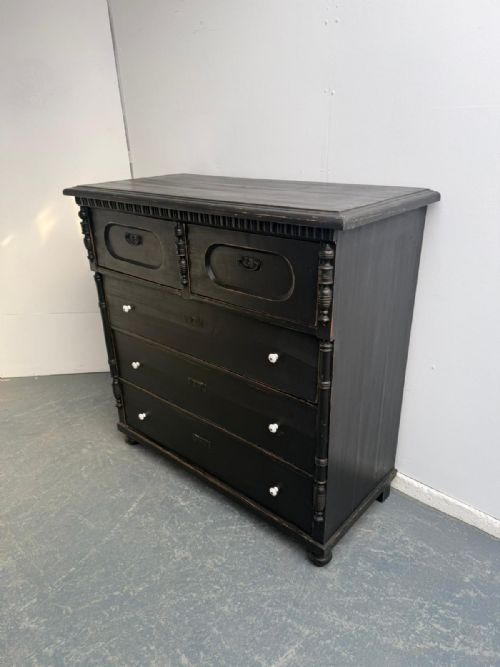


Black Chest of Drawers
A black chest of drawers brings depth and dramatic weight to a room, offering practical storage through dark painted pine, ebonised mahogany, and lacquered surfaces.
Black Chest of Drawers
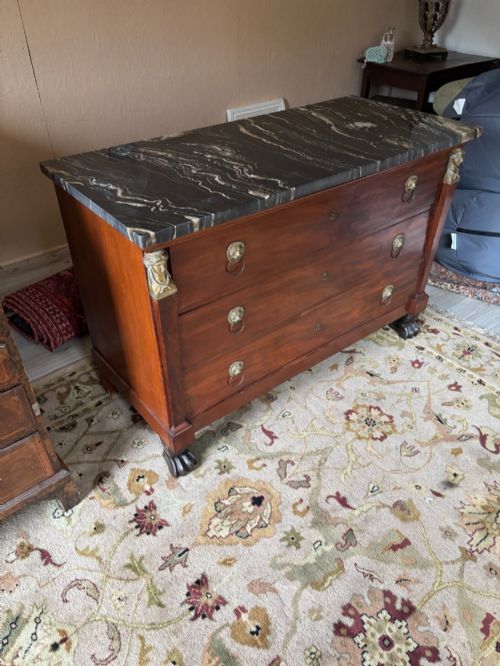
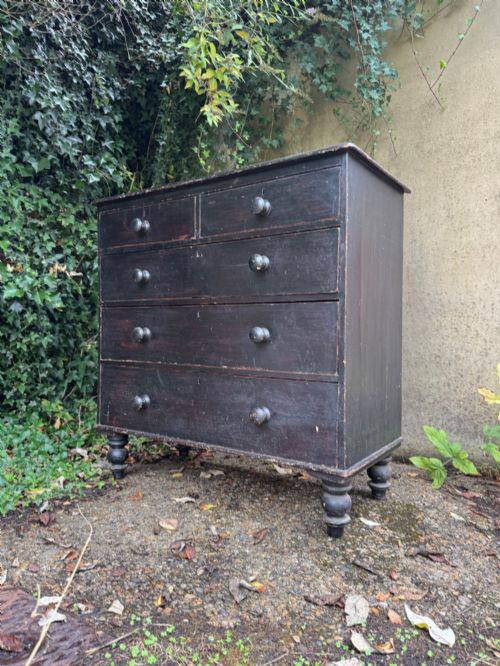
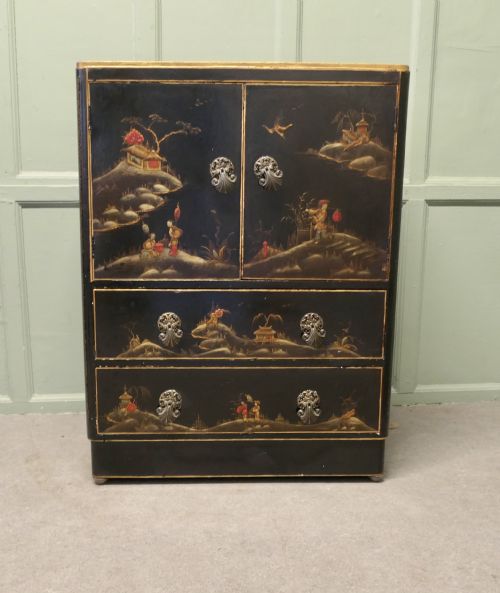
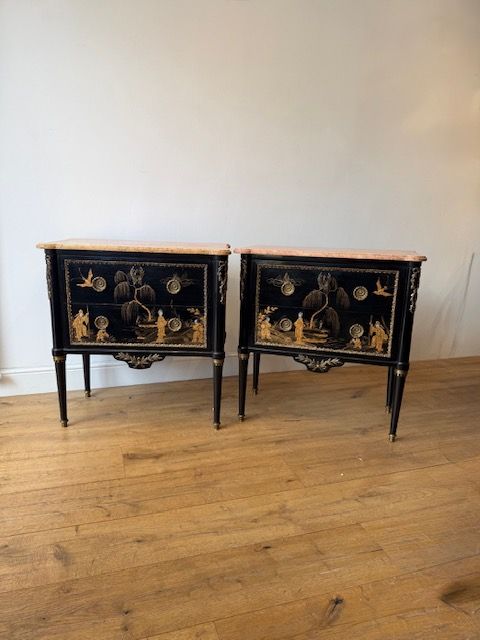
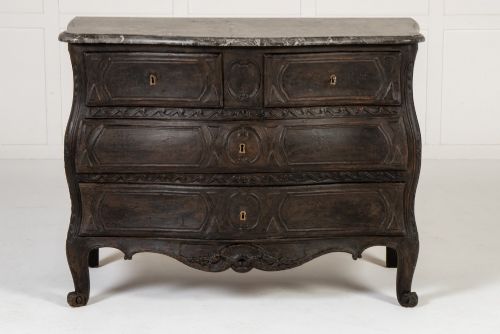
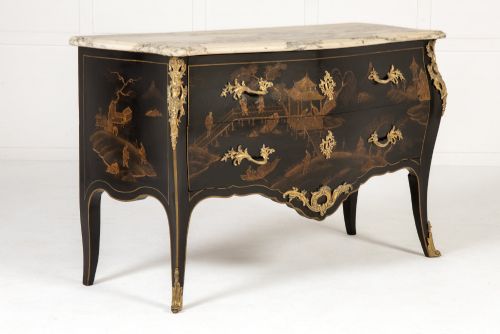
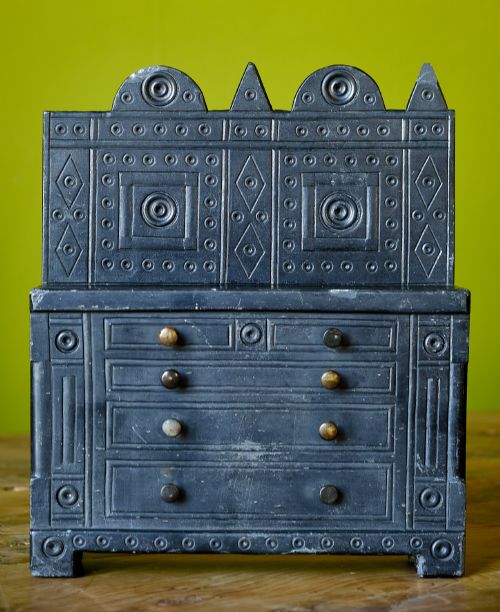
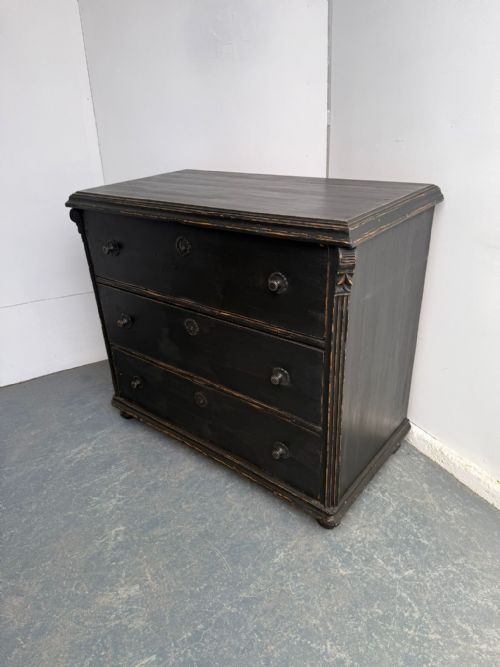
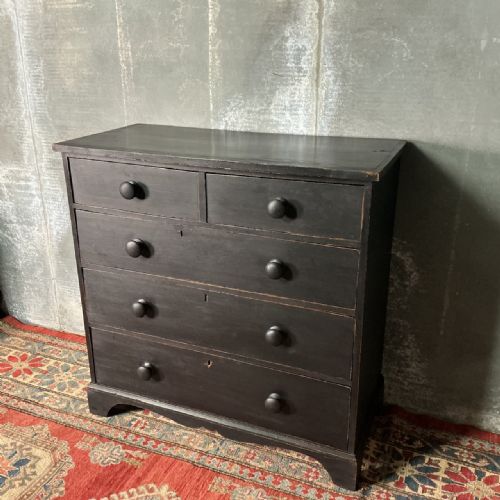
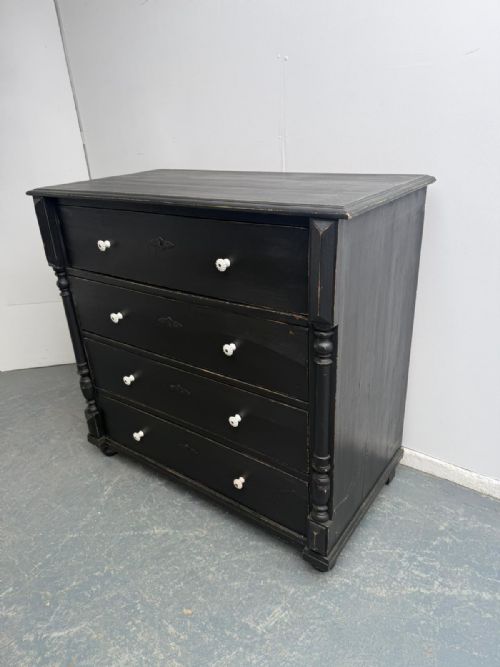
A black chest of drawers encompasses diverse forms ranging from robust 19th-century pine country pieces and Hungarian painted carcases to refined 18th-century French commodes and English ebonised bow-fronts. Buyers frequently encounter vernacular painted pine examples alongside sophisticated japanned and chinoiserie pieces adorned with gold lacquer details.
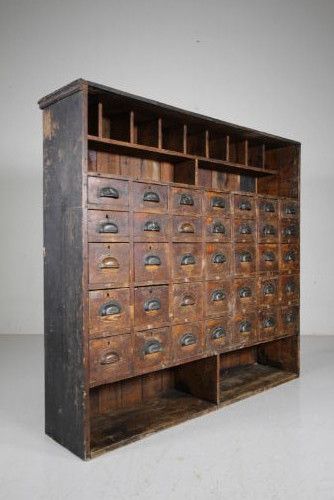
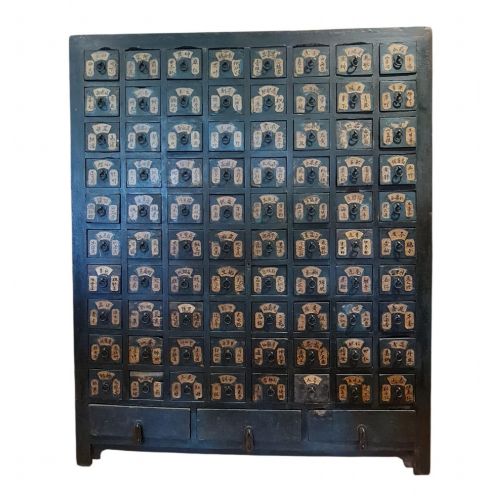
The selection extends beyond standard bedroom furniture to include specialised storage such as Japanese tansu step chests, French industrial filing cabinets, haberdashery shop units, and apothecary chests with numerous small drawers. Regional variations appear across English, French, Swedish, and Hungarian traditions, spanning centuries of cabinet-making from the 17th century through the Art Deco period.
Materials and Construction Methods
Makers constructed these pieces using solid timbers like pine, oak, mahogany, walnut, and elm, often applying black paint, ebonising, or lacquer to the exterior surfaces. Lacquered and japanned variants employ layered resin finishes, occasionally complemented by hand-painted gilt motifs in the chinoiserie taste.
Hardware plays a structural and decorative role, with brass drop handles, escutcheons, and campaign mounts fitted to drawer fronts. Heavier carcases incorporate marble tops or integrated slate elements, while regional pine items rely on traditional pegged joinery and hand-carved details.
Listings feature items from the 17th century through the 1930s, including industrial filing cabinets and apothecary chests.
Distinctions in Quality and Finish
Quality rests upon the integrity of the underlying woodwork and the execution of the surface finish, whether hand-applied paint, deep ebonising, or intricate japanning. Original painted surfaces showing honest age display greater decorative character than later repainting, while well-preserved lacquer work reveals refined detail in the gilt ornamentation.
Structural soundness in drawer construction, such as smooth movement within the carcase and original internal timber linings, separates utility pieces from finer cabinet-maker output. The survival of period brass hardware and stable joints without excessive timber shrinkage also defines the better examples.
The Black Chest of Drawers Glossary
- Commode
- A low French chest of drawers or cabinet, often featuring decorative mounts or a marble top.
- Japanning
- A European imitation of East Asian lacquerwork, created using layers of varnish and heat-cured finishes.
- Ebonised
- Wood treated with stain or paint to imitate the dark, dense appearance of ebony.
- Chinoiserie
- European decorative style employing imitated Chinese motifs, frequently seen on lacquered furniture.
- Tansu
- Traditional Japanese mobile storage cabinetry built in sections, including step chests and merchant chests.
Black Chest of Drawers: Frequently Asked Questions
How do I clean a painted black chest?
Dust regularly with a soft, dry cloth to prevent surface scratching. Avoid harsh chemical cleaners that can degrade historic paint layers.
For stubborn marks, use a damp cloth with mild soap, drying the timber immediately afterwards.
Where should I place a dark chest?
Dark furniture provides a strong visual anchor in light-filled rooms or hallways. Pair them against neutral walls to highlight the silhouette.
Ensure timber pieces are kept away from direct heat sources to prevent warping.
How do I date an ebonised commode?
Examine the timber construction methods, drawer linings, and backboards for hand-cut joints or saw marks. Hardware styles and keyhole escutcheons also offer reliable chronological clues.
French Empire and Regency pieces typically display specific neoclassical proportions.
What is a japanned finish?
Japanning is a European technique mimicking Asian lacquer through successive coats of varnish and polishing. Artisans often added raised gold or metallic decorations.
This finish appears frequently on 18th and early 20th-century decorative commodes.