
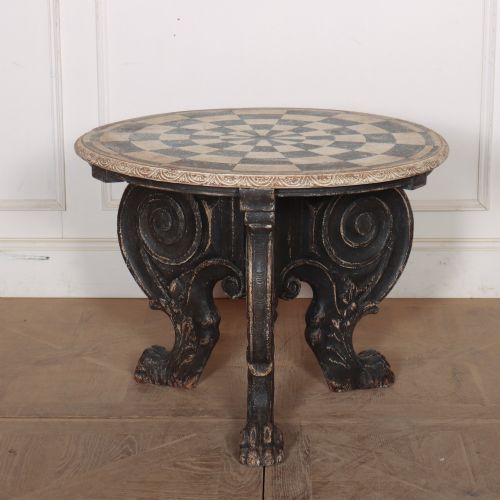


Black Carved Occasional Table
A black carved occasional table brings intricate depth and dark polish to a room, offering a versatile surface rooted in global and Victorian traditions.
Black Carved Occasional Table
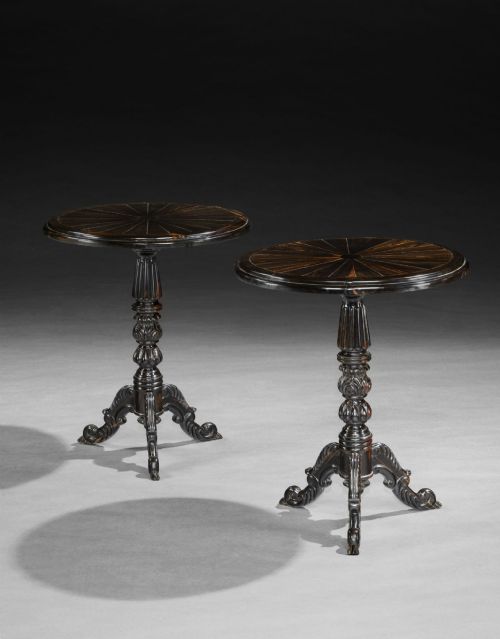
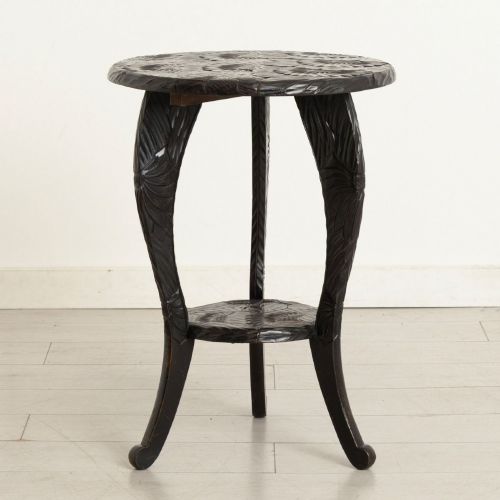
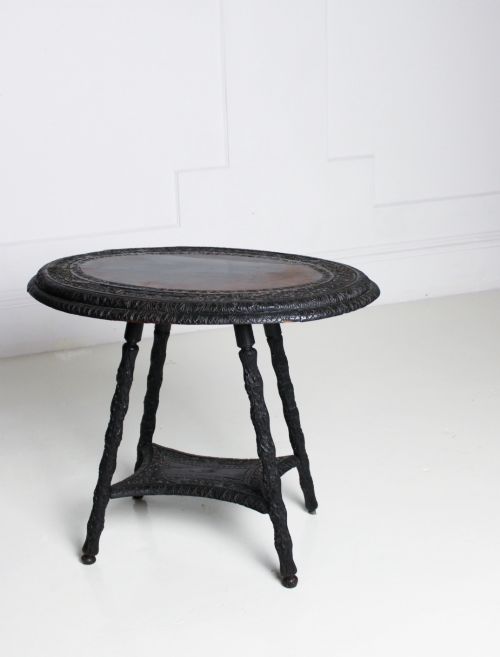
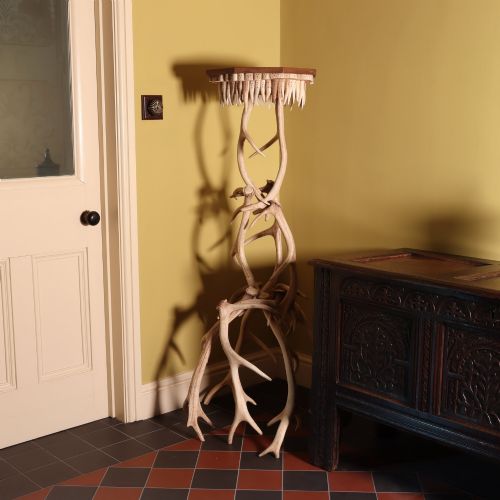
A black carved occasional table encompasses a diverse group of small, movable stands designed for display or holding objects, most frequently emerging from the nineteenth and early twentieth centuries. These pieces span from Anglo-Indian and Burmese folding forms to European Black Forest, Aesthetic Movement, and Chinese Qing Dynasty ebonised items.
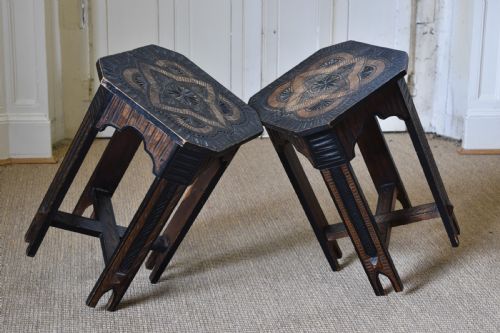
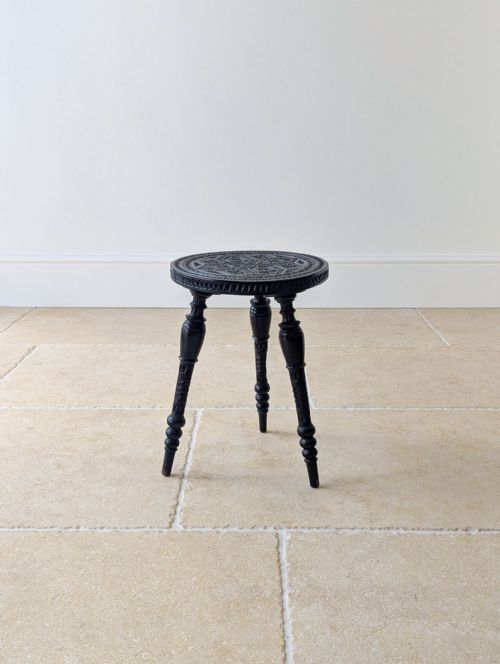
The version most commonly met on this page combines a dark or ebonised wooden structure with dense hand-carving, ranging from chip-carved geometric patterns to figurative motifs like elephants and foliage. They function practically as side, lamp, or centre tables while serving as decorative focal points.
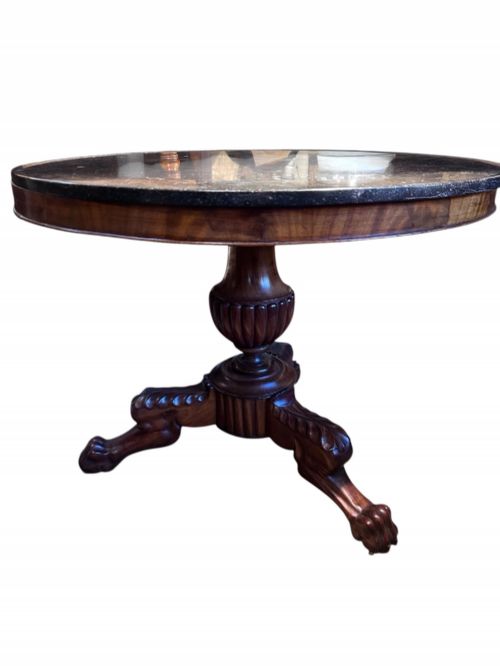
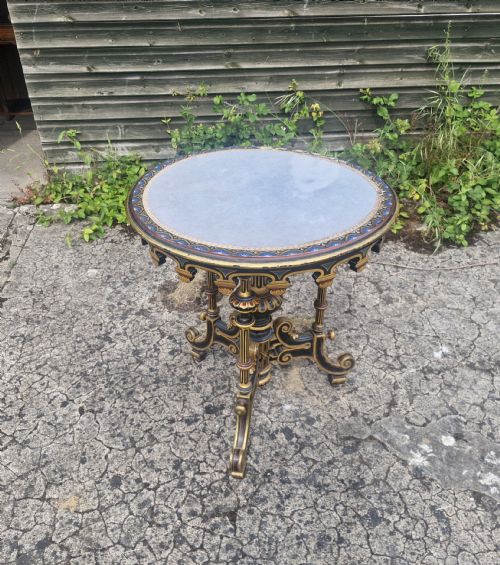
Makers and workshops across different continents adopted dark finishes and elaborate relief carving to satisfy European tastes for exotic or dramatic furnishing. Consequently, buyers encounter a rich variety of regional interpretations utilising local hardwoods, lacquer, and occasionally inset marble tops.
How they were made
Construction relies heavily on dense timbers such as walnut, oak, linden wood, and various hardwoods, alongside imported ebonised woods and lacquered surfaces. Artisans shaped these materials using hand tools to achieve deep relief carving, piercing, and chip-carving techniques.
Surfaces were frequently ebonised to imitate costlier ebony, finished with dark lacquer, or detailed with bone inlay and parcel gilding. Joinery methods varied by region, encompassing traditional European framing as well as folding mechanisms found in eastern export pieces.
Listings feature items spanning the nineteenth century through the 1930s, incorporating woods like walnut, oak, and ebonised hardwood alongside lacquer.
What varies in quality
Quality rests primarily on the crispness and depth of the hand-carving, where superior examples exhibit sharp undercutting and confident relief work rather than shallow, mechanical pressing. The selection of timber also dictates standard, with denser hardwoods and genuine ebony or quality walnut outperforming soft, plain secondary woods.
Structural integrity and the retention of original surface finishes further divide the range, as pieces retaining their early lacquer, ebonising, or intricate inlay without heavy restoration command greater appreciation. The sophistication of regional design, from restrained Aesthetic Movement lines to elaborate figurative carving, informs the relative success of each piece.
Liberty of London
The Black Carved Occasional Table Glossary
- Ebonised
- Wood finished with a dark stain or paint to imitate expensive ebony. This treatment was particularly popular during the Victorian and Aesthetic periods.
- Chip-carved
- A style of relief carving where small triangles or chips are removed from a flat wooden surface to create geometric patterns. It appears frequently on side and occasional tables from the later periods.
- Black Forest
- A term describing intricately carved wooden furnishings, often featuring naturalistic animal or foliage motifs, originating from central Europe. These pieces typically utilise linden wood or walnut.
- Aesthetic Movement
- A late nineteenth-century design style that emphasised decorative arts for their own beauty. Pieces from this movement often feature ebonised surfaces and refined geometric lines.
- Gueridon
- A small French table supported by one or more columns or figures. They frequently served as candle stands or decorative display surfaces.
Black Carved Occasional Table: Frequently Asked Questions
Where should I place an occasional table?
These compact pieces suit spots beside seating, in hallways, or as lamp stands where a small surface is useful.
Their dark tones and detailed carving allow them to anchor empty corners or sit beside larger upholstered furniture without dominating the floor plan.
How do I care for ebonised wood?
Dust regularly with a soft, dry cloth and avoid placing the table in direct sunlight or near heat sources that might dry the wood.
Applying a minimal amount of appropriate wax polish helps maintain the dark lustre without building up heavy residues on carved details.
Are these tables sturdy enough for daily use?
Most occasional tables were built for light duties like holding books, lamps, or decorative objects rather than heavy weight.
Folding versions and intricate carved stands require careful handling when moved to ensure joints and hinges remain secure.
How do I distinguish regional styles?
Look to the specific motifs and carving techniques, such as animal figures on Black Forest items or dense foliage on Anglo-Indian pieces.
Materials also offer clues, distinguishing European walnut and oak from eastern hardwoods, lacquers, and inlaid bone.