

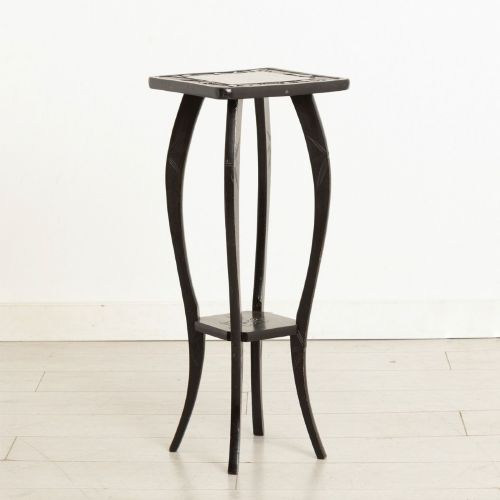
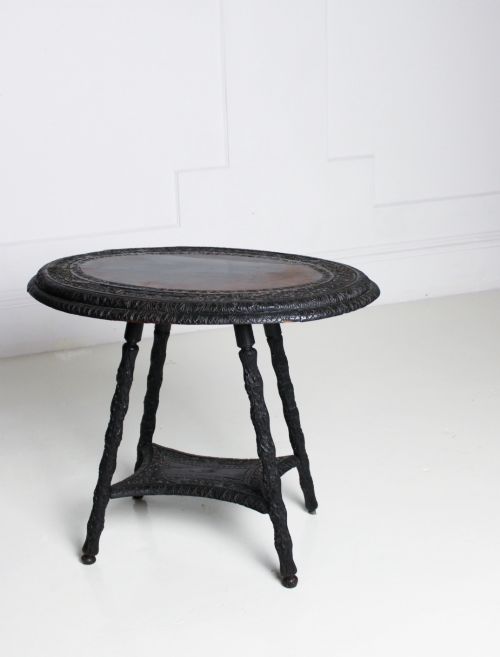
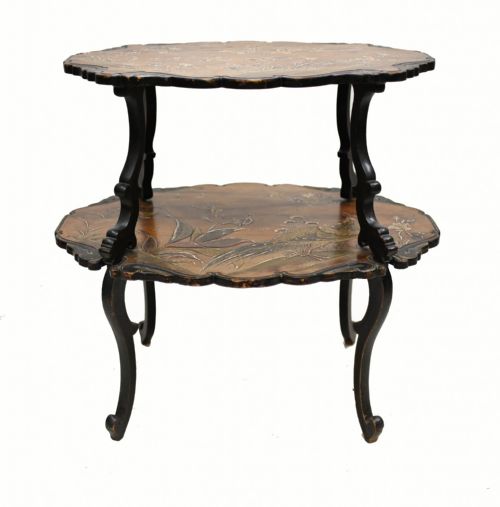
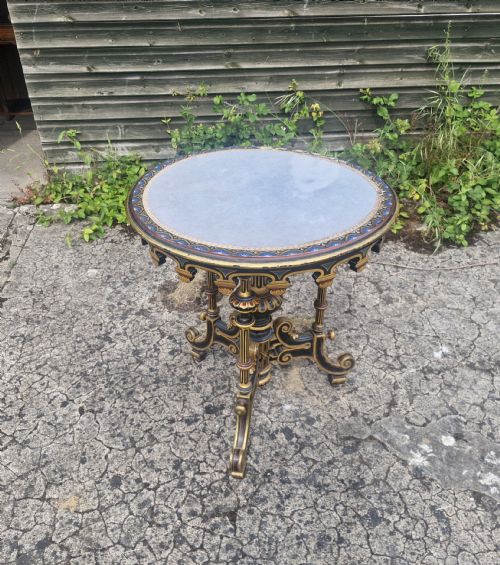
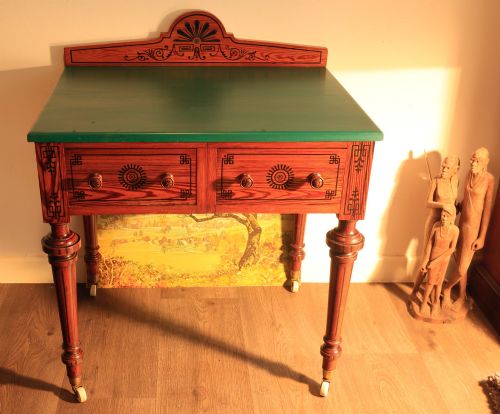

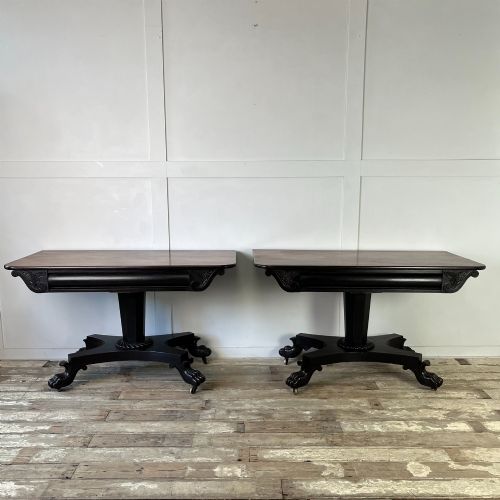


Ebonised Carved Side Table
An ebonised carved side table brings dark, striking surfaces and intricate detail into a room, drawing the eye with rich historic character.
Ebonised Carved Side Table
An ebonised carved side table is a compact surface built to stand against a wall or beside seating, finished in a dark, blackened coat that mimics costly ebony. When searching for an ebonised carved side table, you encounter pieces spanning the nineteenth century, including Victorian, Regency, and Aesthetic Movement designs.
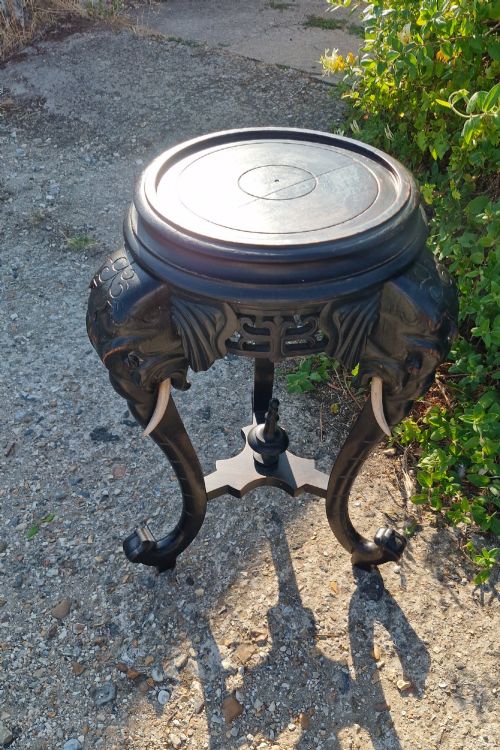
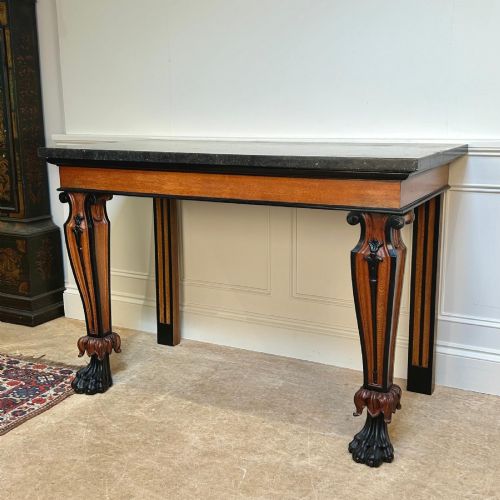
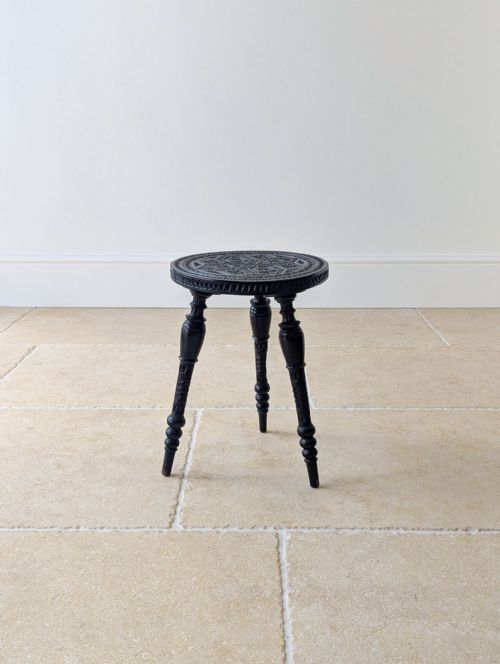
The forms vary widely across the selection, ranging from occasional and console tables to plant stands and lamp tables. Many examples incorporate distinct stylistic influences such as Anglo-Indian, Moorish Revival, and Japonisme, often featuring deep hand-carved motifs like elephants, dragons, or geometric patterns.
How they were made
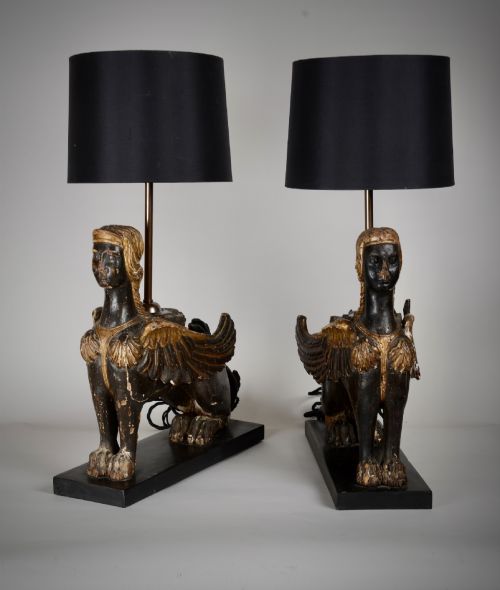
Cabinet makers utilised dense timbers such as hardwood, walnut, mahogany, and birch, applying a dark ebonising stain or japanning finish to achieve a uniform, ink-black surface. This treatment provided a stark, dramatic ground for elaborate chip-carving, incised detailing, and occasional parcel gilt highlights.
Construction techniques combined traditional joinery with surface embellishments like brass inlays, marble inserts, and cast brass fittings. Makers employed skilled hand-carving to render figurative elements, foliage, and intricate fretwork directly into the wood before final polishing.
Listings feature pieces spanning the nineteenth century, including Regency, Victorian, and early twentieth-century examples.
What varies in quality
The standard of carving sets the superior examples apart, where deep, crisp relief work shows the hand of a skilled artisan rather than mechanical replication. Superior pieces maintain sharp contours in the wood ornamentation without softening of the edges through wear or heavy over-finishing.
The choice of secondary woods and the precision of the ebonised finish dictate the overall integrity of the piece. High-grade construction shows careful selection of timbers underneath the black finish, alongside well-fitted inlays, stable joints, and authentic period hardware.
Liberty & Co.·Lamb of Manchester·Daniel Cottier·H Ogden of Manchester
The Ebonised Carved Side Table Glossary
- Ebonised
- Wood treated with a stain, dye, or paint to imitate natural ebony. This dark finish gained immense popularity during the Victorian and Aesthetic periods for creating high-contrast interiors.
- Japanning
- A European imitation of East Asian lacquer work. Artisans built up layers of varnish and paint, frequently curing them by heat to produce a glossy, dark surface.
- Console table
- A table designed to stand against a wall, traditionally supported by wall brackets or console legs. These pieces often served as display surfaces in hallways and formal rooms.
- Occasional table
- A small, movable table intended for intermittent use around a room. Victorians used these versatile pieces for holding lamps, books, or decorative objects.
Ebonised Carved Side Table: Frequently Asked Questions
What is an ebonised carved side table?
An ebonised carved side table is a small accent table featuring a dark, blackened wood finish and decorative hand-carving. These pieces date primarily from the nineteenth century and reflect varied design movements.
They serve practical purposes as lamp stands, plant pedestals, or serving surfaces while adding strong visual contrast to a room through their dark surfaces.
How do I date an ebonised table?
Dating relies on examining the timber species, construction methods, and stylistic cues present in the carving and overall form. Pieces from the Victorian and Aesthetic periods often display specific motifs like bamboo turnings or geometric Moorish patterns.
Secondary woods, fixings, and the nature of the ebonised finish also provide clues to whether a piece originates from the early nineteenth century or later decades.
Where were these tables used originally?
These tables found places in drawing rooms, parlours, and hallways of nineteenth-century homes. Their compact proportions allowed them to fit easily into tight spaces or act as decorative display areas.
Larger console versions stood firmly against walls in reception rooms, while smaller occasional tables moved around to hold reading materials or small lamps.
How do I care for ebonised wood?
Ebonised wood requires gentle dusting with a soft, dry cloth to prevent scratching the dark surface. Avoid placing the table in direct sunlight or near heat sources to protect the finish from fading.
Applying a suitable microcrystalline wax periodically helps maintain the sheen of the black surface without building up excessive residue.