


Black Carved Box
When you handle a black carved box, you touch domestic history carved from dense hardwoods and styled with regional folklore.
Black Carved Box
A black carved box typically takes the form of a linden wood, walnut, or ebony receptacle designed for storage, holding everything from cigars and tobacco to jewellery and writing implements. These containers emerge frequently from nineteenth-century European and colonial workshops, spanning styles from Black Forest animal carvings to intricate Anglo-Indian reeded woodwork.
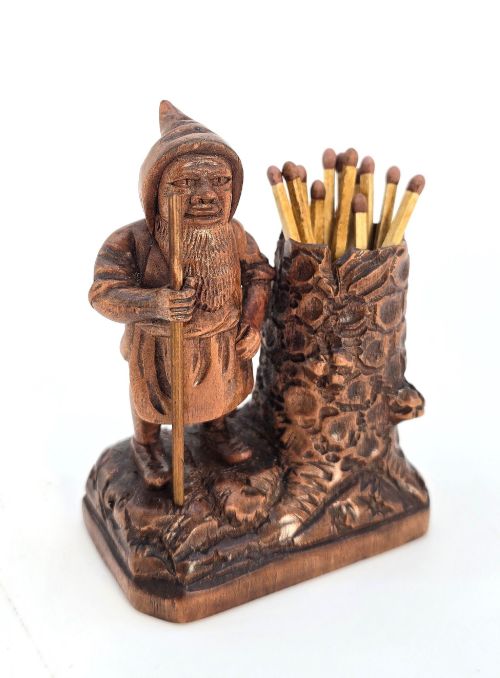
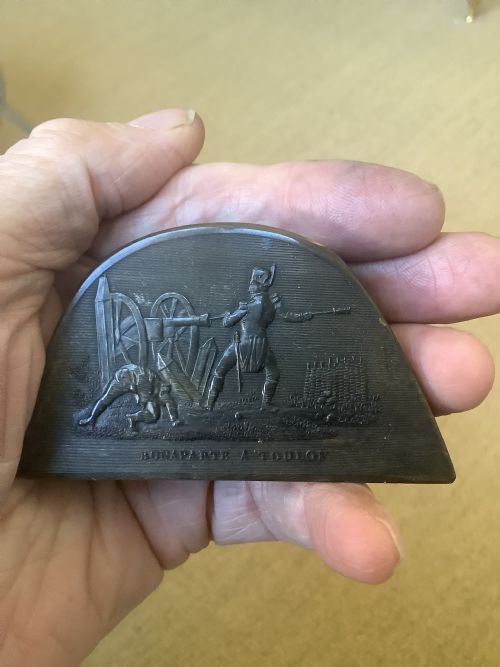
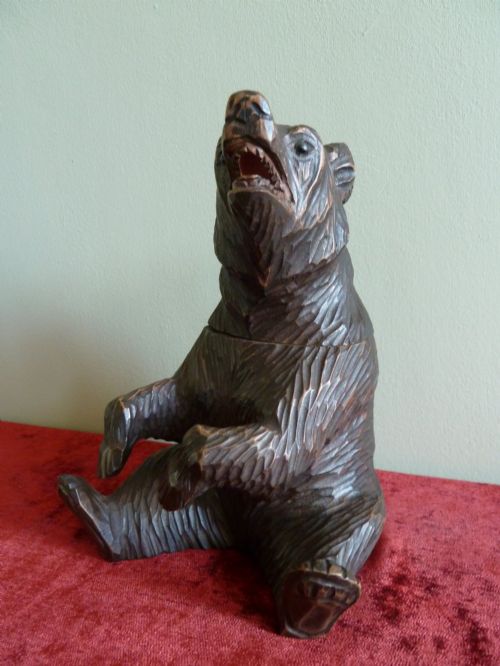
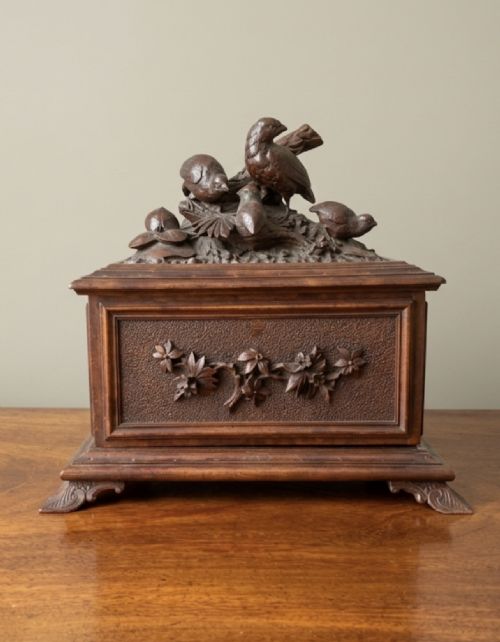
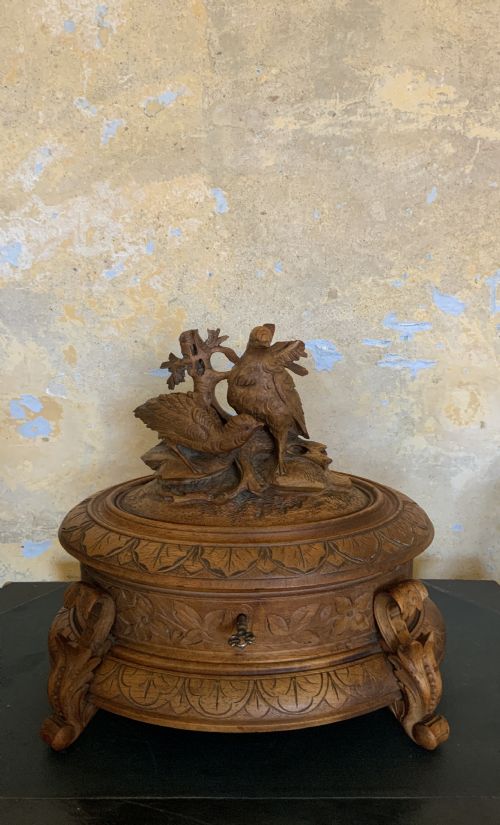
The most common versions met on this page belong to the Black Forest tradition, often rendered in dark-toned timber and shaped as bears, dogs, or caskets with hinged lids. Alongside these, buyers encounter colonial productions utilising solid ebony or lacquer, reflecting global trade routes and nineteenth-century taste for dark decorative objects.
How they were made
Carvers shaped these pieces using hand gouges and chisels on seasoned timber like linden wood, walnut, and exotic ebony. Artisans exploited the natural grain of dark woods to achieve deep relief without needing heavy stain, often combining carved figural elements with smooth flat panels.
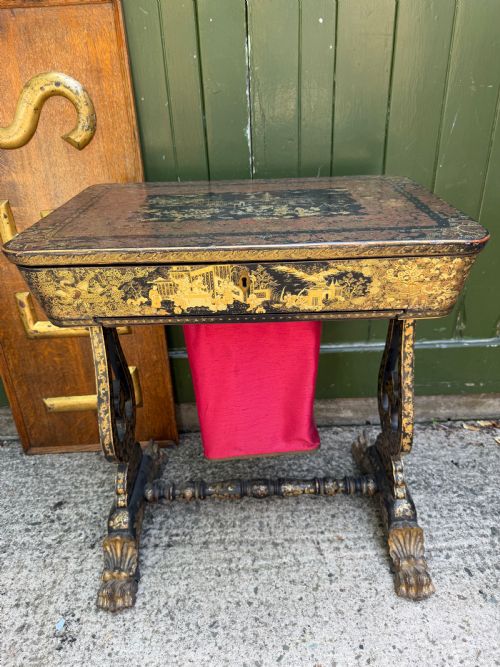
Surface finish involved hand-waxing or varnishing to seal the dark grain, while some Asian and colonial variants employed layers of lacquer built up over wood bases. Metal hinges and brass fixtures were secured by hand, matching the domestic utility of the box to its decorative exterior.
The selection includes regional folk art traditions from the Black Forest, Anglo-Indian workshops, and Swiss carving communities.
What varies in quality
The depth and animation of the carving dictate the distinction between standard workshop output and superior studio pieces. Animal forms with glass eyes, expressive postures, and detailed fur texture demonstrate a higher tier of hand skill than repetitive or flat foliage patterns.
Material selection and internal preservation also divide the range, as boxes retaining original silk linings, working locks, and solid ebony or dense walnut construction command greater regard. The crispness of fitted compartments and the alignment of lids show the precision applied by the original maker.
The Black Carved Box Glossary
- Black Forest
- A regional carving style originating in Switzerland and Germany during the nineteenth century, known for naturalistic animals and deeply carved wooden containers. It frequently depicts bears, dogs, and alpine foliage.
- Humidor
- A specialised box designed to keep cigars at a specific humidity, often lined with wood and fitted with tight closures. Nineteenth-century examples often feature carved figural lids.
- Anglo-Indian
- Furniture and decorative objects made in India under British rule, typically utilising dense tropical hardwoods like solid ebony. These pieces often display intricate reeded or floral carved decoration.
- Linden wood
- A pale timber frequently utilised by European carvers for its soft, even grain that accepted deep sculptural detail. Dark finishes were often applied to emulate heavier walnut or ebony.
- Casket
- A small ornamental box or chest with a hinged lid, used for holding valuables or correspondence. They range from simple geometric forms to highly figurative carved boxes.
Black Carved Box: Frequently Asked Questions
What were black carved boxes used for?
These containers served practical domestic functions on nineteenth-century desks, sideboards, and dressing tables. Owners stored items such as tobacco, cigars, stamps, jewellery, and writing supplies within them.
Beyond simple storage, their decorative carved exteriors meant they were displayed openly as conversation pieces in period interiors.
How do I identify Black Forest boxes?
Black Forest pieces are characterised by naturalistic wooden carvings, most frequently featuring animals like bears and dogs, or alpine leaves and caskets. They are typically rendered in walnut or linden wood with dark patination.
Look for expressive faces, glass eyes in figural pieces, and deep undercut foliage that demonstrates hand carving.
What is Anglo-Indian woodwork?
Anglo-Indian boxes are nineteenth-century pieces produced in India for British residents and export, predominantly utilising solid ebony. They are easily recognised by dense, crisp carving, reeded decoration, and distinct colonial forms.
The weight of the timber and the precision of the linear carving separate these pieces from European counterparts.
How should I care for antique wooden boxes?
Keep wooden and carved boxes away from direct sunlight and sudden temperature shifts to prevent the timber from splitting or warping. Dust gently with a soft, dry cloth and avoid modern chemical polishes.
Applying a light coat of natural beeswax periodically helps maintain the sheen of the dark wood surface.