


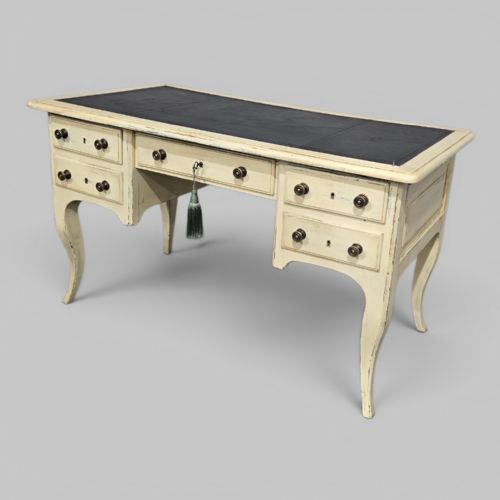


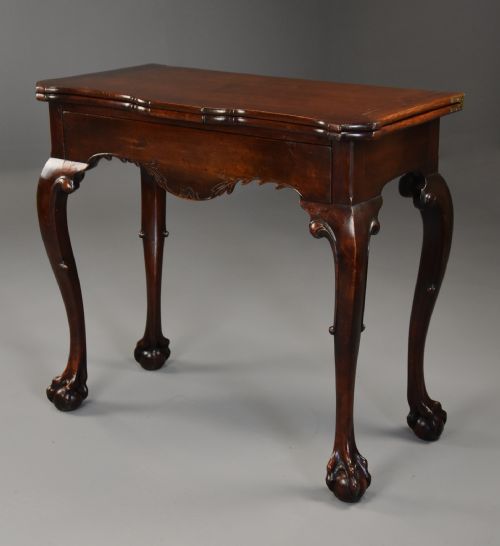


Black Cabriole Leg Table
A black cabriole leg table brings sculptural curved lines and dark polished surfaces into a room, offering both decorative presence and practical utility.
Black Cabriole Leg Table
When searching for a black cabriole leg table, buyers encounter forms ranging from side tables and occasional tables to console tables and writing desks. These pieces span multiple centuries and design vocabularies, connecting early forms to later revivals.
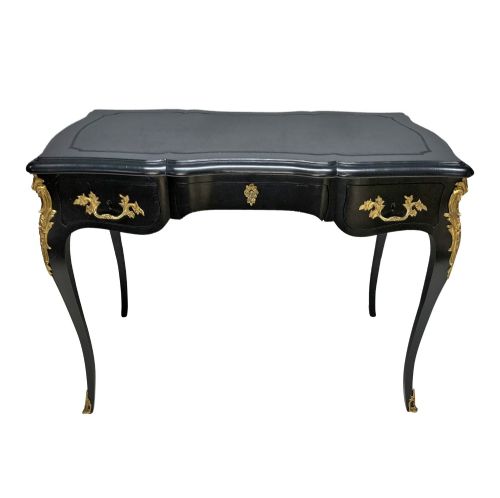
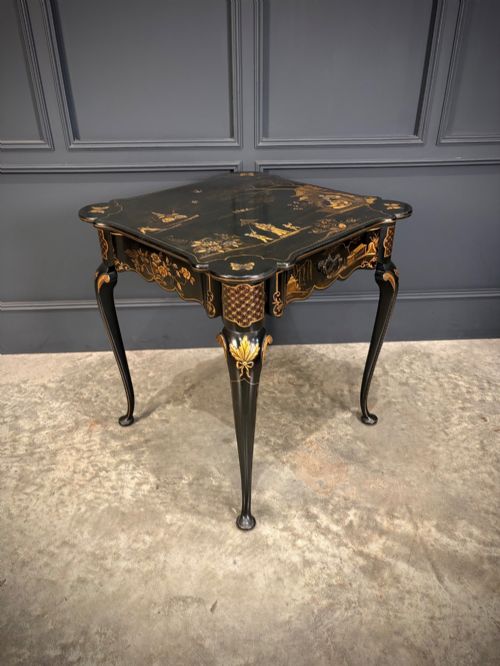
The most common interpretations on this page draw upon Chinoiserie decoration and Louis XV style aesthetics. They frequently feature ebonised wood or black lacquer finishes paired with curved legs.
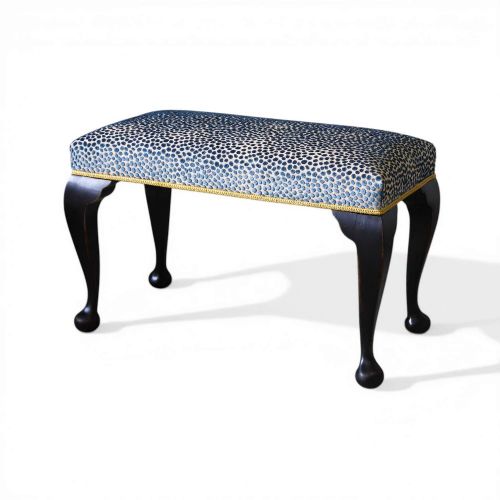
Origins stretch from the eighteenth century through the Victorian and Edwardian eras into the early twentieth century. Makers worked within Georgian, Queen Anne, and Rococo Revival traditions to shape these dark, curved supports.
Materials and construction
Craftsmen shaped woods such as walnut, oak, and various ebonised timbers to form the curved structural frames. Surfaces received black lacquer or paint applications, occasionally accented with gilt details or inlaid brass.
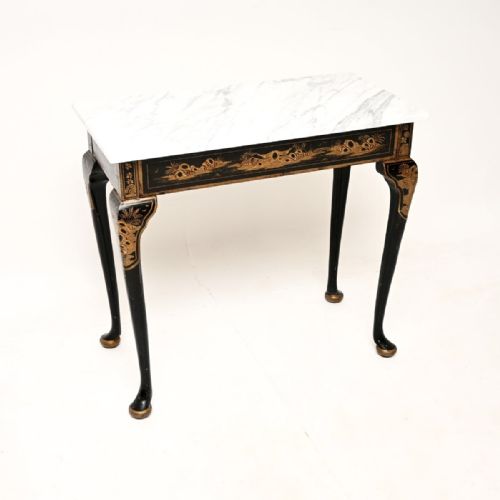
Designers incorporated materials like rouge marble and leather inserts into tops and writing surfaces. Joinery techniques and carved detailing unite the wooden frames with their distinctive curved legs.
Black Cabriole Leg Table Retail Price Guide 2026
Typical asking prices for black cabriole leg table among the pieces listed under this phrase on Sellingantiques today, from the lower quarter to the upper quarter. They describe what is for sale here now, not the wider market.
A nineteenth-century console table carries the Clifton Family coat of arms for Lytham Hall.
Distinctions in quality
Quality rests in the precision of the carving along the knee and foot of the cabriole leg. Superior examples exhibit harmonious proportions and fluid curves rather than stiff or heavy profiles.
The depth and execution of surface finishes define the upper tier of pieces. Hand-applied lacquer, detailed Chinoiserie motifs, and well-preserved marble or brass inlays separate finer workshop production from simpler output.
The Black Cabriole Leg Table Glossary
- Cabriole leg
- A furniture leg featuring a double curve, swelling outward at the knee and tapering inward to the foot. This form derives from traditional animal limb shapes and gained widespread popularity during the eighteenth century.
- Chinoiserie
- European decorative style reflecting Chinese artistic influences, typically executed in gold and coloured motifs upon a black lacquered ground. Artisans applied this technique extensively to cabinets, tables, and screens.
- Ebonised
- Wood finished to resemble ebony through staining, painting, or chemical treatment. This technique creates a dense dark surface common in Victorian and Edwardian furniture.
- Louis XV style
- Design movement characterised by asymmetric ornamentation, curved outlines, and rocaille motifs. Tables in this style utilise sweeping lines and elaborate mounts.
- Low boy
- A small English or American dressing table or side table standing on four relatively short legs, typically featuring drawers beneath the top. Eighteenth-century examples frequently show refined joinery and polished surfaces.
Black Cabriole Leg Table: Frequently Asked Questions
What is a cabriole leg?
A cabriole leg is a curved furniture support that bows outward near the top and tapers inward toward the foot. It mimics the shape of an animal limb and appears across numerous historical periods.
Cabinetmakers utilised this form to add movement and elegance to tables, desks, and chairs without relying on heavy straight posts.
How do I identify Chinoiserie finish?
Chinoiserie involves painted or gilt decorative scenes depicting figures, landscapes, or pavilions set against a dark lacquered background. These motifs reflect European interpretations of East Asian art.
On tables, the decoration often covers the top and apron, complementing the black finish of the surrounding wood structure.
Where should I place an occasional table?
An occasional table suits living rooms, hallways, or bedrooms where a compact surface is useful for lamps or decorative objects. Their small scale allows them to fit beside seating or against empty wall spaces.
These pieces combine decorative impact with practical utility in domestic interiors.
How do I care for ebonised wood?
Ebonised wood requires gentle cleaning with a soft, dry cloth to remove dust without harming the dark finish. Avoid excess moisture and harsh chemical polishes that can degrade the surface.
Keeping the piece away from direct sunlight preserves the depth of the black colour over time.