

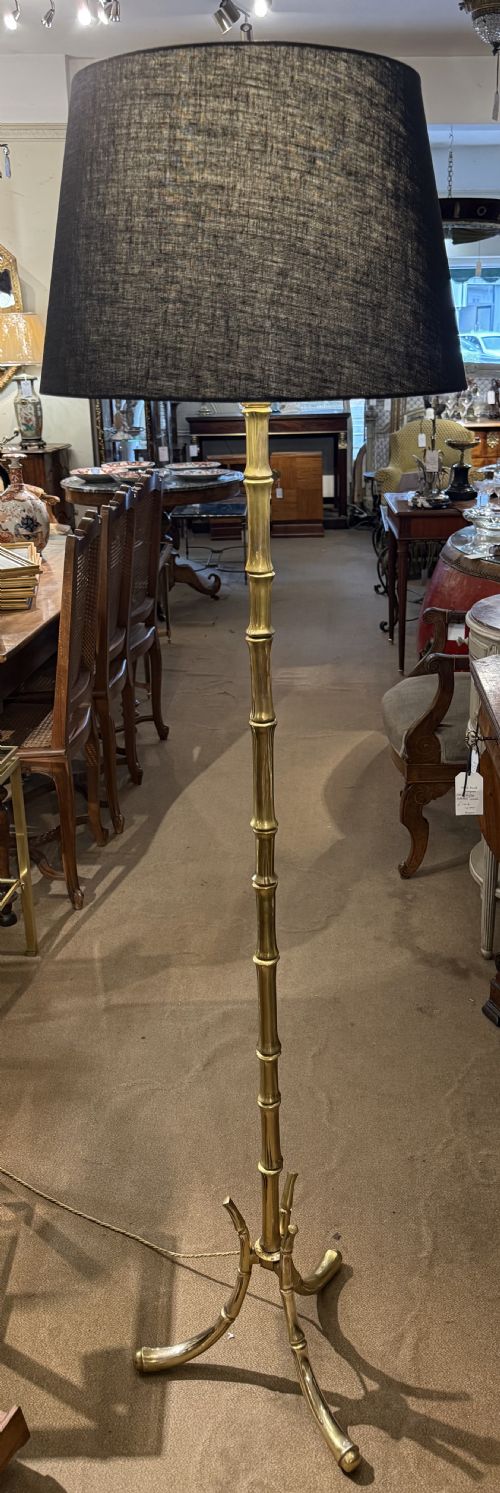
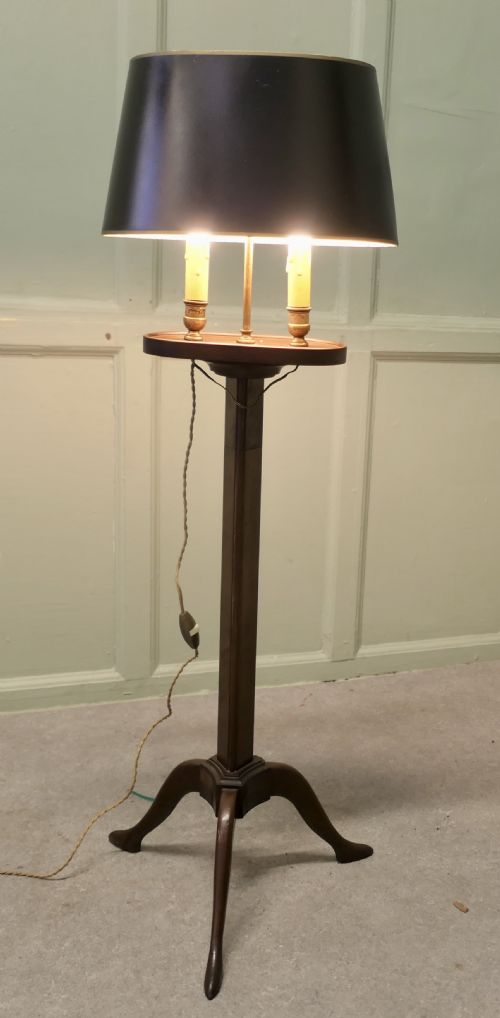
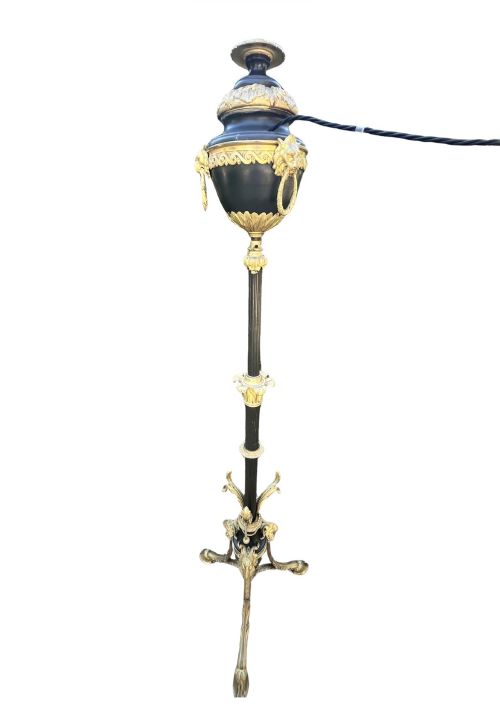
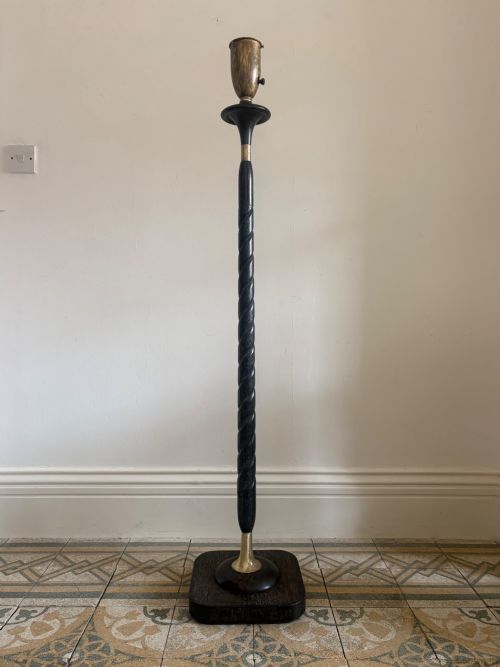
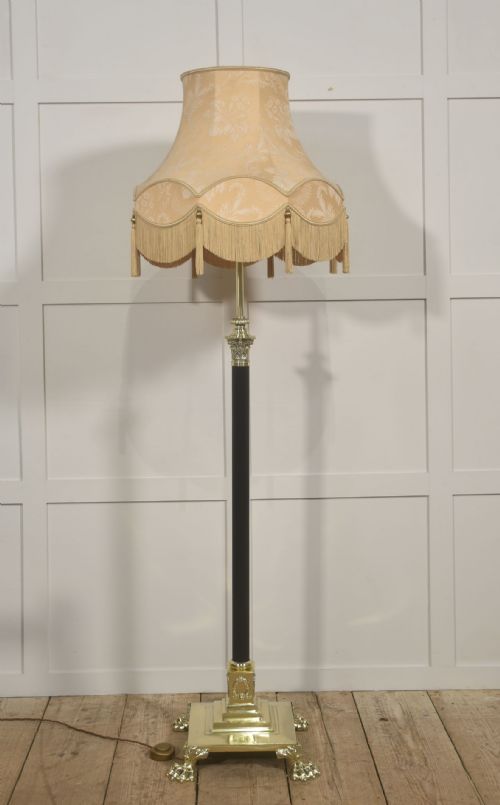



Black Brass Floor Lamp
These black brass floor lamps combine dark finishes with gleaming metal to anchor a room and cast a reading light over an armchair.
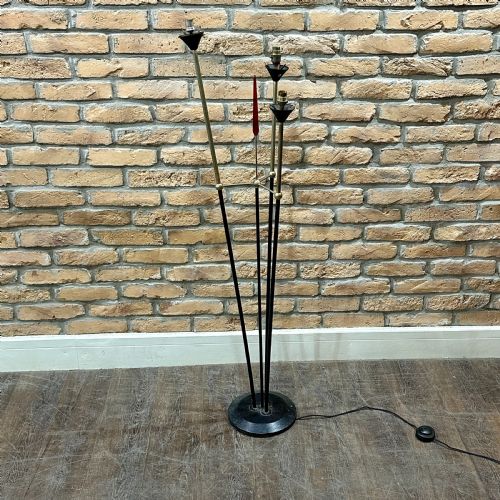
Black Brass Floor Lamp
A black brass floor lamp brings together dark painted or patinated surfaces with polished metal highlights to illuminate a corner or seating group. Buyers exploring this phrase encounter standard lamps spanning the nineteenth century through the mid-twentieth century, including Neoclassical columns, Victorian designs, and French twentieth-century creations.
The selection ranges from simple turned brass and metal shafts to adjustable twin candle lamps, bouillotte styles, and telescopic oil lamps that have been electrified. Forms such as ebonised barley twists and wrought iron structures sit alongside neoclassical twin-arm standards, providing varied heights and silhouettes.
Origins stretch from nineteenth-century pieces through the 1920s, 1930s, and 1950s, capturing shifts in domestic lighting from early candle and oil setups to mid-century modern idioms. These pieces often incorporate fabric shades alongside their metal framework to diffuse light effectively across a room.
How they were made
Makers shaped these lamps using brass, patinated bronze, and gilt bronze, often combining them with ebonised wood, mahogany, and painted metal. Turning wood into barley twists or casting metal into columns and adjustable stems required skilled joinery and foundry work.
Functional mechanics formed an integral part of the construction, seen in telescopic shafts and adjustable twin candle configurations that allowed owners to raise or lower the light source. Surfaces received dark finishes through ebonising or patination to contrast with the warm tone of exposed brass.
Black Brass Floor Lamp Retail Price Guide 2026
Typical asking prices for black brass floor lamp among the pieces listed under this phrase on Sellingantiques today, from the lower quarter to the upper quarter. They describe what is for sale here now, not the wider market.
Materials appearing across these lamps include brass, patinated bronze, gilt bronze, ebonised wood, mahogany, and fabric.
What varies in quality
The refinement of the casting and turning distinguishes standard production from finer work, with crisp detail on neoclassical columns and well-defined profiles on ebonised wood. The integrity of the mechanical adjustments, such as smoothly operating telescopic stems, reflects the original maker's standard of construction.
Materials contribute heavily to the character of each piece, where heavy cast bronze and substantial brass components provide stability that lighter fabricated sheet metal cannot match. The retention of original patination on the dark surfaces and the brass preserves the authentic visual weight of the period.
Maison Bagues·Rene Mathieu
The Black Brass Floor Lamp Glossary
- Bouillotte lamp
- A traditional table or standard lighting form featuring adjustable shades over candle arms, originally designed for card games. These typically include a central column and multiple light sources.
- Barley twist
- A spiral turning resembling a twisted rope, carved into wooden shafts like mahogany or ebonised timber. This decorative technique adds vertical movement and texture to a lamp standard.
- Telescopic
- An adjustable mechanism allowing the vertical shaft of a lamp to extend or retract. This feature was especially useful in nineteenth-century designs to alter the height of the light source.
- Ebonised
- Wood treated with a dark stain or finish to imitate ebony. This technique creates a stark contrast against polished brass or gilt bronze elements.
- Patinated bronze
- Metal that has developed a softened surface sheen and darker coloration through age and chemical treatment. It provides a subdued background that highlights brighter metallic details.
Black Brass Floor Lamp: Frequently Asked Questions
What is a black brass floor lamp?
A black brass floor lamp is a tall lighting fixture that combines dark metal or ebonised components with brass details. These pieces serve to illuminate reading corners and living spaces while offering decorative presence.
Designs range from nineteenth-century neoclassical columns to mid-century modern interpretations. They integrate traditional materials like bronze, fabric, and wood into functional vertical standards.
How do I date an old floor lamp?
Dating relies on examining the construction methods, materials, and stylistic cues present in the base and stem. Nineteenth-century examples often feature heavy cast brass or telescopic oil lamp conversions, while twentieth-century pieces show distinct modernist or art nouveau lines.
Makers' signatures, wiring methods adapted from earlier oil setups, and specific wood turnings like barley twists offer further chronological clues. Comparing the proportions to documented period styles helps narrow down the decade of production.
Were these lamps originally electrified?
Many early standards began life as oil lamps or candle holders before being converted to electricity during later decades. Telescopic wrought iron and brass examples often retain the mechanical fittings of their original fuel-burning configurations.
Later twentieth-century creations were built specifically for electrical components from the outset. This evolution means surviving pieces frequently display a hybrid of old mechanical parts and modern wiring.
How do I style a floor lamp in a room?
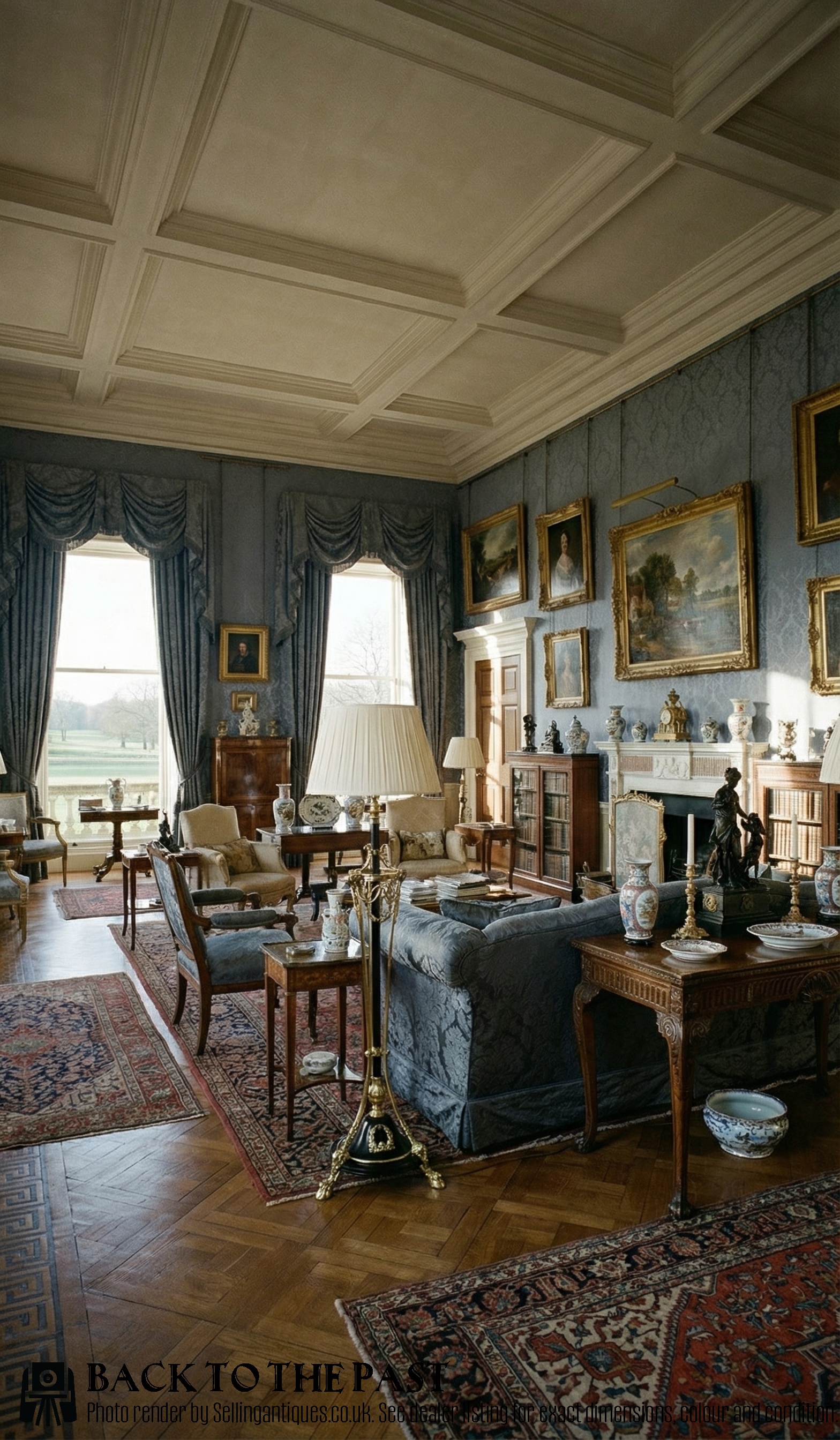
Position a standard lamp beside an armchair or at the end of a sofa to create a dedicated reading zone. The dark finish and brass accents allow the piece to anchor a corner without overpowering surrounding furniture.
Pairing the lamp with complementary nineteenth-century or mid-century pieces enhances the room's historical coherence. The height of the shaft and the choice of fabric shade help balance the vertical proportions of the space.