
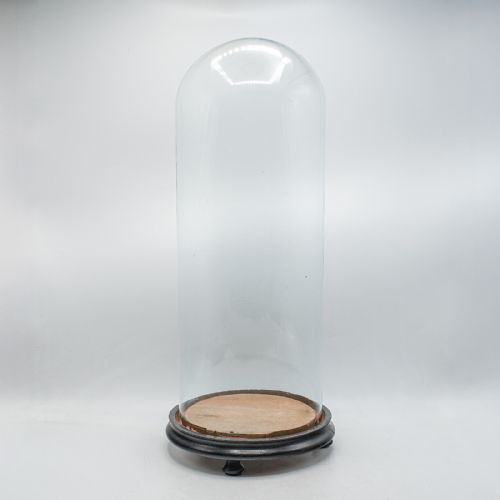


Black Base Glass Cloche
These black base glass cloche displays are English specimen and taxidermy showcases from the Victorian and Edwardian periods, prized for housing curiosities.
Black Base Glass Cloche
A black base glass cloche is an English display dome designed to house delicate specimens, taxidermy, and botanical collections. These pieces emerge from the Victorian and Edwardian eras, serving as protective enclosures for domestic curiosities and scientific studies.
The most common forms on this page are tall and oval display domes resting on ebonised timber bases. They protect fragile items from dust while offering a clear view from every angle.
Materials and construction
These items combine blown glass domes with turned ebonised wood bases. The dark timber provides a heavy foundation for the clear glass covers.
Interiors often feature fitted layers of fabric, felt, or baize to cushion specimens and mount botanical or taxidermy displays securely.
Professor's specimen domes once brought entire Victorian jungles indoors without the humidity.
Assessing quality
Quality rests in the clarity and consistency of the blown glass cover, where bubbles and waviness distinguish early hand-formed examples. Bases show refinement through careful timber turning and uniform ebonised finishes.
Proportions dictate the visual success of the piece, with taller or ovoid specimens demanding precise alignment between the wooden groove and the glass rim.
The Black Base Glass Cloche Glossary
- Cloche
- A bell-shaped glass cover used to protect delicate items. It sits directly upon a matching base.
- Ebonised
- Wood treated to resemble ebony, creating a dark, glossy black finish typical of Victorian bases. This treatment highlights the grain while providing a uniform dark tone.
- Taxidermy showcase
- An enclosed display case designed to preserve and exhibit prepared animal specimens. These enclosures protected fragile feathers and fur from household dust.
- Ovoid
- Egg-shaped in profile, offering curved internal space for tall or spreading botanical arrangements. This form was popular for clock cases and specific collector items.
Black Base Glass Cloche: Frequently Asked Questions
What went under a cloche?
These domes housed taxidermy specimens, botanical collections, and delicate clocks. Owners used them to protect fragile curiosities from dust and handling.
They served as miniature display rooms for natural history specimens and prized ornaments within Victorian and Edwardian homes.
How do I date a dome?
Dating relies on the proportions of the glass and the turning style of the wooden base. Victorian examples often display heavier timber profiles.
Edwardian pieces tend toward taller, more slender proportions while retaining the traditional ebonised wood foundation.
Are the bases original?
Most pieces retain their original ebonised wood or timber bases designed specifically for the glass dome. The fit between glass rim and base groove indicates original pairing.
Felt, fabric, or baize linings inside the base further support authenticity in period displays.
How do I clean the glass?
Glass domes require careful handling due to their size and delicate blown structure. Use a soft cloth and mild cleaner while supporting the weight securely.
Avoid harsh abrasives on the ebonised wooden base to preserve the dark finish.