


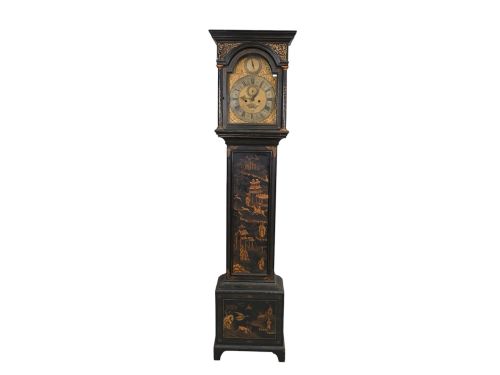

Black and Brass Clock
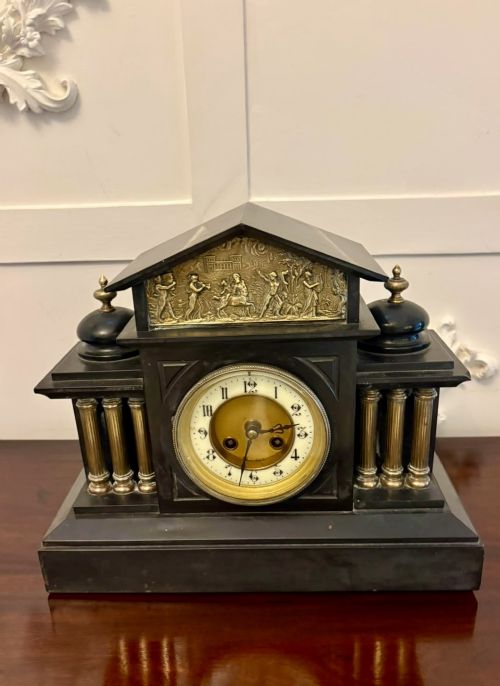
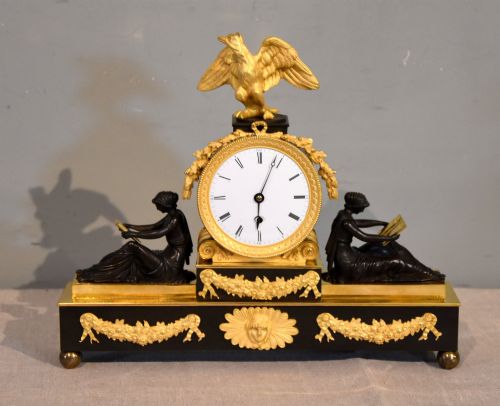
A black and brass clock brings architectural weight and metallic contrast to a room, combining dark slate or ebonised cases with gleaming brass mounts.
Black and Brass Clock
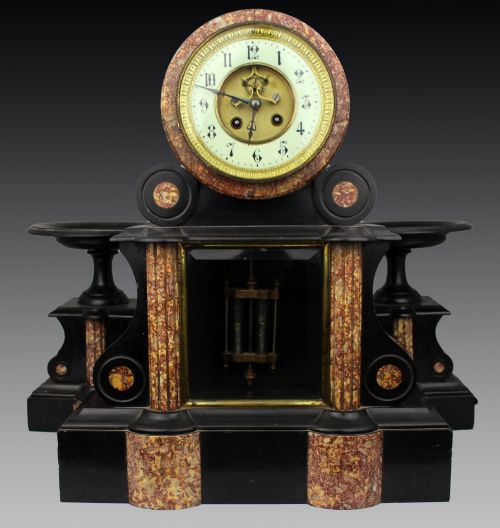
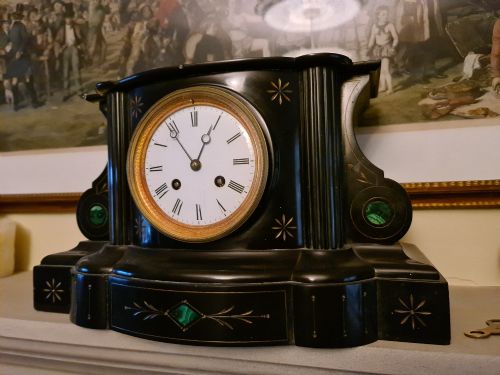
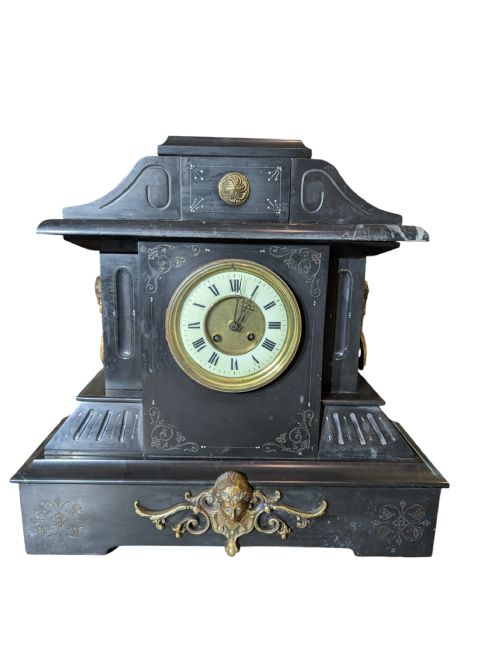
When searching for a black and brass clock, collectors encounter pieces ranging from imposing nineteenth-century mantel clocks in dark marble and slate to intricate eighteenth-century lacquered longcase timepieces. The selection spans distinct periods including the Regency, Victorian, and Edwardian eras, each utilising contrasting dark finishes and bright metal fittings.
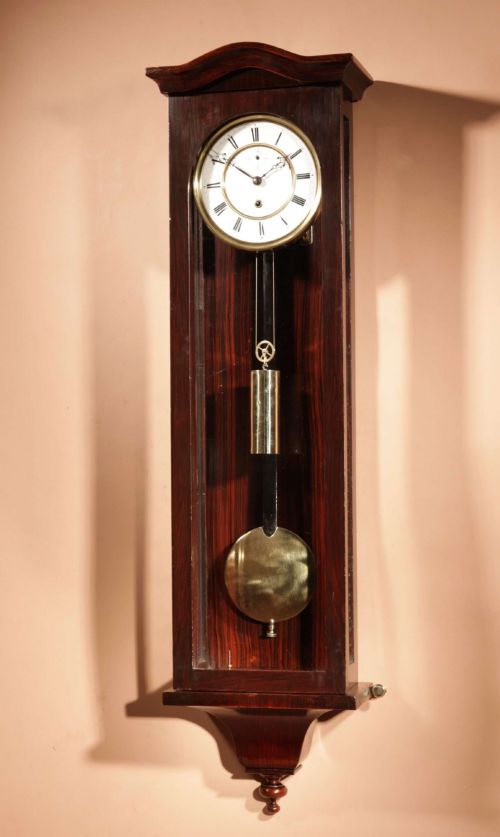
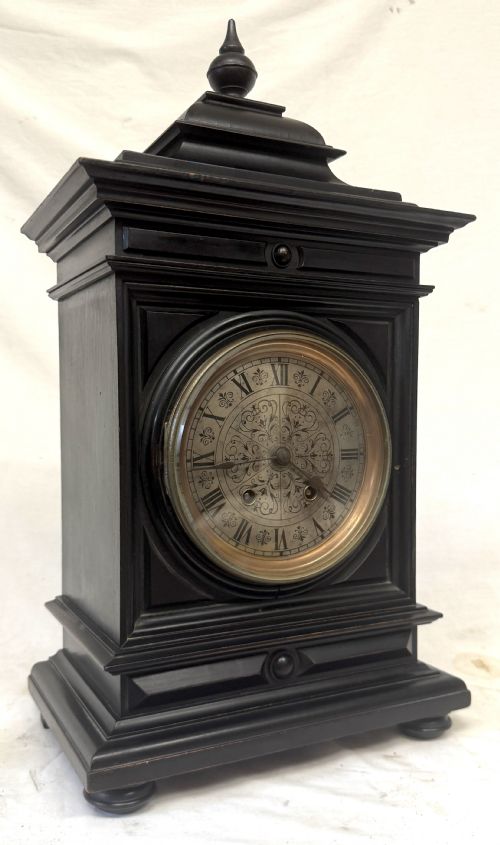
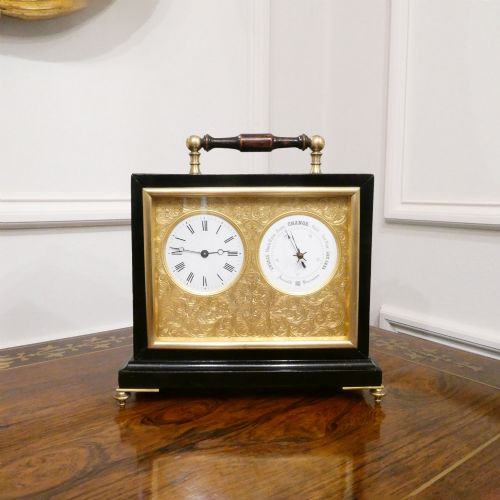
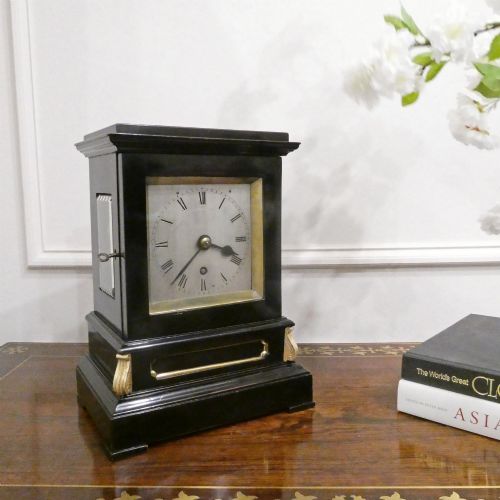
Mantle clocks and bracket clocks form the most frequent encounters on this page, often featuring architectural marble or ebonised wood paired with gilded brass bezels, dials, and feet. Wall clocks and larger grandfather clocks also appear, integrating black Japanned finishes or dark wood cases with brass dial plates and mounts.
Materials and Construction
Maker workshops built the dark cases of these clocks using heavy materials like black marble, natural slate, and ebonised or japanned wood, sometimes decorated with gilt bronze, ormolu, and inlaid mother of pearl. These dense dark surfaces provided a steady foundation for intricate brass dials, silvered chapter rings, and cast brass bezels.
Internal movements relied on traditional brass gear trains, fusee mechanisms, or pendulum regulations, housed securely behind glazed brass doors and heavy stone or wooden outer cases. Enamel and metal dials received hand-painted numerals and delicate steel hands, completing pieces designed for both domestic utility and decorative display.
Listings feature cases made from black slate, marble, ebonised wood, and lacquer, paired with brass, gilt bronze, and enamel.
Distinctions in Quality
The finest pieces display superior sculptural integration between the heavy dark stone or ebonised wood case and the chased, fire-gilded ormolu brass mounts. Master makers ensured that decorative elements like marble inlay, gilt bronze figures, and engraved brass backplates were executed with precision rather than mass-produced uniformity.
Mechanical execution separates standard timepieces from exceptional examples, with signed movements by known makers offering superior gear cutting, quarter-striking capability, and fine pendulum suspension. The clarity of enamelled dials and the crispness of brass casting further distinguish high-grade production from simpler commercial work.
Japy Frères·Philipp Haas·Philippes Paris·Henry Jones·Des Granges·John Bull
The Black and Brass Clock Glossary
- Fusee
- A conical pulley used in spring-driven clocks to ensure even power delivery as the mainspring unwinds. This mechanism helps maintain consistent timekeeping throughout the duration of the winding cycle.
- Ebonised
- Wood treated with a dark stain or finish to simulate the appearance of solid ebony. This technique was widely utilised on Victorian and earlier mantle and bracket clock cases.
- Garniture
- A set consisting of a central clock flanked by matching decorative objects such as urns or candelabra. These sets were designed to sit harmoniously on a mantelpiece.
- Dial
- The face of the clock where the hours and minutes are displayed. It often incorporates silvered chapter rings and fine brass spandrels in the corners.
Black and Brass Clock: Frequently Asked Questions
What periods do these clocks cover?
The listed items span from the seventeenth century through the Regency and Victorian periods up to the mid-twentieth century. Styles shift from early wooden bracket clocks to heavy nineteenth-century architectural marble and slate designs.
Different eras brought distinct aesthetic choices, moving from restrained classical lines to ornate Art Nouveau and Chinoiserie decorations.
How do I identify a marble clock?
Many nineteenth-century pieces utilise black marble or slate to create heavy, monumental mantel clocks that often mimic architectural facades. These are frequently accented with gilt brass mounts and inlaid coloured stones.
Faux marble finishes also appear in the record, offering the same dramatic dark aesthetic through painted techniques rather than solid stone.
What is a bracket clock?
Bracket clocks originally earned their name from being placed on wall brackets to allow easy winding throughout a room. Over time, the term evolved to describe portable table clocks with flat bases and carrying handles.
In this selection, they often feature ebonised wood cases combined with detailed brass dials and high-grade mechanical movements.
How were Chinoiserie clocks decorated?
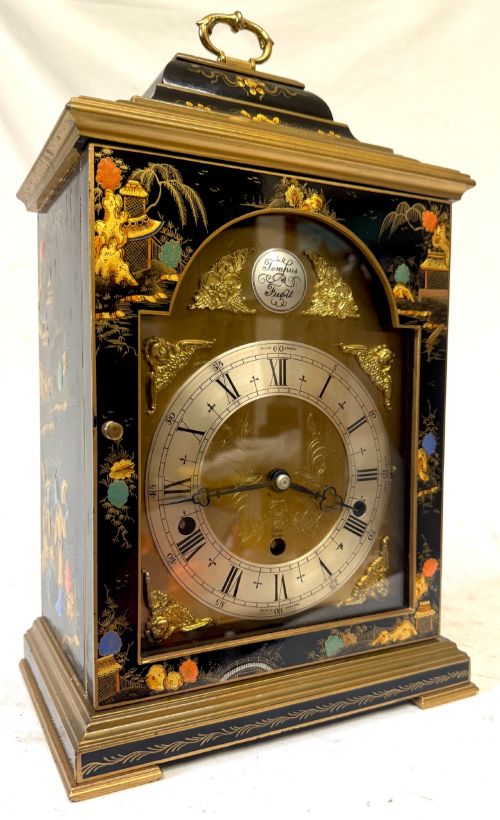
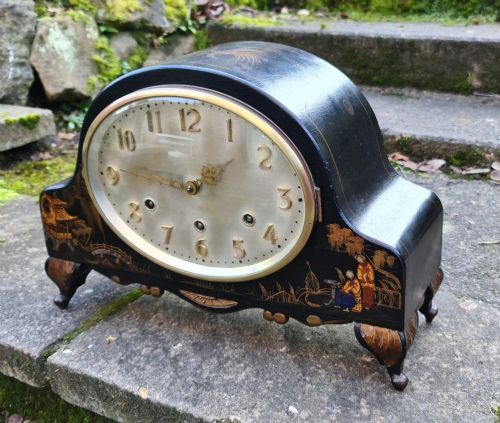
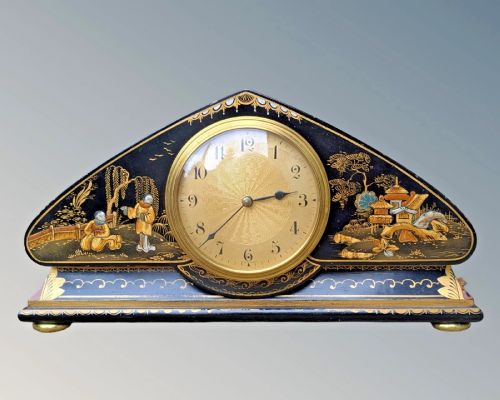
Chinoiserie clocks feature lacquered or Japanned surfaces adorned with hand-painted scenes inspired by Asian art, typically rendered in gold against a dark background. These decorative schemes appear on both longcase and mantel clock formats.
The intricate painted details combine with brass hardware to create a striking contrast of dark surfaces and metallic highlights.