





Birmingham Silver Dishes
Birmingham silver dishes bring together functional domestic forms and precise assay office marks from the late nineteenth century onwards.
Birmingham Silver Dishes
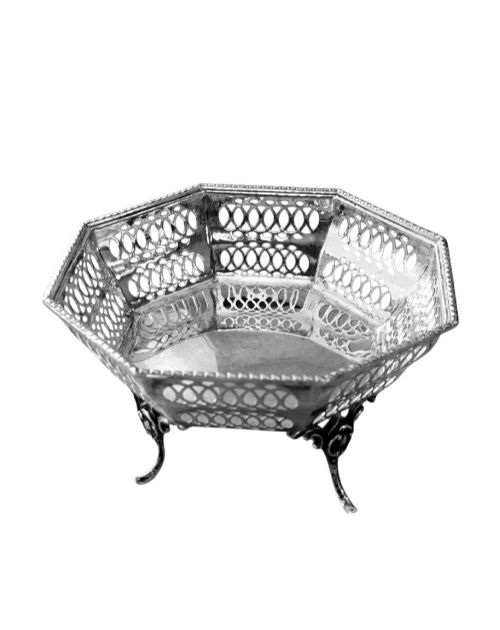
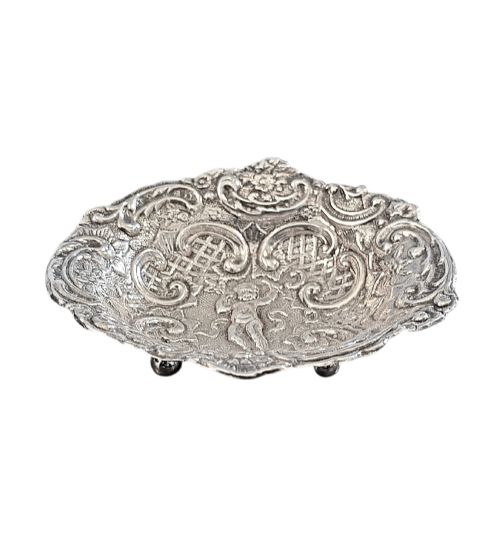
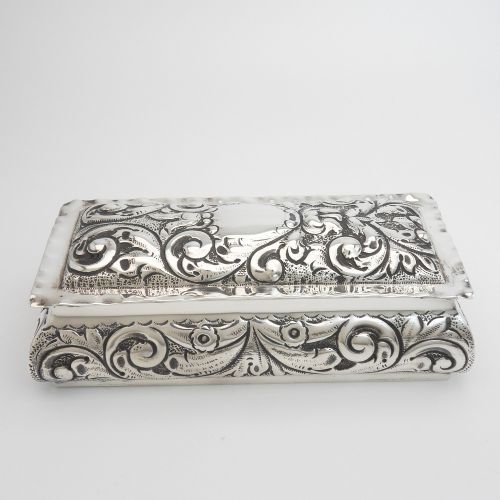
Birmingham silver dishes encompass a diverse range of domestic tableware and dressing items, from small pin trays to open bonbon baskets and lidded vanity boxes. When you search for birmingham silver dishes, you encounter pieces shaped by Victorian, Edwardian, and mid-century aesthetics.
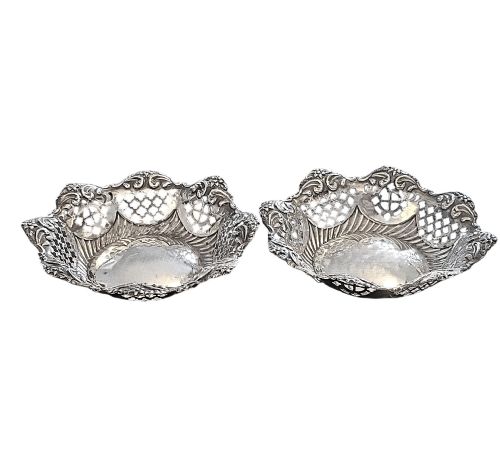
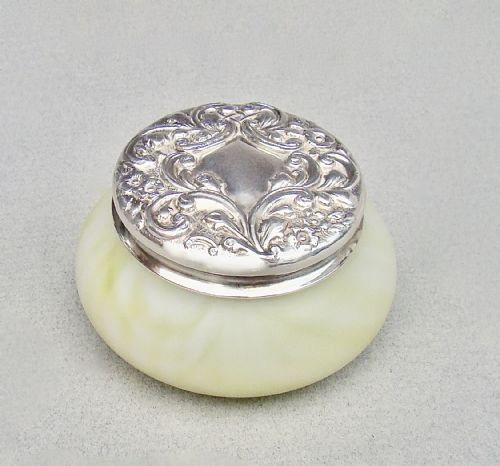
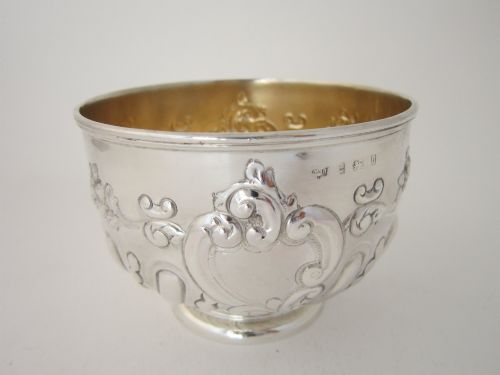
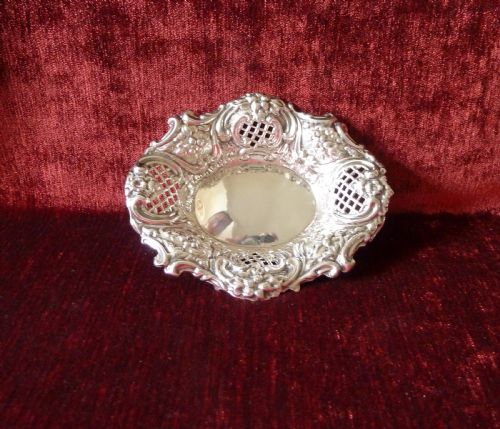
The most common examples on this page are small footed bowls, trinket dishes with hinged lids, and pierced sweetmeat baskets. Makers working in the Midlands adapted traditional forms into distinct local styles influenced by Arts and Crafts ideals and Art Nouveau curves.
Many of these vessels incorporate contrasting elements such as coloured glass bodies, enamel panels, or gilded interiors. Others take specific shapes including apples, hearts, and multi-lobed polygons.
Materials and construction
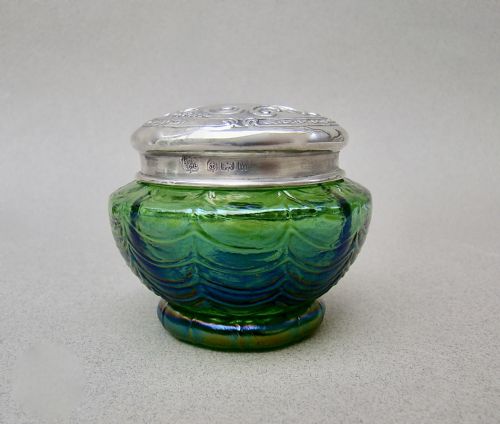
Silver smiths utilised sterling silver alongside silver plate and silver gilt, frequently combining metal mounts with glass or porcelain bodies. Cranberry glass, satin glass, and clear crystal form the lower sections of lidded boxes and preserve jars, secured with hallmarked silver rims and hinged lids.
Techniques such as piercing, lattice work, and chasing create decorative pierced baskets and textured pin dishes. Enamelling adds colour to dressing table accessories, while gilding provides a contrasting interior finish to salt cellars and trinket boxes.
Birmingham Silver Dishes Retail Price Guide 2026
Typical asking prices for birmingham silver dishes among the pieces listed under this phrase on Sellingantiques today, from the lower quarter to the upper quarter. They describe what is for sale here now, not the wider market.
One particular preserve pot takes the very specific physical form of a small apple.
Assessing quality and execution
Quality rests in the crispness of the hallmarks, the weight of the metal, and the integration of secondary materials like enamel and glass. Thicker gauge silver maintains its structural integrity without distortion across delicate pierced lattice work and raised handles.
Better pieces display refined chasing and secure hinge mechanisms on lidded boxes and baskets. The harmony between the silver mount and the fitted glass or porcelain body determines the overall success of the piece.
Mitchell Bosley & Co·A. J. Pepper & Co·A E Jones·A. Bromet & Co·Hukin and Heath·A & J Zimmerman Ltd·Daniel and Arter·John Barrett·Henry Williamson Ltd·John Collyer·Adie Brothers·Vale Brothers and Sermon
The Birmingham Silver Dishes Glossary
- Hallmark
- A series of official marks stamped on precious metals, indicating the maker, standard of purity, assay office, and year of testing. These marks provide the primary evidence for dating English silver.
- Bonbon dish
- A small open vessel designed for holding sweets or small confectionery. These often feature decorative piercing or swing handles.
- Gilding
- The application of a thin layer of gold to the interior surface of a silver vessel. This protects the metal from acidic foods and provides a warm contrast.
- Piercing
- A technique where metal is cut through to create decorative openwork patterns such as lattices or scrolling foliage. It lightens the visual weight of baskets and dishes.
- Tazza
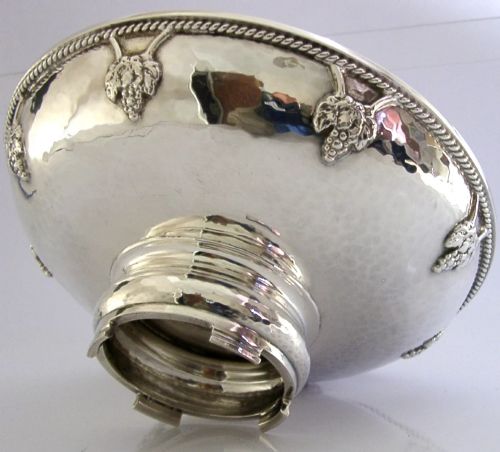
- A shallow bowl or saucer raised on a stem and foot, used for serving fruit or small items. Examples often feature heavy gauge sterling silver and substantial proportions.
Birmingham Silver Dishes: Frequently Asked Questions
How do I date a Birmingham silver dish?
Dating relies on the assay office mark, which for Birmingham is an anchor, alongside the specific date letter stamped into the metal.
Additional clues come from the stylistic indicators of the period, such as Edwardian lattice work or Art Deco geometric forms.
What is the difference between sterling silver and silver plate?
Sterling silver consists of solid metal conforming to a strict purity standard, whereas silver plate involves a thin layer of silver bonded to a base metal core.
Hallmarks on solid pieces indicate standard sterling purity, while plated items carry different manufacturer marks.
How were lidded trinket boxes used?
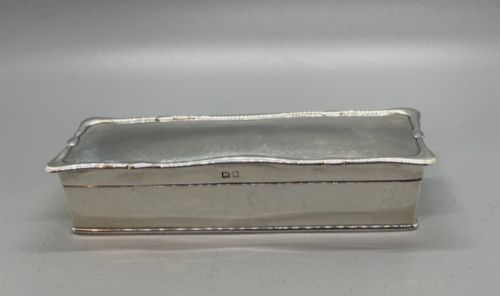
These lidded vessels sat upon dressing tables and sideboards to hold small personal items such as hairpins, jewellery, and trinkets.
Many incorporated glass or enamel bodies to protect the contents while offering a decorative surface.
Can I use silver preserve pots for dining?
Preserve pots with fitted glass inserts and matching spoons were designed specifically for serving jams and jellies at the table.
The glass liner protects the metal from fruit acids during use.