


Bird Stained Glass Panel
A bird stained glass panel brings light and avian detail into a room through traditional leaded work.
Bird Stained Glass Panel
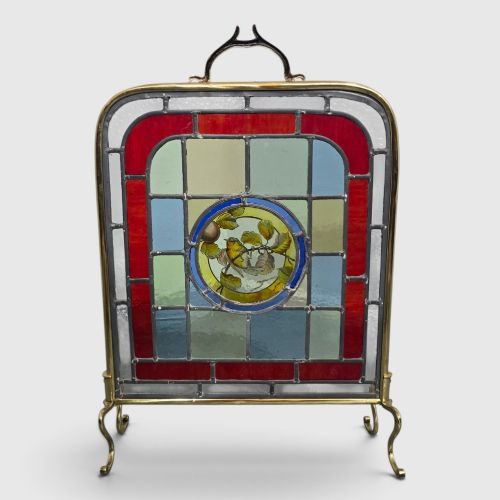
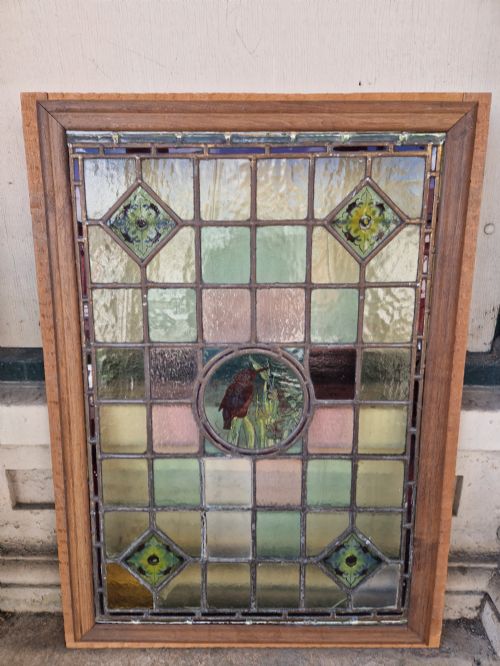
When you search for a bird stained glass panel, you find architectural salvage and decorative windows spanning the Victorian and Edwardian eras. These pieces capture avian scenes, often depicting a bird on a branch or in flight.
You are most likely to meet panels set within leaded glass windows from the nineteen-tens or Victorian periods. Frames in softwood, pine wood, or brass occasionally accompany these panels as fire screens or doors.
How they were made
Amber bullseyes and varied coloured glass are incorporated into the leading to add texture and depth to the composition.
Listings feature periods from the Victorian era through the Edwardian Arts and Crafts movement, utilising lead, stained glass, and brass.
What varies in quality
The sophistication of the bird design and the complexity of the glass selection separate finer examples from simpler windows. Hand-painted elements show greater artistic merit when the brushwork achieves naturalistic feather textures.
The surrounding framework, whether sturdy brass fire screens or original pine structures, dictates the overall integrity of the piece.
The Bird Stained Glass Panel Glossary
- Lead came
- The grooved lead strips used to hold individual pieces of glass together in a window. These pliable strips form the structural grid of the design.
- Bullseye
- A small, rounded disc of glass featuring a central concentric swirl, often used as an accent in Edwardian windows. This optical centre catches and refracts light distinctly.
- Architectural salvage
- Building elements rescued from older structures for reuse in interior design or restoration. These pieces retain historical fabric.
- Fire screen
- A decorative panel placed in front of an unused fireplace to block drafts or hide the grate. Many utilise brass frames and glass panels.
Bird Stained Glass Panel: Frequently Asked Questions
How were bird stained glass panels used?
These panels functioned primarily as windows within homes, doors, or as decorative screens placed in front of fireplaces. They allowed natural light to enter while providing privacy and colourful avian imagery.
In domestic settings, they served as both functional architectural elements and decorative focal points within rooms.
How do I date a stained glass panel?
Dating relies on stylistic clues, materials, and framing techniques associated with periods like the Victorian era or the Arts and Crafts movement. Edwardian examples often incorporate specific motifs like amber bullseyes.
Examining the type of lead cames and the surrounding wood, such as pine or softwood, also helps establish the era of manufacture.
Are these panels suitable for hanging in modern windows?
Many panels can be installed in front of existing glass or hung securely within a window frame to catch the light. Consideration must be given to the weight of the lead and glass structure.
Frames made of brass or wood provide the necessary rigidity for hanging or freestanding display.
What styles are common in these bird panels?
Victorian and Arts and Crafts styles dominate these pieces, reflecting the design sensibilities of the late nineteenth and early twentieth centuries. The focus remains on natural subjects, particularly birds on branches or in flight.
Hand-painted details are characteristic of these traditional decorative styles.