
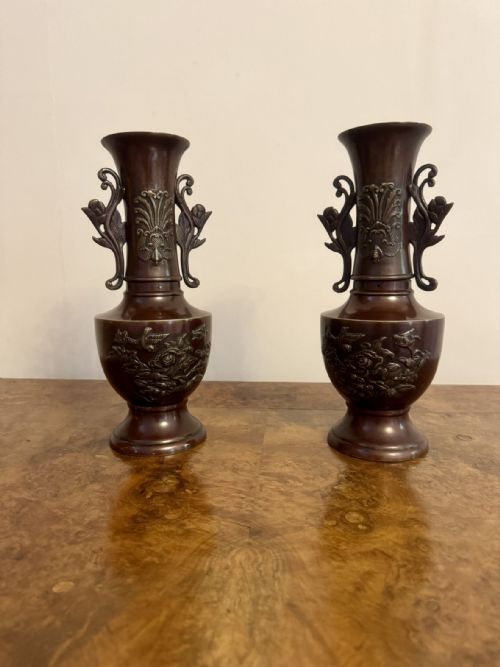


Bird Relief Vase
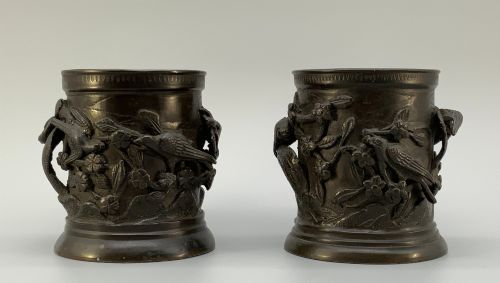
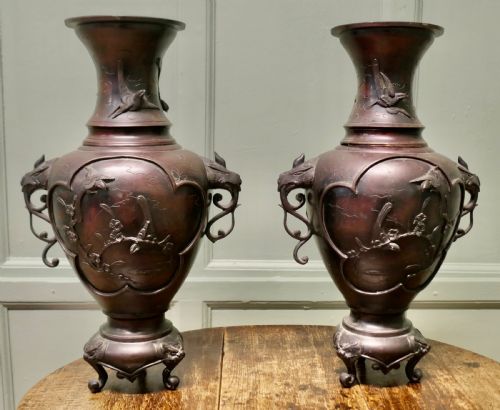
These bird relief vase examples bring together metalwork and ceramics featuring raised avian motifs to suit collectors of decorative arts.
Bird Relief Vase
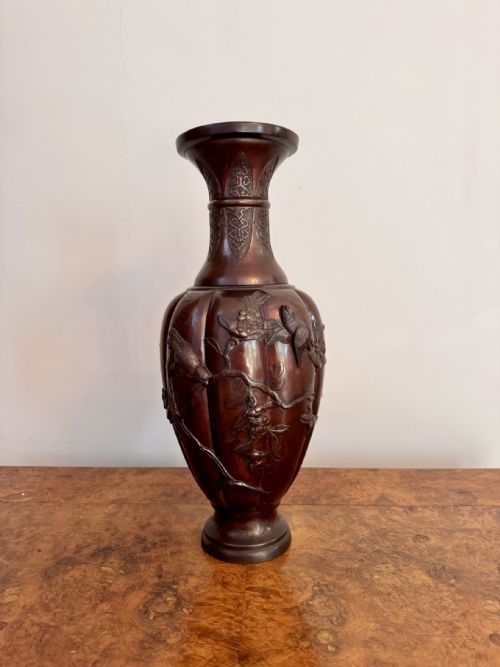
A bird relief vase is a decorative vessel displaying raised avian and botanical motifs across the body, drawing collectors who appreciate sculptural surface detail. When exploring this selection, buyers most frequently encounter Japanese bronze pieces from the Meiji period alongside occasional ceramic examples from English and continental makers.
The forms span standard baluster urns, twin-handled vessels, stem vases, and larger jardinieres or stick stands. These items originate predominantly from late nineteenth and early twentieth century workshops, combining functional vessels with detailed sculptural ornamentation.
How they were made
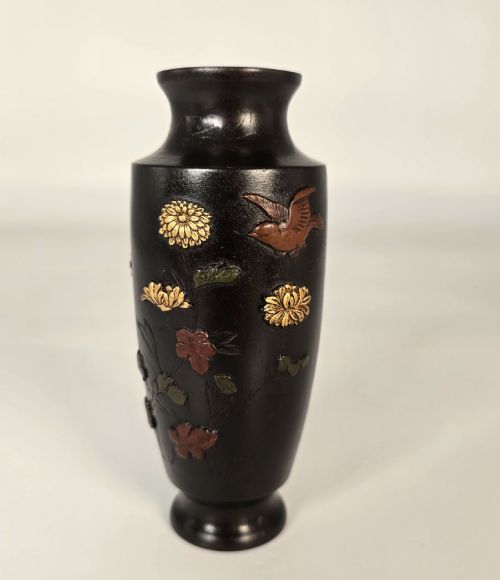
Metalwork pieces utilise cast bronze, patinated bronze, copper, and brass, often incorporating gold inlay or mixed metal highlights to define the raised feathers and flora. Makers applied these decorative elements using casting and surface chasing techniques.
Ceramic pieces employ glazed earthenware, pottery, and porcelain, shaped and fired before receiving surface glazes or applied relief designs. The combination of materials allows for varied textures across both metallic and ceramic surfaces.
Listings span the Victorian era, the Meiji period, and the early twentieth century, utilising bronze, copper, porcelain, and glazed earthenware.
What varies in quality
The standard of a piece rests upon the crispness of the raised casting and the precision of the mixed metal detailing on bronze examples. Finer items exhibit sharply defined plumage and harmonious integration of inlay work.
Proportion and scale also dictate distinction, with larger presentation pieces and balanced pairs commanding greater attention than simpler single vessels. The depth and execution of the sculptural relief separate standard production from superior examples.
Royal Dux·Rene Lalique·Bretby
The Bird Relief Vase Glossary
- Meiji Period
- The era in Japanese history spanning from 1868 to 1912, known for producing intricate bronze work and metalcraft exported to Western markets. Pieces from this time frequently display naturalistic bird and floral themes.
- Mixed Metal
- A technique involving the combination of different metals such as bronze, copper, and brass on a single object to create contrasting colour and tone. This method highlights specific details within a raised design.
- Baluster
- A vertical architectural form with a swelling lower portion, frequently utilised to describe the graceful silhouette of traditional vases and urns. It provides a stable base while allowing generous space for surface decoration.
- Patinated Bronze
- Bronze that has undergone a chemical or natural treatment to alter its surface colour and finish, ranging from deep browns to greenish tones. This process protects the metal and enhances visual depth.
Bird Relief Vase: Frequently Asked Questions
What are bird relief vases made from?
These vessels appear primarily in cast bronze, patinated bronze, and mixed metals, alongside ceramic and glazed earthenware variants. The materials reflect the manufacturing traditions of nineteenth and early twentieth century workshops.
Metal versions often incorporate copper, brass, and gold inlay highlights, whereas ceramic options utilise fired clay with applied or moulded surface decoration.
How do I identify a Meiji period vase?
Meiji period bronze pieces typically date between 1868 and 1912, identifiable by naturalistic motifs including birds, blossom, and raised floral work. Many items incorporate mixed metal highlights and distinct patination.
These pieces often display a high level of sculptural precision in the rendering of feathers and branches across the body of the vessel.
Where were these vases produced?
The selection includes a significant proportion of Japanese metalwork created during the late nineteenth century for both domestic and international markets. Chinese bronze vessels from a similar period also appear.
Additionally, European workshops from England and continental makers contributed ceramic and pottery alternatives featuring avian relief designs.
How should I display a large bronze vase?
Large bronze urns and jardinieres require stable placement on sturdy furniture or pedestals capable of supporting substantial metal weight. Positioning them away from high traffic areas protects the patinated surfaces.
Adequate lighting helps reveal the subtle depth of the raised bird and floral relief details across the body of the piece.