
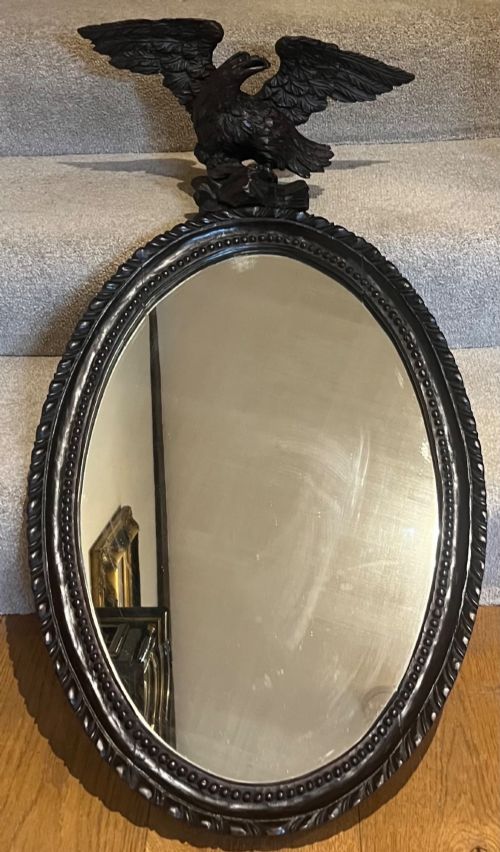

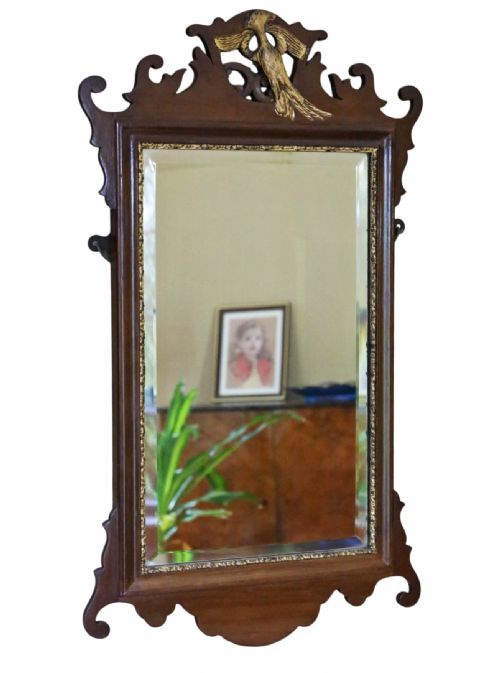


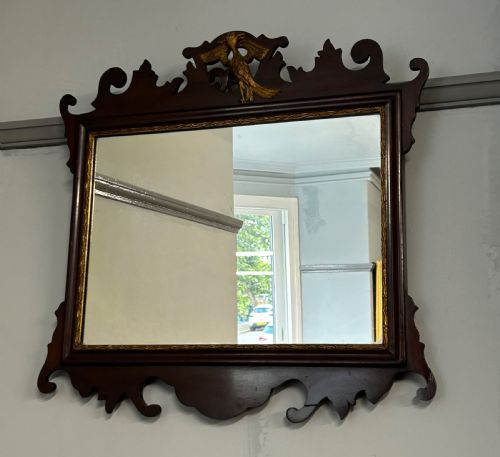


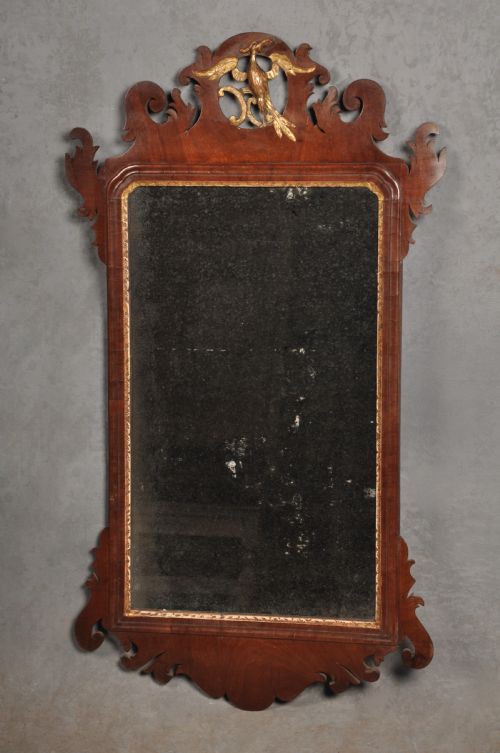

Bird Crest Mirror
These bird crest mirror pieces bring carved avian detail and traditional glass forms into a room, favoured for their historical character and decorative presence.
Bird Crest Mirror
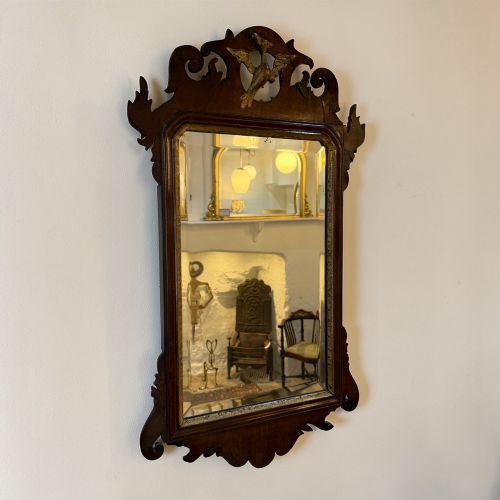
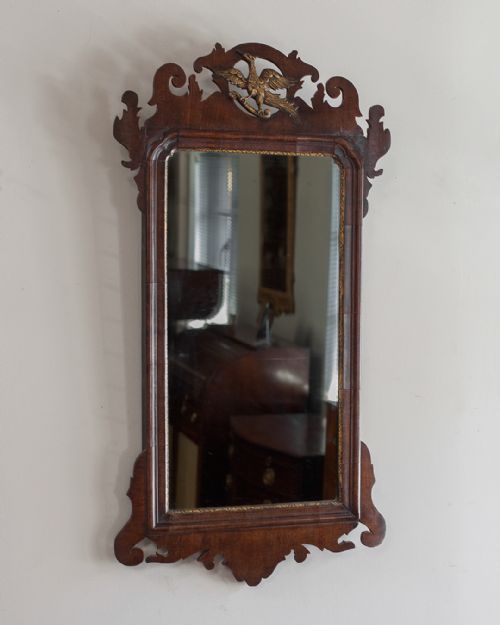
A bird crest mirror is a wall hanging, overmantel, or chest fitting featuring carved avian cresting at the top. The selection includes eighteenth century George III examples, Victorian revivals, and French designs.
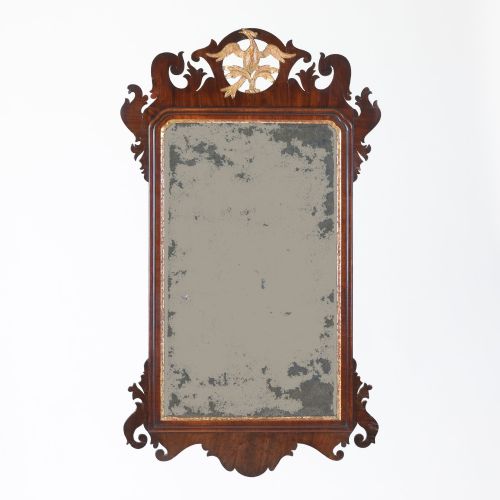
Most entries on this page take the form of fret-cut mahogany frames or gilded gesso structures. The carved bird motif frequently follows the traditional Ho-ho bird style associated with mid Georgian cabinet making.
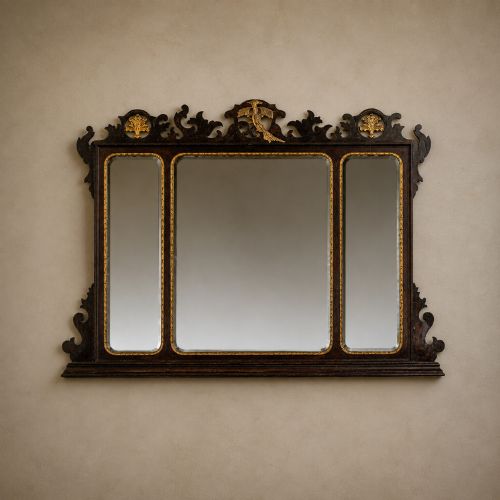
Buyers encounter wall mirrors alongside larger triptych overmantels and occasional mirrored chests of drawers. Eighteenth century mahogany versions appear alongside nineteenth century Regency and French chateau interpretations.
How they were made
Frames rely on timber foundations of mahogany, walnut, yew wood, or general carved wood shaped through fretwork techniques. Giltwood and gesso pieces apply gold leaf and plaster over a wooden base to build up ornate relief ornament.
Glass plates are set within these surrounds, sometimes featuring bevel edges on later revival pieces. Paint and original gilding finish the surfaces of the French and English decorative examples.
Materials across these listings include mahogany, yew wood, giltwood, glass, gesso, and paint.
What varies in quality
Quality rests in the crispness of the hand carving upon the bird crest and surrounding fretwork. Sharply defined plumage and scrolls show skilled joinery and carving execution.
The integrity of the original surface finish defines the grade of the piece. Intact original gold leaf, gesso, and untouched timber patination elevate the standing of the mirror compared to heavily restored examples.
The Bird Crest Mirror Glossary
- Fretwork
- Openwork ornamentation cut from a thin board of wood using a fret saw. This technique creates geometric or scrolling patterns common on Georgian frames.
- Gesso
- A plaster mixture applied to wood surfaces as a base for gilding or painting. It allows intricate relief moulding before gold leaf is laid down.
- Giltwood
- Wood that has been coated with gold leaf or gold paint. It provides a reflective, ornate finish characteristic of formal period interiors.
- Overmantel
- A large mirror designed to hang above a fireplace mantelpiece. These often feature expansive triptych glass arrangements and substantial cresting.
- Pier mirror
- A tall mirror specifically proportioned to hang on the wall space between two windows. They often incorporate candle sconces or matching console tables.
Bird Crest Mirror: Frequently Asked Questions
Where should I hang a bird crest mirror?
These mirrors suit principal reception rooms, hallways, or above fireplace mantels where the carved cresting remains visible.
Positioning the glass opposite a window maximises natural light reflection within the space.
How do I identify an eighteenth century example?
Eighteenth century pieces typically display period mahogany timbers, hand-cut fretwork, and early mirror plates with characteristic distortion.
Construction methods use traditional joinery without modern fixings, and the carved bird cresting shows period proportions.
What is a Ho-ho bird?
The Ho-ho bird is a stylized mythological Chinese phoenix adapted into European rococo and chinoiserie design.
Carvers placed this creature at the summit of mirror frames as a decorative cresting.
Are these mirrors heavy to hang?
Substantial giltwood and mahogany frames carry significant weight, particularly larger overmantel and triptych versions.
Secure wall fixings into structural timber or masonry are necessary to support the load safely.