

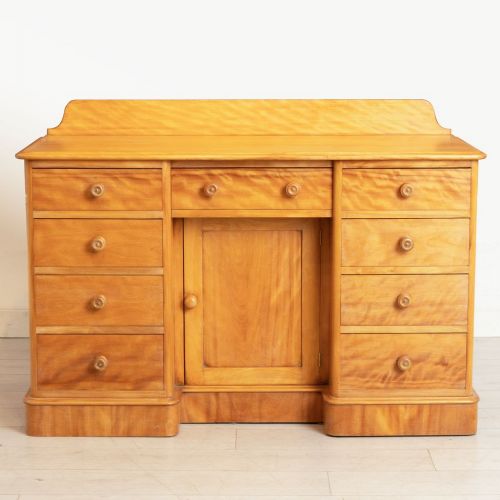


Birch Writing Desk
A birch writing desk offers pale, figured timber and sturdy utility, spanning the nineteenth century through the Art Deco era.
Birch Writing Desk
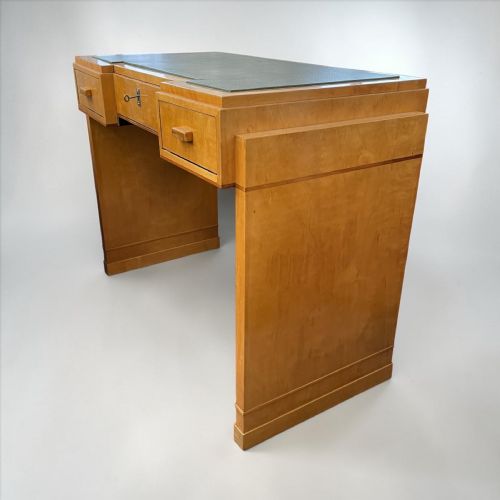
A birch writing desk brings together functional workspace and pale, decorative timber, appearing in forms from simple writing tables to substantial pedestal desks and secretaires. Buyers examining this page encounter pieces originating primarily from nineteenth-century Britain and Scandinavia, alongside later twentieth-century iterations.
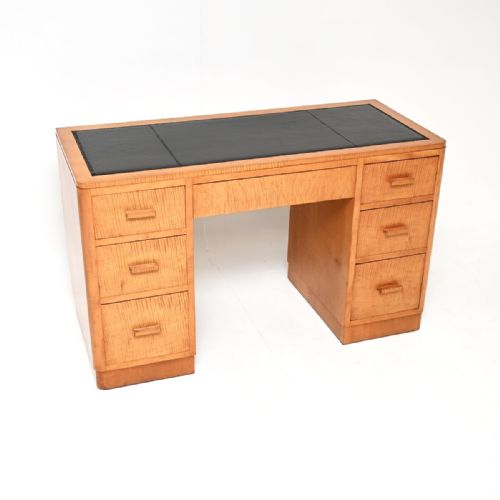
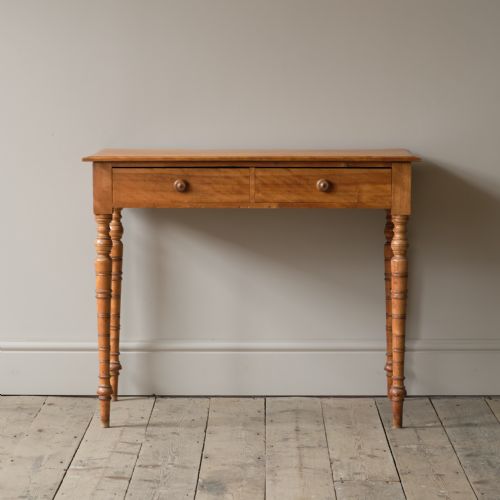
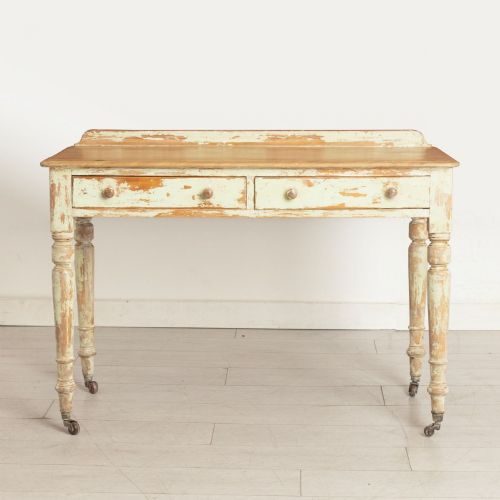
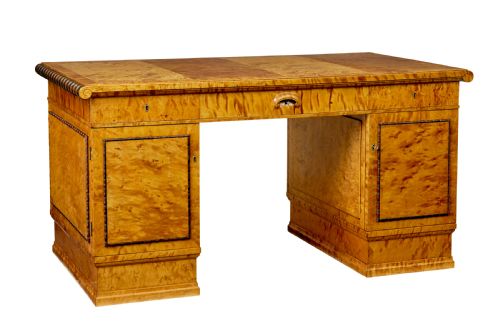
Pedestal desks and kneehole desks dominate the selection, offering banks of drawers beneath a writing surface. Simpler side tables and writing tables also appear, providing a lighter silhouette with turned or tapering legs.
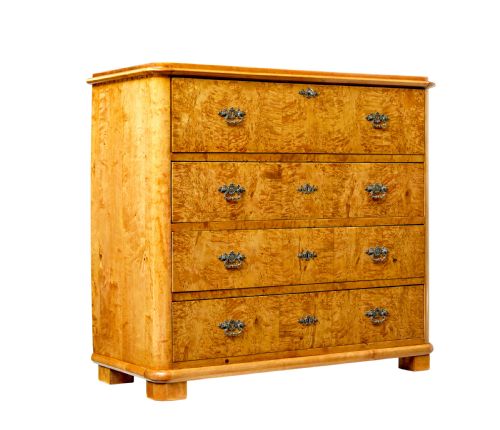
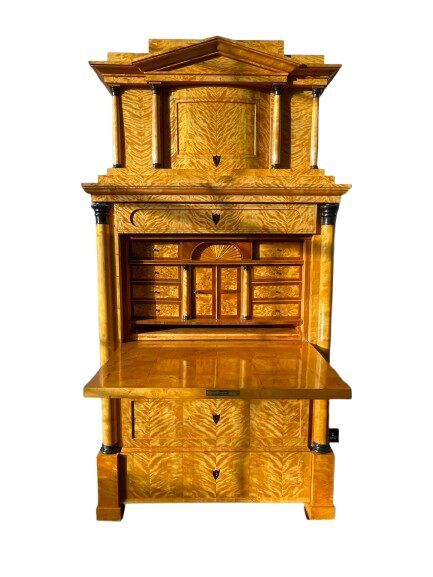
Secretaire chests of drawers and escritoires represent another major category, concealing a fitted writing interior behind a drop-front or drawer front. These taller forms often display dramatic grain patterns, particularly in nineteenth-century continental pieces.
What varies in quality
Quality rests upon the selection and matching of the birch veneer, where striking grain patterns and careful book-matching elevate a piece visually. The handling of secondary woods and the crispness of carved or ebonised details reveal the maker's competence.
Proportion and structural integrity define the higher tiers of these desks, ensuring that drawers operate smoothly and pedestals remain stable. Maker attribution, through stamps or known design characteristics, adds distinct weight to a piece.
Nineteenth-century Scandinavian cabinetmakers occasionally hid secret compartments inside secretaires behind false book spines.
Heal and Son·J Shoolbred·Howard and Sons
The Birch Writing Desk Glossary
- Satin birch
- A timber derived from specific varieties of birch displaying a lustrous, light-reflecting grain. It gained popularity in nineteenth-century cabinetmaking for its bright, warm surface.
- Secretaire
- A cabinet or chest incorporating a writing drawer with a drop-down front that reveals small compartments and pigeonholes. This form kept writing materials concealed when not in use.
- Pedestal desk
- A heavy desk supported by two vertical banks of drawers resting on the floor. The sitter sits in the kneehole space centred between the pedestals.
- Biedermeier
- A Central European design style spanning the nineteenth century, prioritising clean lines, domestic utility and the natural beauty of veneers. Or ornamentation remains restrained to let the wood grain speak.
Birch Writing Desk: Frequently Asked Questions
How do I identify a Biedermeier desk?
Biedermeier desks, originating in nineteenth-century Europe, are characterised by architectural simplicity and smooth, unblemished surfaces. They rely heavily on the visual impact of figured veneers such as birch without excessive carving.
These pieces often feature dark contrasting details like ebonised mouldings against pale birch. The focus remains strictly on proportion, clean geometry and the natural pattern of the wood.
How should I care for satin birch furniture?
Satin birch furniture requires protection from direct sunlight and excessive heat, which can dry out the pale timber and fade the finish. Regular dusting with a soft, dry cloth maintains the surface without buildup.
Application of appropriate furniture wax every few years nourishes the wood and preserves its characteristic sheen. Avoid placing damp items directly onto the unsealed wooden surfaces.
What is a kneehole desk?
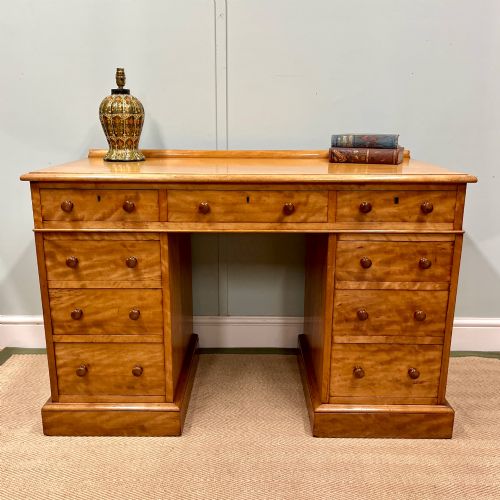
A kneehole desk is a pedestal form featuring a central recess where the user sits, flanked by two vertical columns of drawers. This layout provides substantial storage whilst maintaining a dedicated space for seating.
Victorian cabinetmakers frequently produced these in satin birch for domestic studies and libraries. The back is often finished, allowing the desk to sit away from the wall in the middle of a room.