





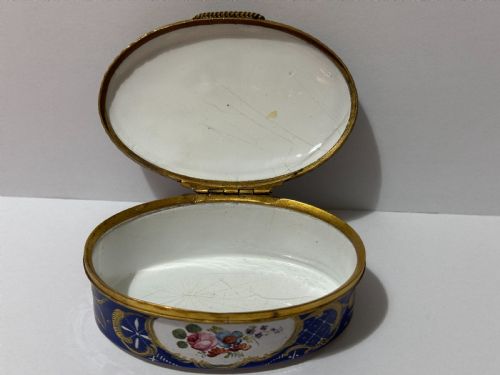


Bilston Enamel Snuff Box
A bilston enamel snuff box is a small, hand-painted container crafted for carrying tobacco or patches, prized for its glossy surface and fine detail.
Bilston Enamel Snuff Box
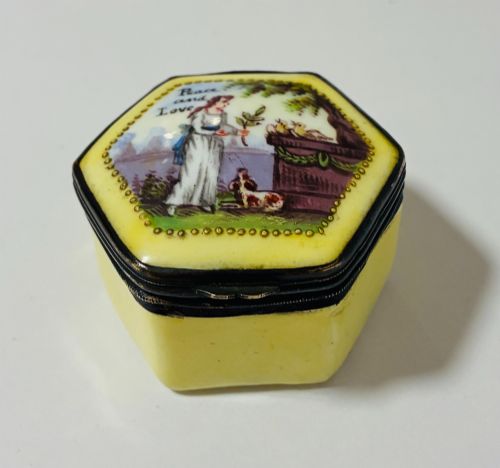
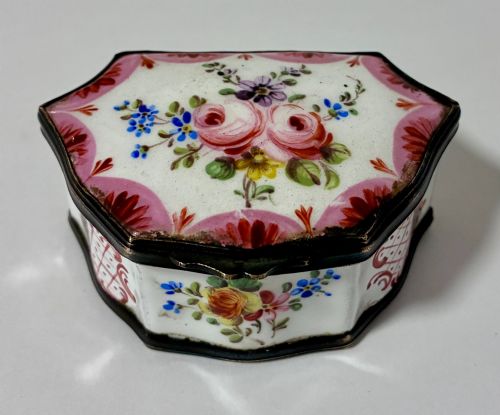
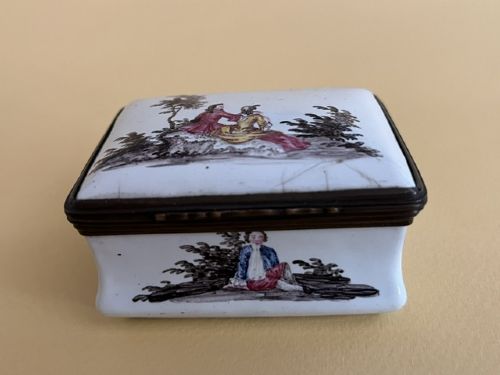
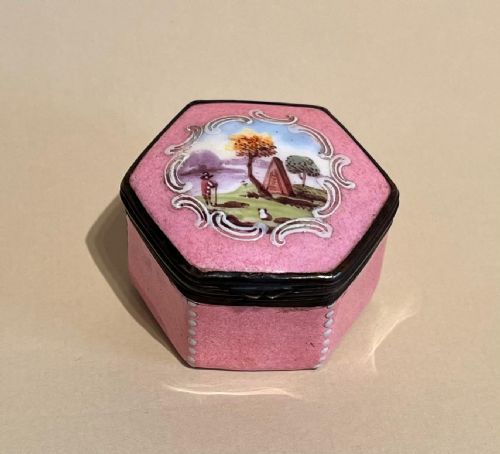
A bilston enamel snuff box belongs primarily to the eighteenth century, spanning the Georgian period and reaching into the nineteenth century with rectangular, oval, and novelty forms. The pieces met here frequently originate from Staffordshire and carry painted scenes, landscapes such as parkland or Cheltenham Wells, and inscriptions including tokens of esteem.
The category encompasses not only snuff boxes but also patch boxes and bonbonniere containers, alongside individual box tops and lids. These small decorative items display the distinctive white or powder pink enamel surfaces characteristic of the English enamel trade of the period.
Materials and construction
The foundation of these pieces relies on copper formed into shapes and coated with enamel to create a smooth canvas for painting. Metal mounts, often in copper gilt, brass, or gilt metal, frame the lids and secure the closures.
Makers applied hand-painted pigments directly onto the fired enamel surface, capturing detailed figures and text before a final firing to seal the colours. The combination of gilded metal hinges and lustrous enamel defines the physical construction seen across the inventory.
Bilston Enamel Snuff Box Retail Price Guide 2026
Typical asking prices for bilston enamel snuff box among the pieces listed under this phrase on Sellingantiques today, from the lower quarter to the upper quarter. They describe what is for sale here now, not the wider market.
Some boxes carry secrets inside their lids, retaining original miniature mirrors intended for adjusting facial patches on the go.
Judging quality in enamel boxes
Quality reveals itself in the precision of the hand-painted miniature work, where finer brushwork and more detailed compositions elevate a piece. The crispness of the copper gilt or brass mounts and how tightly the hinge fits the body also separate superior examples from simpler ones.
The preservation of the enamel surface without major distraction to the gloss or the painted scenes dictates the desirability of the piece. Subtle variations in the shade of the enamel, such as powder pink or clean white, add character to individual boxes.
The Bilston Enamel Snuff Box Glossary
- Bilston enamel
- Enamel work produced in the town of Bilston in Staffordshire during the eighteenth century, known for small boxes and decorative objects.
- Patch box
- A small container equipped with a mirror inside the lid, originally used by Georgian ladies to hold small silk patches for the face.
- Bonbonniere
- A small ornamental box designed specifically to hold sweets or bonbons.
- Copper gilt
- Copper metal that has received a thin layer of gold applied to its surface, commonly used for the rims and hinges of enamel boxes.
- Staffordshire
- The English county that served as a major centre for the production of enamels and ceramics during the Georgian era.
Bilston Enamel Snuff Box: Frequently Asked Questions
What is a bilston enamel snuff box?
A bilston enamel snuff box is a small eighteenth-century container made of copper and enamel, featuring hand-painted designs used originally for holding powdered tobacco.
These boxes represent a high point of English miniature craft during the Georgian period, often inscribed with personal mottoes or decorated with pastoral scenes.
How were patch boxes used?
Patch boxes were carried in pockets or reticules by Georgian women to hold small pieces of fabric or court plaster shaped into stars or dots.
Once the box was opened, the small interior mirror allowed the owner to check the placement of these cosmetic patches on the face.
How can I tell eighteenth century boxes apart?
Eighteenth century boxes are distinguished by their copper bases, hand-painted details, and characteristic enamel colours such as powder pink or bright white.
Later nineteenth-century examples often show different moulding techniques and shifts in the palette used for the transfer-printed or painted decoration.
Where were these boxes made?
These boxes were manufactured primarily in the English Midlands, specifically within Staffordshire and the town of Bilston.
Local workshops specialised in shaping the copper foundations, applying the vitreous enamel, and executing the fine miniature paintings on the lids.