



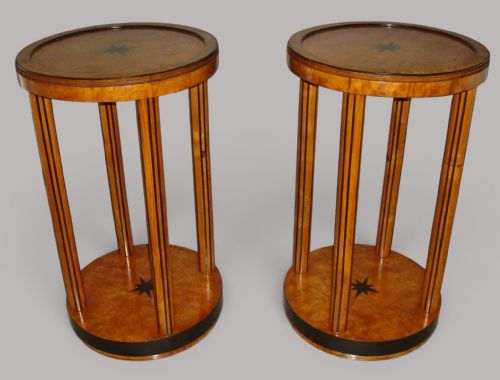


Biedermeier Style Pedestal Tables
Biedermeier style pedestal tables combine striking architectural woods with restrained European forms to anchor a room with calm presence.
Biedermeier Style Pedestal Tables
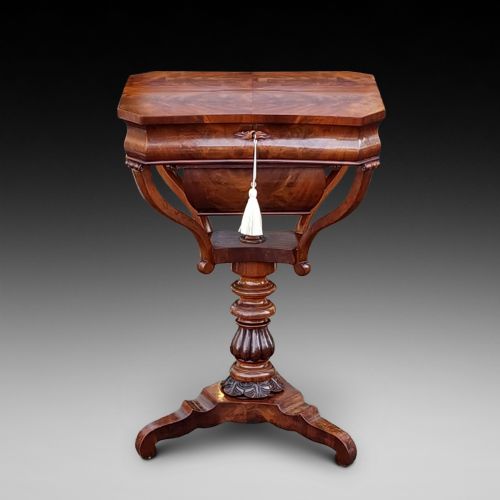
Biedermeier style pedestal tables encompass diverse forms such as drum tables, sofa tables, and centre tables originating across the nineteenth century and twentieth century revivals. These pieces rely on a central support column rising from a solid base rather than traditional corner legs.
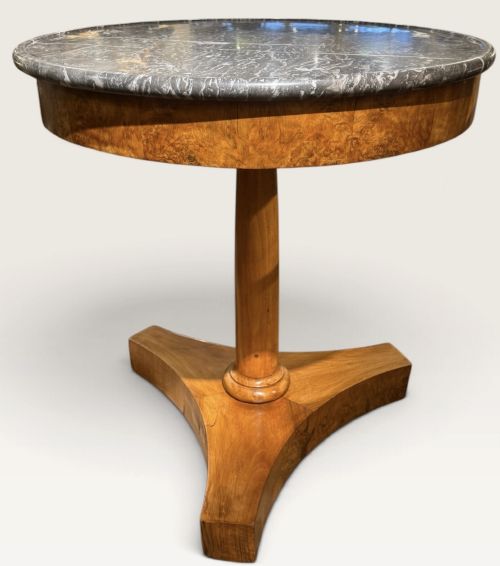
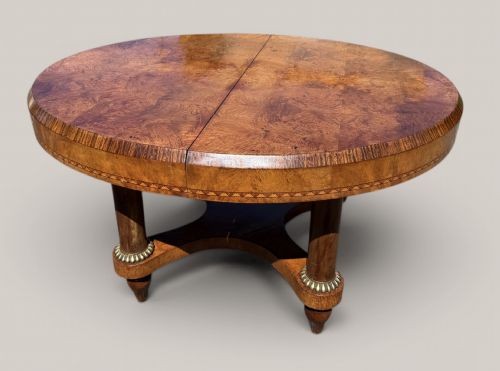
The version most commonly encountered on this page is the occasional table or drum table, often executed in northern European timbers like burr birch and elm. Such tables frequently feature circular or oval tops supported by pillar or lyre pedestals.
Originating within nineteenth century Scandinavian and broader European design, these tables bridge the gap between classical French Empire grandeur and domestic utility. Makers utilised rich veneers and straightforward silhouettes to create functional surface area without visual clutter.
Materials and Construction
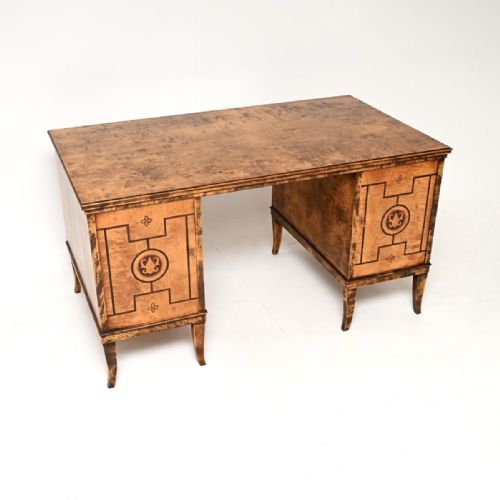
Construction relies heavily on dense native and exotic timbers, with cabinetmakers applying figured veneers like burr maple, flame birch, and burr walnut over stable core woods. These patterned grains are arranged symmetrically across table tops to create natural decorative geometry.
Support columns and bases integrate structural hardwoods such as mahogany and elm alongside occasional brass or ormolu mounts. Marble tops appear on specific gueridon and circular formats, adding weight and a cool tactile contrast to the warm timber surfaces.
Biedermeier Style Pedestal Tables Retail Price Guide 2026
Typical asking prices for biedermeier style pedestal tables among the pieces listed under this phrase on Sellingantiques today, from the lower quarter to the upper quarter. They describe what is for sale here now, not the wider market.
Early nineteenth century cabinetmakers occasionally utilised tree burls to create swirling tabletops that double as abstract landscapes in wood.
Judging Quality
Quality reveals itself in the selection and bookmatching of the veneer, where top tier examples display continuous, highly figured burr patterns across the entire surface without interruption or clumsy patching. The transition from the central pedestal to the feet demonstrates the maker's structural confidence.
Proportion dictates visual success, separating masterwork proportions from heavier, domestic interpretations. The crispness of inlay work and the integration of secondary woods like ebony indicate the level of workshop care invested in the piece.
The Biedermeier Style Pedestal Tables Glossary
- Burr Birch
- A timber harvested from viral growths on birch trees, yielding complex, swirling grain patterns highly prized for cabinet fronts and table tops. It defines much of the distinctive look found in northern European furniture.
- Gueridon
- A small French table supported by a single central pillar, often topped with marble. This form gained popularity for serving drinks or holding decorative lamps.
- Drum Table
- A circular table with a deep rim containing drawers, mounted on a central pedestal base. The silhouette resembles the shape of a marching drum.
- Ormolu
- Gilded bronze mounts applied to furniture for decorative accent. It provides a sharp metallic contrast against dark mahogany and pale birch surfaces.
- Lyre Form
- A pedestal shaped in the stylized outline of a classical stringed musical instrument. This architectural support appears frequently beneath nineteenth century occasional tables.
Biedermeier Style Pedestal Tables: Frequently Asked Questions
Where should I place a pedestal table?
Centre tables and drum tables work effectively in the middle of a room or as a standalone focal point beneath a central light fixture. Their rounded footprints allow for easy movement around them in tighter spaces.
Sofa tables and occasional variants fit neatly against walls or beside seating where a stable surface is required without the visual interruption of corner legs.
How do I care for burr wood surfaces?
Keep nineteenth century wood surfaces away from direct sunlight and excessive heat sources to prevent the underlying veneers from drying out or lifting. Regular dusting with a soft, dry cloth maintains the finish.
Apply occasional professional wax polish suited to antique furniture to nourish the timber grain and protect the polish without building up greasy residue.
Are marble top tables original?
Marble tops frequently appeared on gueridons and specific centre table formats throughout the nineteenth century to provide a durable, heat resistant surface. Examining the underside reveals how the stone rests on the wooden frame.
Consistency in the edge bevelling and matching wear patterns between the stone and the timber base generally confirm the integrity of the piece.