


Biedermeier Side Table
These biedermeier side table pieces bring crisp nineteenth-century northern European geometry and striking timber figure into domestic rooms.
What a biedermeier side table is
A biedermeier side table is a functional nineteenth-century form designed for domestic utility and display. The selection on this page centres on nineteenth-century examples, including specific pieces dated to eighteen seventy and the broader Victorian period.
The primary forms appearing across these listings include side tables, occasional tables, lamp tables, card tables, tea tables, and tripod tables. Console and writing table variations also emerge from the archive records.
Origin and style descriptions frequently point to Swedish Biedermeier, alongside Karl Johan, Empire Revival, and French Empire expressions. These pieces span standard side functions as well as occasional, tea, and card table formats.
Materials and construction
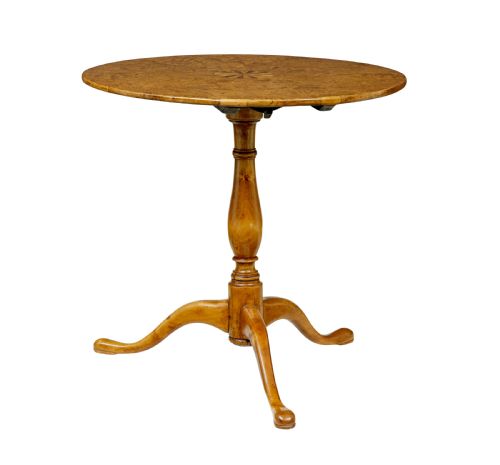
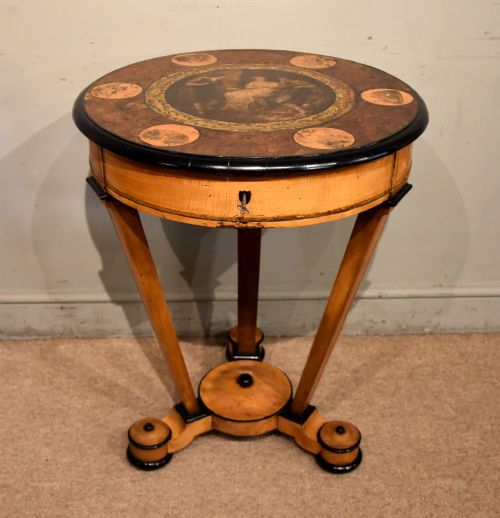
Makers utilised a distinctive palette of timber species, prominently featuring birch, burr birch, birds eye maple, alder root, walnut, and mahogany. Contrast is achieved through the integration of ebonised wood and ebony elements alongside bright brass details.
Surface treatment relies heavily on natural wood grain patterns and decorative figuring, such as birds eye and burr formations. Inlaid decoration also appears alongside white marble surfaces on specific items.
Retail Price Guide 2026
Typical UK retail prices for biedermeier side table, calculated from the Sellingantiques database of over a million retail prices indexed since 2003. This retail price guide relies exclusively on Sellingantiques data; no external sources or auction records are used, so the figures do not describe the wider market.
The listings combine nineteenth-century Swedish furniture forms with French Empire and revival styles executed in birch, maple, and mahogany.
Assessing quality
Quality rests upon the selection and matching of timber veneers, where highly figured burr birch and birds eye maple elevate the visual impact of a piece. The crispness of inlay work and the harmonious integration of ebonised details also differentiate standard examples from finer outputs.
Structural integrity depends on the precision of the joinery, particularly in complex forms like tripod bases and folding card tables. The choice of secondary woods and the retention of original surface patination further distinguish higher-grade pieces.
The Biedermeier Side Table Glossary
- Birr Birch
- A decorative timber cut from birch growth excrescences, yielding a swirling, mottled grain pattern. It provides exceptional visual texture on table tops.
- Birds Eye Maple
- Timber figure featuring small, circular disruptions in the grain resembling tiny eyes. This characteristic pattern was highly prized for nineteenth-century cabinet work.
- Card Table
- A hinged table designed for gaming, featuring a fold-over top that opens to reveal a baize-lined playing surface. These items combine social function with compact storage.
- Tripod Table
- A small table supported by a central pillar resting on three spreading feet. This construction allows for stability on uneven floors.
- Gueridon
- A small round occasional table supported by one or more central columns. The form originated in seventeenth-century France and persisted through the nineteenth century.
Frequently Asked Questions
What is a biedermeier side table used for?
These tables served various domestic functions in nineteenth-century homes, ranging from general surface utility to specific uses as lamp, tea, or card tables. Their compact footprints made them adaptable for placement beside seating or against walls.
Today, they function effectively as accent pieces in modern interiors, holding lighting, books, or decorative objects. Their clean geometric lines allow them to integrate easily into diverse room schemes.
How do I identify Swedish Biedermeier?
Swedish Biedermeier is typically characterised by lighter blonde timbers such as birch and maple, paired with minimalist neoclassical forms. Makers often relied on the natural grain of the wood for decoration rather than heavy carving.
Look for restrained brass mounts, ebonised details, and clean architectural silhouettes. Regional pieces frequently demonstrate a preference for pale veneers that brighten domestic interiors.
What is the difference between a side table and a console table?
Side tables are generally freestanding pieces designed to be accessed from multiple sides or placed beside furniture. Console tables traditionally featured flat backs intended to stand flush against a wall.
In nineteenth-century contexts, these terms sometimes overlap depending on the specific room layout and function. The construction details usually indicate whether a piece was meant for central placement or wall support.
How should I care for burr birch surfaces?
Burr birch and figured maple veneers require protection from direct sunlight and extreme humidity fluctuations to prevent fading and veneer lifting. Regular dusting with a soft, dry cloth maintains the surface sheen.
Avoid using silicone-based polishes or harsh chemical cleaners, which can degrade nineteenth-century finishes. Occasional application of appropriate wax preserves the moisture and natural chatoyancy of the timber.