




Bevelled Silver Table Mirror
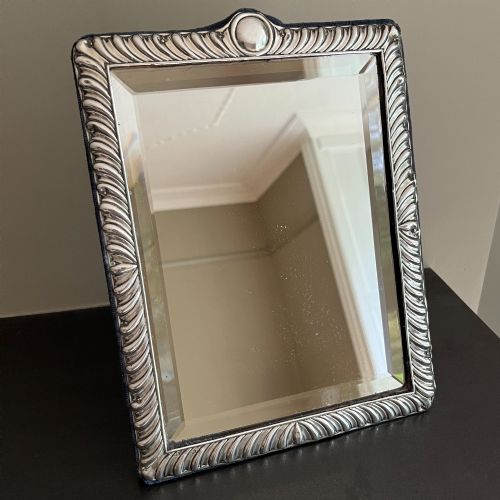
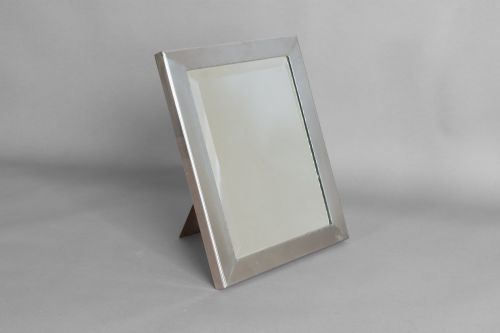
A bevelled silver table mirror sits upon the dressing table to catch the light and sharpen every reflection.
Bevelled Silver Table Mirror
A bevelled silver table mirror is a dressing table accessory designed for personal grooming and vanity. These objects range from compact easel backs to large triptychs intended to stand upright on furniture.
The versions most commonly met on this page span the Victorian, Edwardian, and Art Deco periods, encompassing both sterling silver and silver plated constructions. Makers produced these mirrors in rectangular, heart shaped, and easel formats using glass and mirror plateaus.
Beyond standard dressing table mirrors, related forms include mantel clocks and spelter figures which share the material vocabulary of the era. The primary focus remains on reflective glass framed in metal or wood with supportive backs.
What varies in quality
Quality rests in the weight of the metal and the precision of the silver hallmarks stamped into the frame. Thicker gauge silver and substantial wooden backing boards separate robust examples from lighter, more fragile items.
The clarity and depth of the bevel on the mirror glass itself indicate the care taken by the original glazier. Finer pieces feature intact original mirror plates and well-engineered strut mechanisms that support the weight without slipping.
Bevelled Silver Table Mirror Retail Price Guide 2026
Typical asking prices for bevelled silver table mirror among the pieces listed under this phrase on Sellingantiques today, from the lower quarter to the upper quarter. They describe what is for sale here now, not the wider market.
A dancing lady cast in spelter keeps watch beside the clocks and mirrors.
Henry Matthews
The Bevelled Silver Table Mirror Glossary
- Bevelling
- The practice of grinding and polishing the outer edge of a mirror glass at an angle to create a decorative border. This technique adds depth and catches light differently than a flat cut edge.
- Strut mirror
- A portable mirror supported by a hinged prop or leg attached to the back, allowing it to stand upright on a flat surface. These were essential items on Edwardian and Victorian dressing tables.
- Hallmark
- A series of official marks stamped onto precious metals indicating the standard of purity, the assay office, and the maker. On these pieces, they provide reliable dating evidence.
- Spelter
- A zinc alloy frequently used in the Art Deco period as a base metal for decorative figures and frames. It was often painted or bronzed to imitate more costly materials.
Bevelled Silver Table Mirror: Frequently Asked Questions
How do I date a silver table mirror?
Dating relies heavily on the hallmarks struck into the sterling silver frame, which indicate the assay office and year of manufacture. Stylistic markers such as Edwardian symmetry or Art Deco geometry also point to specific decades.
The materials used for the backing, such as wood covered in velvet, further support the period of production.
Were these mirrors meant for travel?
Most table mirrors were designed for stationary use on dressing tables and mantelpieces rather than travel. Their heavy glass plates and hinged struts required a stable surface to stand safely.
Smaller easel backs offered some portability between rooms within a large household.
What is the difference between sterling and plated?
Sterling silver consists of solid precious metal throughout the frame, carrying official hallmarks for purity. Silver plated items feature a thin layer of silver applied over a base metal core.
Plated pieces offer the appearance of silver without the intrinsic metal weight of solid sterling.
How should I clean the silver frame?
Cleaning requires a soft cloth and a gentle polish formulated specifically for silver to avoid damaging the metal surface. Care must be taken to keep polishing compounds away from the glass edge and the backing material.
Frequent light dusting preserves the finish better than aggressive chemical cleaning.