


Belgian Landscape Painting
These works capture open pastures and quiet coastal waters, offering a window into historical rural life.
Belgian Landscape Painting
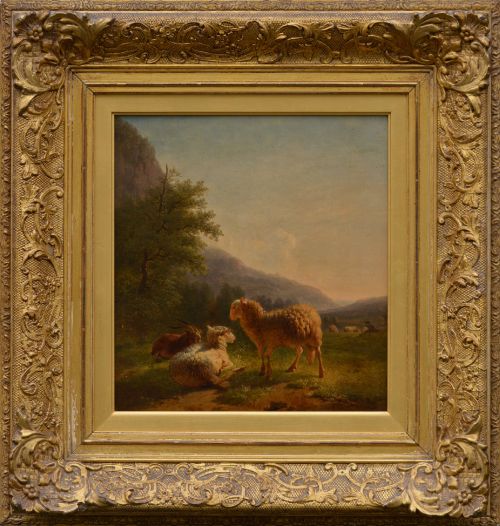
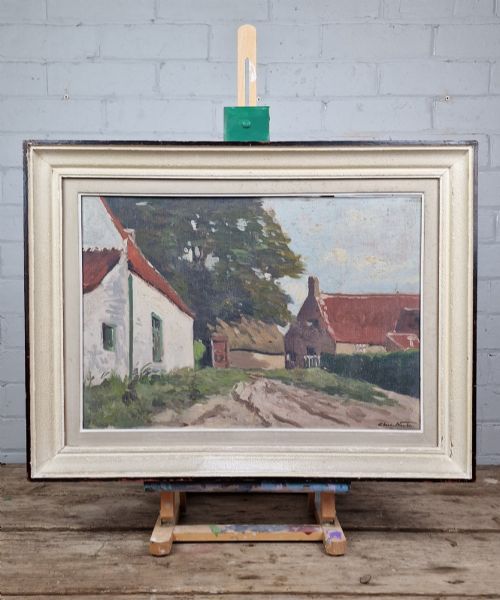
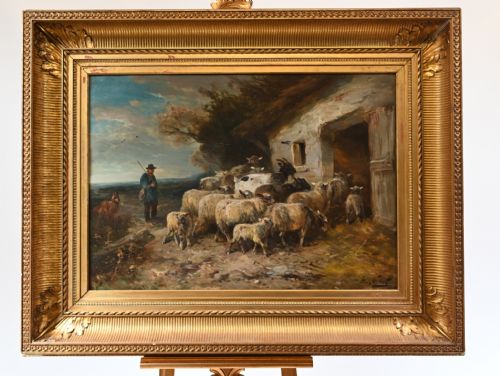
Belgian landscape painting encompasses pastoral scenes, quiet farmyards, and coastal views created during the nineteenth and early twentieth centuries. These artworks capture rural life, featuring shepherds with flocks, horses at work, and village streets across the region.
Most examples encountered here originate from the nineteenth century, extending into the nineteen-twenties and nineteen-fifties. The selection spans oils on canvas or wood panel alongside watercolours, reflecting realism, romanticism, and impressionism.
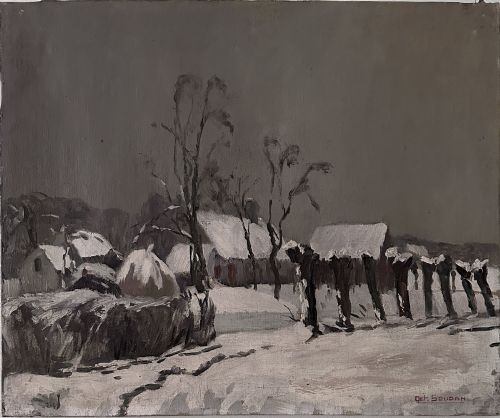
Subjects range from wide coastal waters near Ostend and Bruges to sheltered farmyards and winter villages. Many pieces integrate animals such as sheep, ponies, and poultry into the scenery, anchoring the landscape in everyday agricultural life.
How they were made
Artists primarily applied oil paint to stretched canvas or prepared wooden panels, occasionally working in watercolour on paper. Canvases received priming layers of gesso to create a stable foundation for brushwork and pigment adhesion.
Frames frequently incorporate carved and gilded wood, known as giltwood, sometimes enhanced with gold leaf to complement the palette of the painting within. Support structures vary from simple wooden stretchers to robust historic frames.
Sheep appear with surprising frequency across rural scenes, often monitored by attentive shepherds and sturdy farm ponies.
What varies in quality
Depth of composition and sureness of brushwork separate accomplished hands from routine studio output. Master works display confident handling of light across fields and water, whereas lesser pieces rely on formulaic arrangements.
Condition of the original paint surface and its housing matter greatly. Intact pigment without extensive overpaint, paired with period framing bearing original gesso and gilding, elevates the standing of a piece.
Eugène Verboeckhoven·Charles Houben·Henry Schouten·Franz van Severdonck·Paul Jean Clays
The Belgian Landscape Painting Glossary
- Gesso
- A white paint mixture consisting of a binder mixed with chalk, gypsum, or pigment, used to prepare surfaces for painting.
- Giltwood
- Wood that has been treated with gold leaf or a gold-coloured metallic finish, commonly used for ornate picture frames.
- Impressionism
- A nineteenth-century art movement characterised by relatively small, thin, yet visible brush strokes and an emphasis on accurate depiction of light.
- Post-Impressionism
- A predominantly French art movement that developed from Impressionism, extending its limits while rejecting its limitations for more expressive abstraction.
- Watercolour
- Paint consisting of colour pigments suspended in a water-soluble vehicle, traditionally applied to paper.
Belgian Landscape Painting: Frequently Asked Questions
What subjects appear in these paintings?
The works predominantly feature rural countryside views, pastoral farmyards, coastal shipping scenes, and village streets. Animals like sheep, cattle, and horses frequently occupy the foreground of these pastoral compositions.
Views extend from maritime settings near Ostend to inland agricultural properties and winter villagescapes across the Belgian countryside.
How do I identify the period of a work?
Stylistic clues such as nineteenth-century realism, romanticism, or later impressionist brushwork offer initial dating indicators. Frame construction, canvas types, and artist signatures or biographical dates provide further chronological context.
Written inscriptions on the reverse or stretcher bars often record dates, locations, or the artist's active lifetime.
How should I care for these paintings?
Keep artworks away from direct sunlight, high humidity, and extreme temperature fluctuations to protect canvas, wood panels, and historic frames. Dust surfaces gently with a soft, dry brush without applying moisture or cleaning solutions.
Consult a professional conservator if the paint surface requires cleaning or if the structural support needs attention.
What materials were used by the artists?
Painters primarily utilised oil paints on canvas or wood panels, while some creators worked in watercolour on paper. Supporting frames were constructed from wood, frequently finished with gesso and gold leaf.
Substrate preparation involved traditional sizing and priming methods suited to the specific demands of oil or water-based media.