
Bedside Cupboard with Drawer
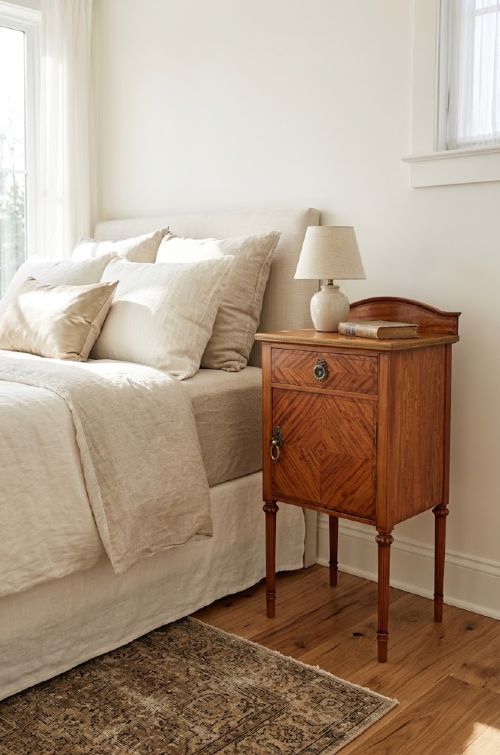
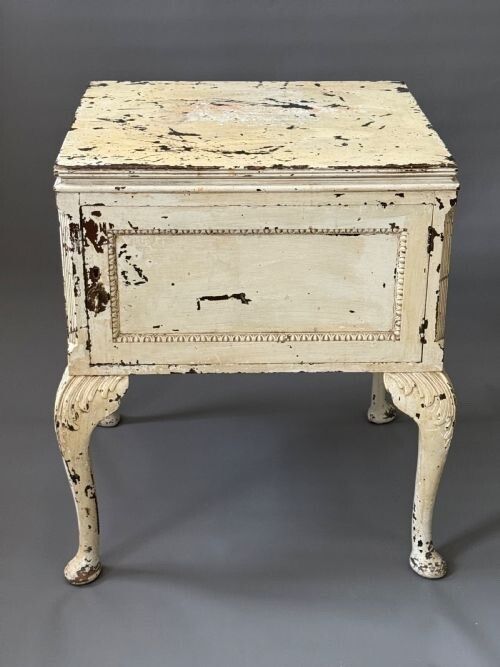
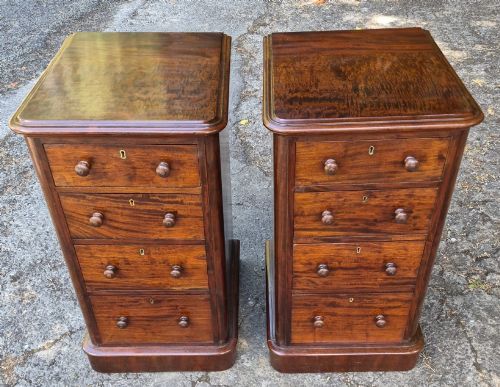
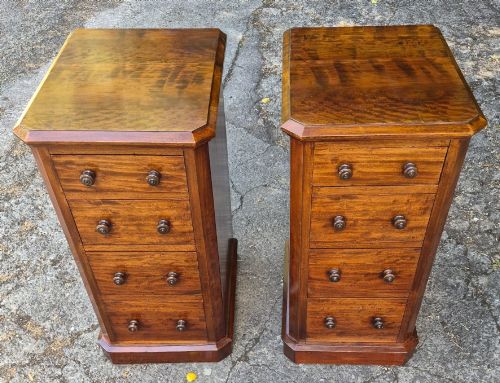
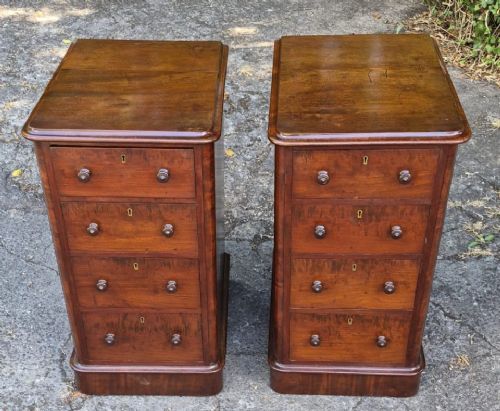
A bedside cupboard with drawer provides compact storage beside a bed, combining a concealed compartment with an accessible sliding tray.
Bedside Cupboard with Drawer
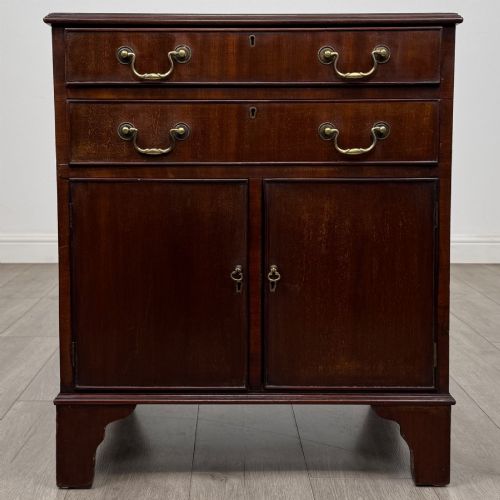
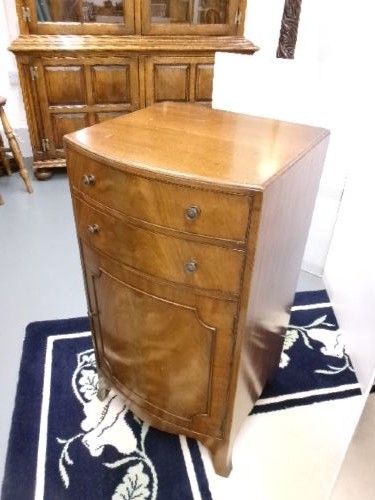
A bedside cupboard with drawer combines an upper or lower sliding compartment with a closed storage space, appearing across the Georgian, Victorian, and Edwardian periods.
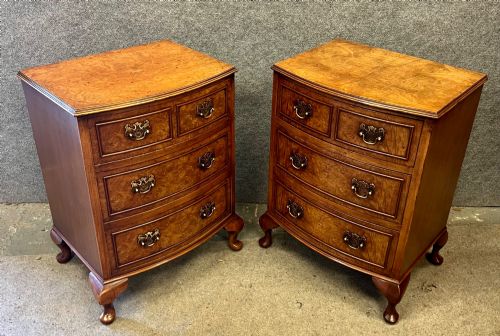
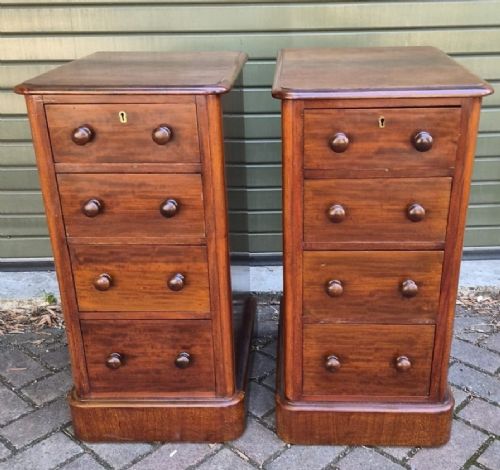
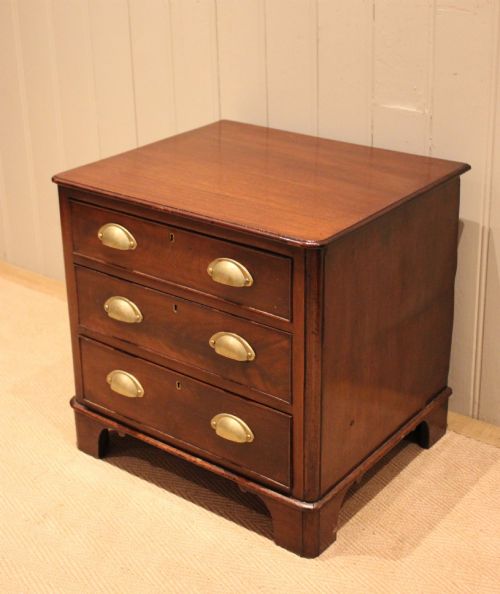
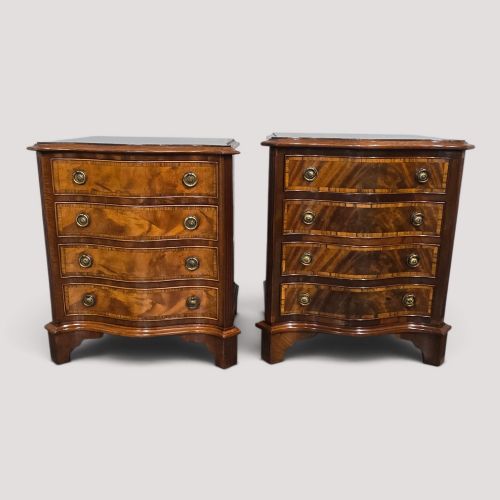
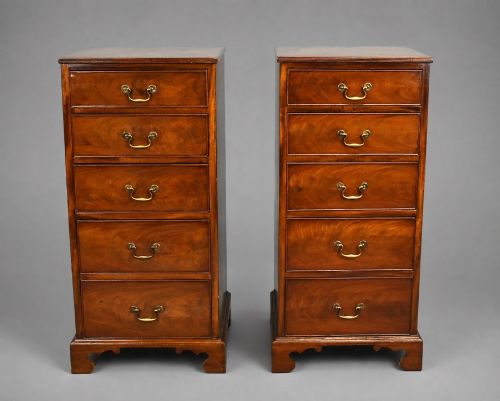
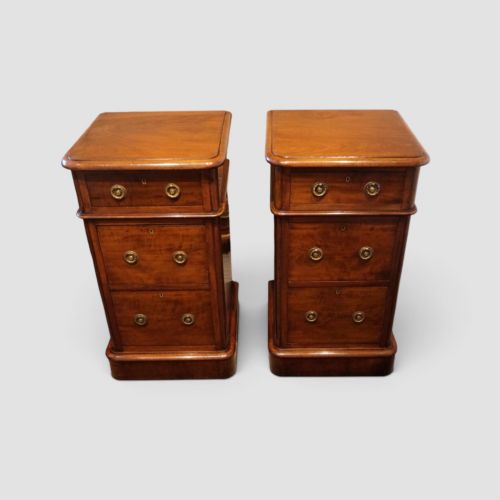
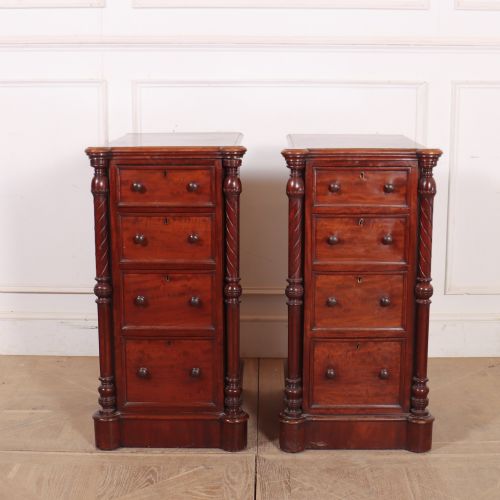
The pieces on this page span the nineteenth century into the twentieth, taking the form of compact cabinets, commodes, and nightstands in mahogany, oak, walnut, pine, and satinwood.
Georgian and Regency examples often feature flame mahogany or tray tops, while Victorian and Edwardian variations introduce painted finishes, faux bamboo, and inlaid details.
Judging quality and craftsmanship
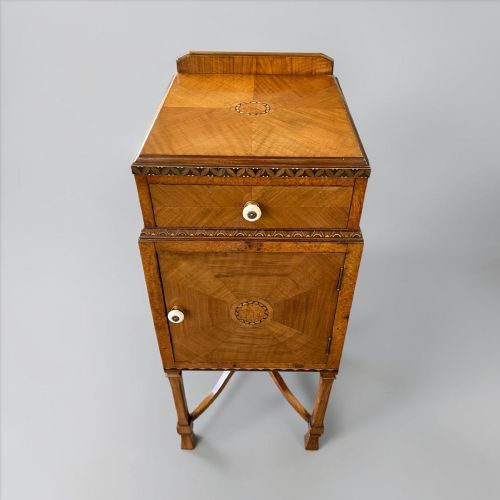
Quality rests upon the selection of timber figures, such as flame mahogany or figured walnut, and the precision of inlaid woodwork and joinery.
Hardware integrity, from fitted brass handles to smooth drawer action, distinguishes finer workshop production from simpler utility pieces.
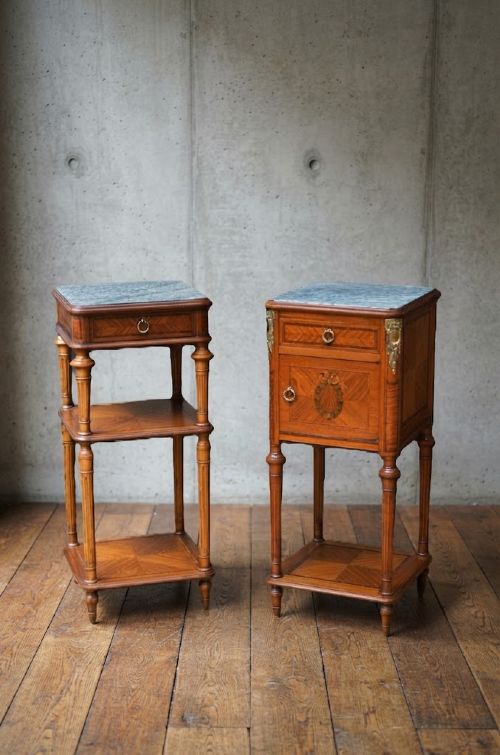
Listings include mahogany, oak, walnut, satinwood, pine, and fruitwood, alongside marble and brass elements.
Gomme
The Bedside Cupboard with Drawer Glossary
- Commode
- A low cabinet or chest enclosing storage space. In this context, it often refers to bedside cabinets with doors and drawers.
- Nightstand
- A small table or cabinet designed to stand beside a bed. These frequently incorporate a single drawer above a small cupboard.
- Tambour
- A sliding door made of narrow vertical strips of wood glued to a canvas backing. This mechanism allows the door to curve around the corner of a cabinet.
- Tray-top
- A raised rim around the upper edge of a small table or cabinet. This design prevents items placed on top from rolling off.
Bedside Cupboard with Drawer: Frequently Asked Questions
What is a bedside cupboard with drawer?
A bedside cupboard with drawer is a small piece of bedroom furniture designed to hold night-time essentials. It pairs an enclosed cabinet section with a sliding drawer for organised storage.
These pieces emerged in various regional styles across the Georgian and Victorian eras, adapting in materials from solid mahogany to painted pine.
How were these cabinets used originally?
Originally placed beside a bed, these small cupboards kept personal items out of sight while offering a flat surface for a candle or lamp. The enclosed lower section often served to house chamber pots or nighttime necessities.
The inclusion of a drawer provided a shallow space for smaller personal belongings, keeping them within easy reach during the night.
How do I identify a Georgian bedside cupboard?
Georgian examples typically rely on substantial timber choices like mahogany, often displaying flame veneer or subtle string inlay. They frequently feature tray-tops or classic square proportions suited to period interiors.
Later Victorian and Edwardian iterations tend to introduce lighter woods, painted finishes, or more eclectic styles such as faux bamboo.
Are marble tops common on these cabinets?
Marble tops appear frequently on continental European nightstands and commodes, particularly French designs from the nineteenth century. They provided a durable, wipe-clean surface resistant to spills from water jugs or candles.
British examples more commonly feature polished wooden tops, though marble tops do occur across various regional workshop traditions.