
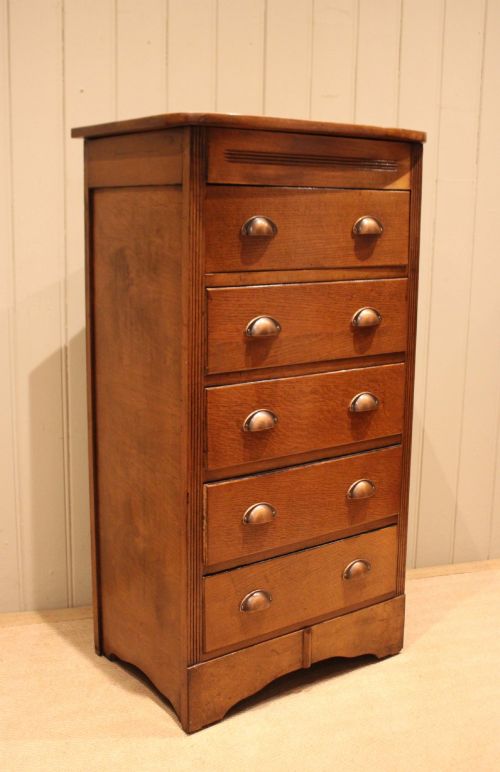
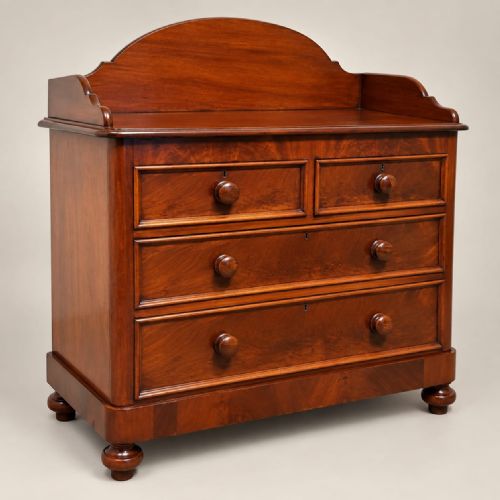
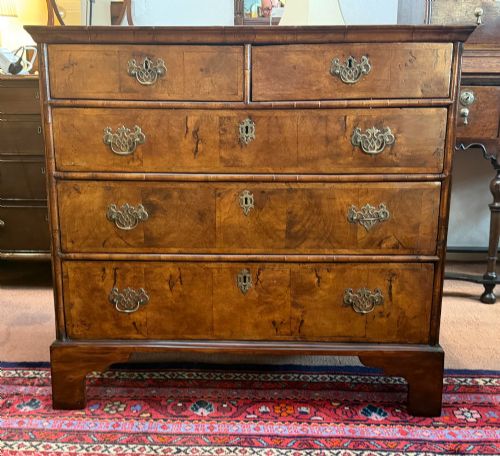
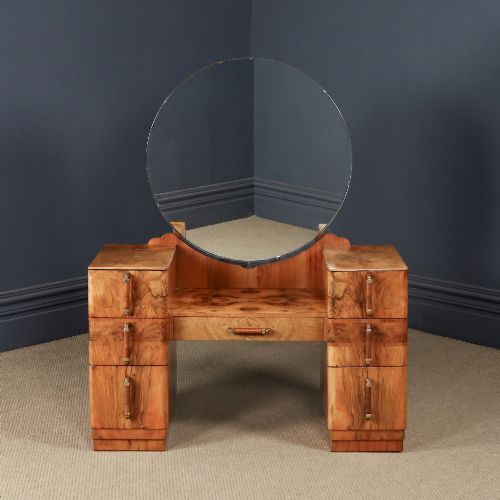
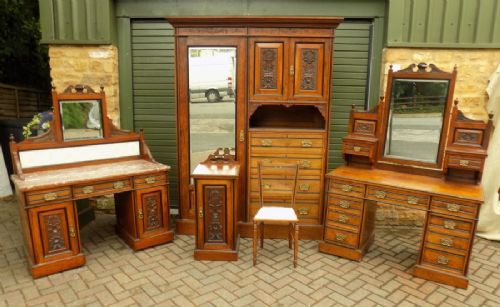
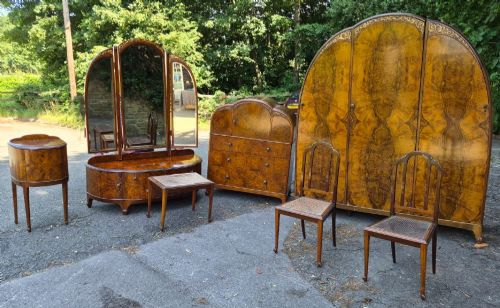
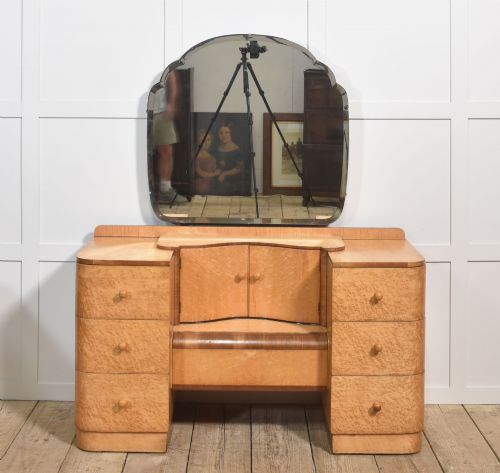
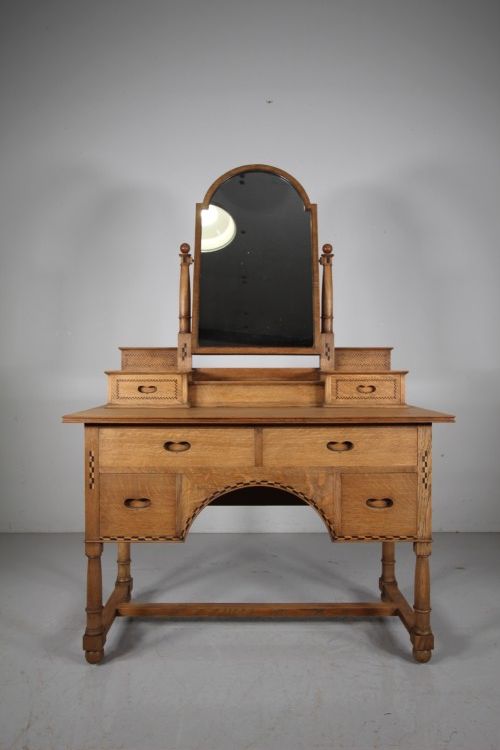
Bedroom Dressing Chest
A bedroom dressing chest combines storage drawers with a fitted mirror for daily grooming, offering both practical utility and period character.
Bedroom Dressing Chest
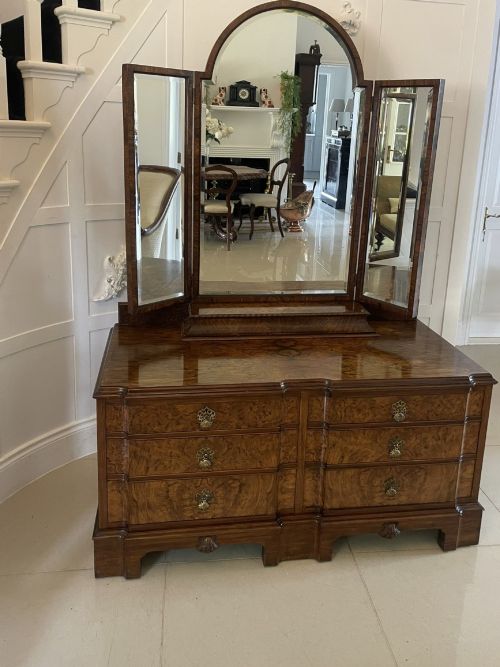
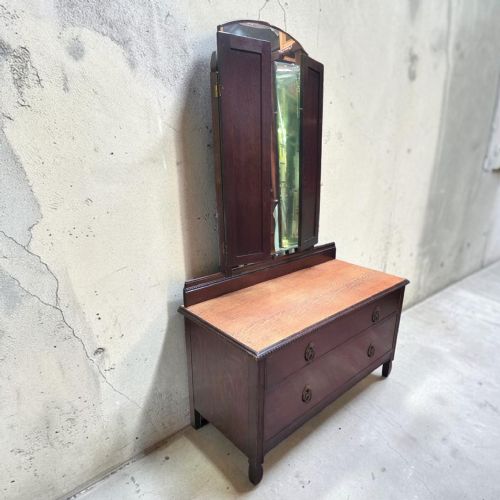
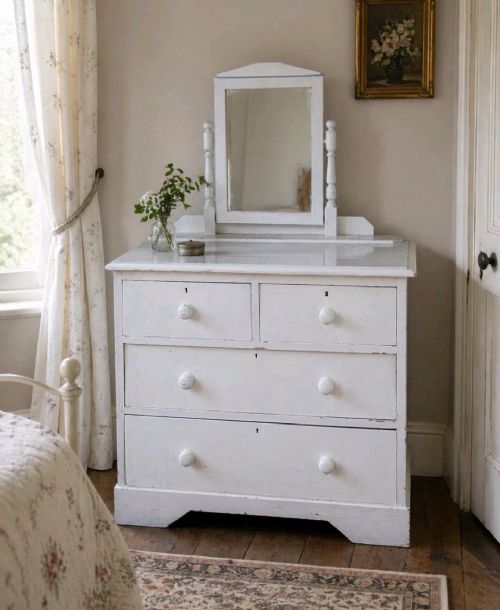
A bedroom dressing chest merges the drawer capacity of a traditional chest with the surface and mirror of a dressing table. Pieces of this form appear across the 18th, 19th and early 20th centuries, spanning periods from late Georgian and Victorian to Edwardian and Art Deco.
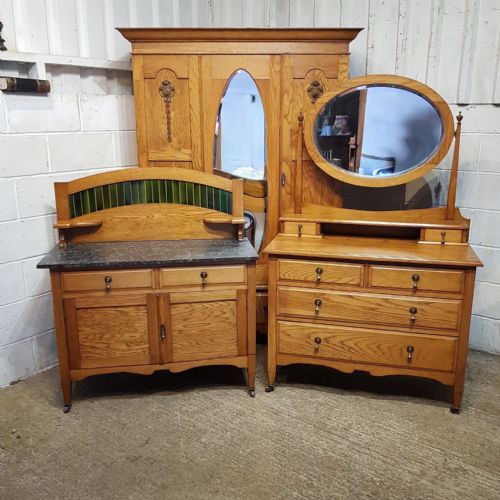
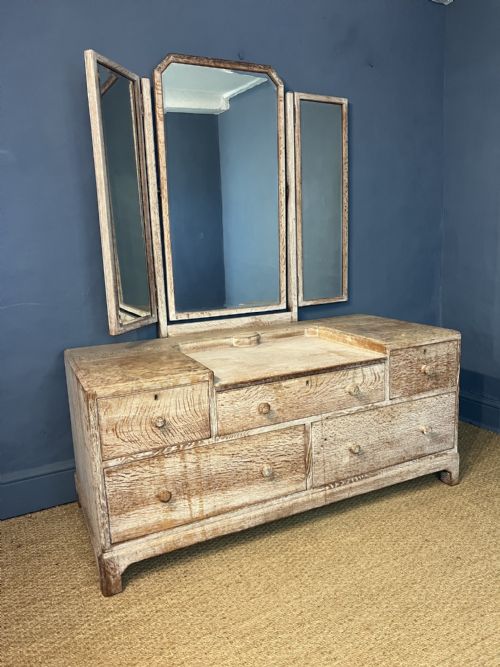
The version most commonly met on this page is the Edwardian or Victorian mahogany or pine dressing chest, often fitted with an adjustable swivel mirror and smaller jewellery drawers mounted on top. Oak examples from the Arts and Crafts and 1930s periods also frequently appear.
Makers occasionally produced these as part of larger bedroom suites that included matching wardrobes and washstands, though many survive as standalone items of bedroom furniture.
How they were made
Construction relies heavily on solid native timbers such as oak, mahogany and pine, combined with decorative veneers like burr walnut and satinwood applied to drawer fronts and tabletops. Carved details, marquetry inlay and brass handles define the decorative approach of Victorian and Edwardian workshops.
Mirrors are supported by upright swing frames, often utilising adjustable brass pivots to alter the angle of the glass. Carcass construction employs traditional dovetail joinery for the drawers to ensure stability over decades of daily use.
Some Edwardian pine chests received painted finishes, offering durable charm for generations of bedrooms.
What varies in quality
Quality rests on the selection of timber veneers, the precision of the dovetail joinery and the integrity of the original mirror glass and brass hardware. Finer examples display carefully matched burr walnut or satinwood grains across the drawer fronts rather than simpler painted pine or plain mahogany.
The complexity of the superstructure, such as triple mirrors, carved pediments or integrated jewellery boxes, separates standard utility pieces from high workshop productions by makers like Heals or Edwards and Roberts.
Frank Taylor and Co·Heal and Sons·Maurice Adams·Shapland and Petter·Edwards and Roberts
The Bedroom Dressing Chest Glossary
- Dressing chest
- A low chest of drawers fitted with a mirror and superstructure designed for personal grooming. These items combine surface space with storage for everyday items.
- Pedestal dressing table
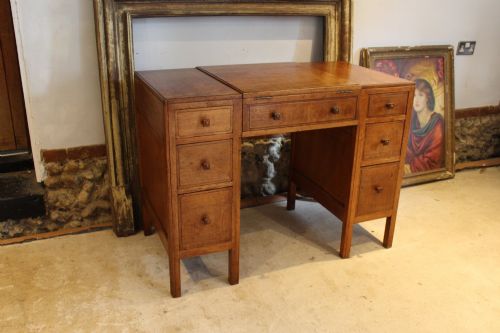
- A form featuring two banks of drawers flanking a central kneehole space beneath the main surface. This layout provides separate drawer stacks on either side.
- Duchess dressing table
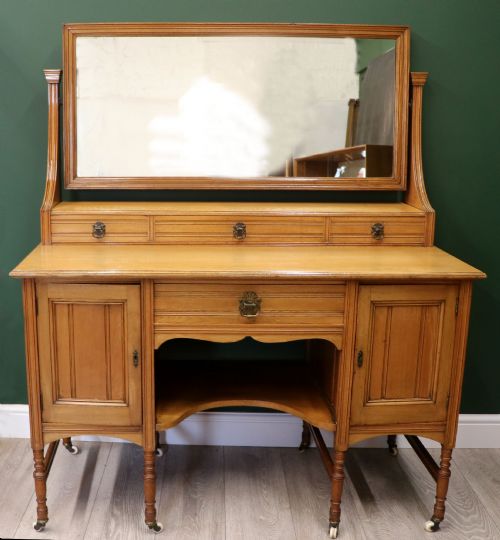
- A grand Victorian dressing table style characterised by a large central swing mirror supported by small trinket drawers. They are frequently executed in burr walnut or mahogany.
- Marquetry
- Decorative woodwork where pieces of veneer are fitted into a background panel to form pictorial or geometric designs. This technique embellishes high-end Victorian cabinet work.
- Limed oak
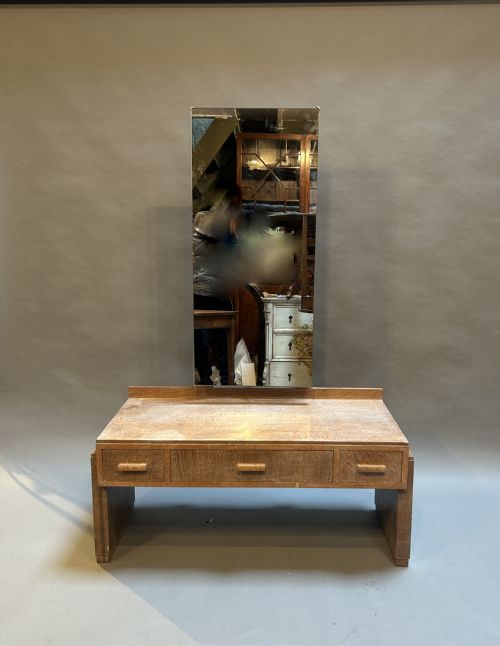
- A specialist wood finish created by applying a white pigment or lime into the open grain of oak timber. Heals popularized this light finish during the 1930s.
Bedroom Dressing Chest: Frequently Asked Questions
How do I distinguish Edwardian from Victorian dressing chests?
Victorian examples tend to use heavy mahogany or burr walnut with deep carving and dark polish. Edwardian pieces often favour lighter mahogany, satinwood inlay or painted pine with simpler structural lines.
Superstructures on Victorian models frequently feature large, ornate mirror frames, whereas Edwardian versions lean towards simpler shields or oval mirrors with adjustable brass brackets.
Were mirrors original to these dressing chests?
Most surviving dressing chests retain their original swing mirrors, held by upright wooden arms bolted to the main carcass. Because mirrors are vulnerable to damage, replacement glass or repaired support arms appear frequently.
Checking for matching wood patina and screw fixings helps confirm if the mirror frame has remained with the chest since manufacture.
Can I use a dressing chest as a standard chest of drawers?
The lower portion functions identically to a standard chest of drawers, offering deep storage capacity. Removing the mirror superstructure is possible, though fixing holes will remain visible on the top surface.
Keeping the mirror intact preserves the balance and intended proportion of the piece within a bedroom setting.
What is the difference between a dressing table and a dressing chest?
A dressing chest typically starts life as a chest of drawers with a mirror added to the top, providing deeper drawer storage. A dressing table is often lighter in build with kneehole space underneath for sitting.
Many listings use the terms interchangeably, but the presence of deep drawer tiers usually defines the chest variant.