

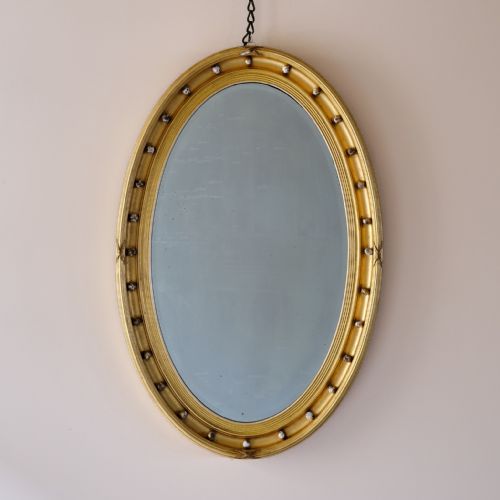


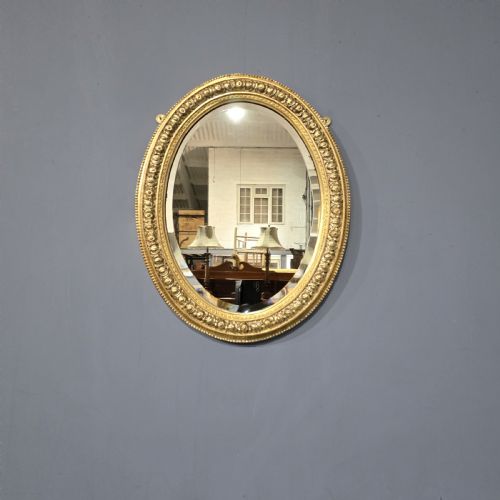


Beaded Gilt Oval Frame
A beaded gilt oval frame brings warmth and classic proportion to a room, enclosing mirrors, portraits and needleworks with delicate perimeter detail.
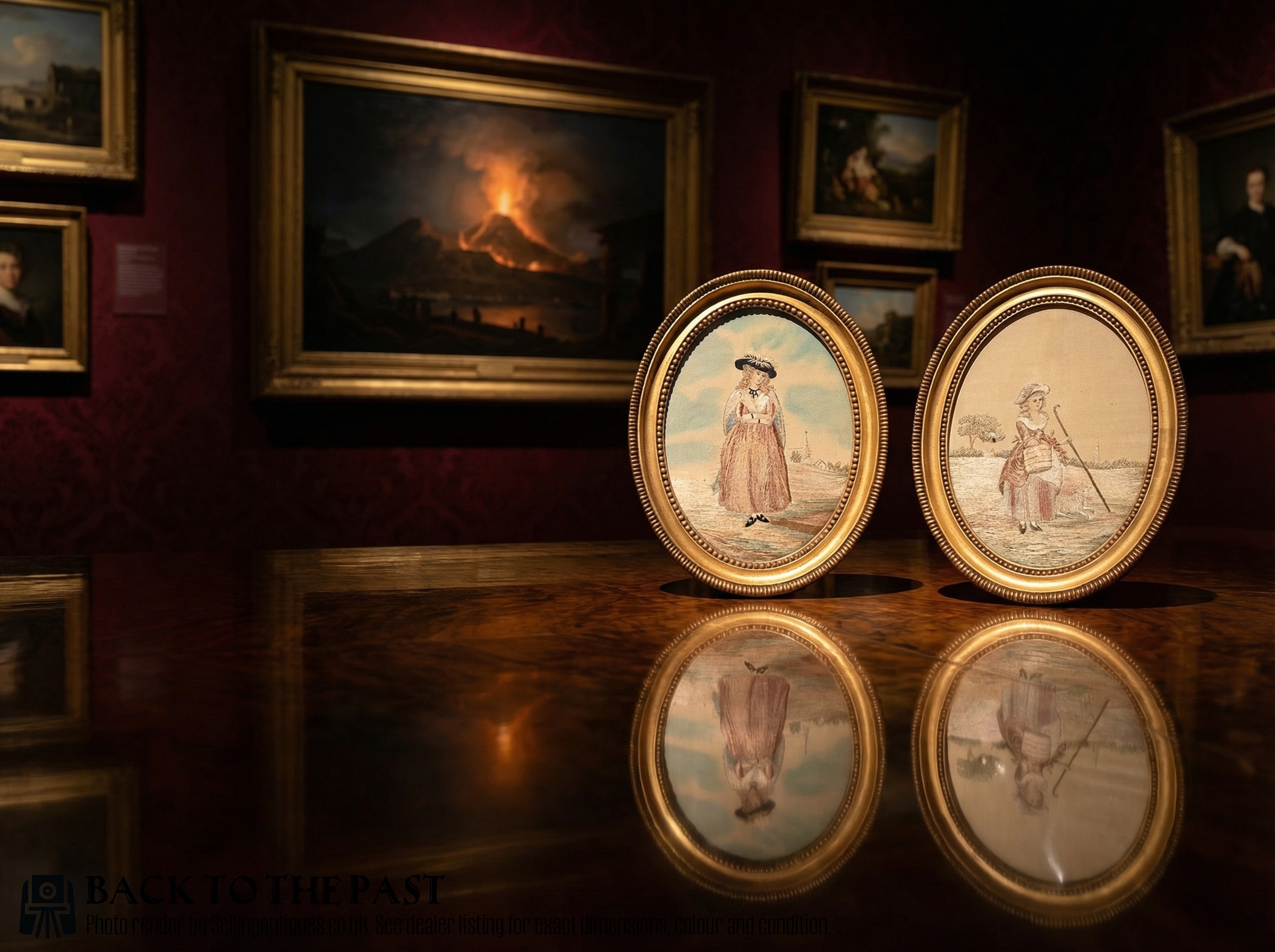
Beaded Gilt Oval Frame
The dominant forms on this page are wall mirrors and portrait pieces, spanning Georgian, Regency, Victorian, and Edwardian eras. Buyers encounter everything from large Irish gilt mirrors to small miniature frames, reflecting diverse regional British and continental workshops.
Examples originate from the eighteenth, nineteenth, and early twentieth centuries, capturing shifts from Neoclassical and Louis XVI formality to later Victorian domestic tastes. Each piece employs the characteristic curved oval silhouette defined by the search phrase beaded gilt oval frame.
How they were made
Maker's workshops built the structural foundation of each beaded gilt oval frame from timber or gesso over wood, applying gold leaf or composition layers to create the metallic finish. Artisans carved or moulded the recurring beaded motifs along the inner or outer edges by hand.
Makers integrated glass plates, water-gilded surfaces, and paper supports into the finished objects, securing delicate portrait miniatures and needleworks within tight rebated mouldings. Gilding techniques varied between oil and water methods, altering the final sheen of the gold surface.
A delicate set of butterfly prints hides inside one Victorian oval frame.
What varies in quality
The definition and crispness of the carved or moulded beadwork separate standard output from finer workshops, where individual beads retain sharp edges and consistent spacing. Inferior examples show rounded, shallow or heavily filled ornament from repeated over-gilding.
The handling of the underlying gesso and the purity of the gold leaf dictate the visual depth of the finish, alongside the joinery of the curved wooden frame itself. Superior pieces exhibit harmonious proportions where the oval geometry remains true without warping at the apex.
JAMES SHARPLES·Henry Jacob Burch
The Beaded Gilt Oval Frame Glossary
- Giltwood
- Timber carved and coated in gold leaf. This material provides the primary structural and decorative body for many traditional wall mirrors.
- Gesso
- A plaster mixture applied to wood frames to create a smooth surface for gilding. Artisans mould fine decorative details directly into this pliable layer.
- Girandole
- A wall mirror featuring attached candle branches or sconces. These reflective pieces doubled ambient candlelight in period interiors.
- Neoclassical
- A decorative style inspired by classical antiquity prevalent during the eighteenth and nineteenth centuries. It prioritises symmetry, restraint, and classical motifs.
- Water gilding
- A traditional technique applying gold leaf over wet bole. This method allows the gold to be burnished to a high, reflective shine.
Beaded Gilt Oval Frame: Frequently Asked Questions
How do I hang a heavy oval mirror safely?
Heavy giltwood frames require secure wall fixings anchored directly into masonry or structural studs rather than plaster alone. Using appropriate steel mirror plates distributes the weight evenly across the vertical span.
Ensure the hanging wire or chain is rated well above the actual weight of the piece to prevent sudden failure over time.
Are these frames suitable for modern bathrooms?
Historic giltwood and gesso surfaces react poorly to high humidity and direct steam exposure. Moisture softens the traditional composition ornament and accelerates degradation of the underlying wood.
Dry interior spaces such as hallways, living rooms, and bedrooms preserve these delicate finishes best.
How do I clean an antique gilded frame?
Dust the surface gently using a very soft, dry artist's brush or an ostrich feather duster. Avoid all commercial cleaning sprays, water, and abrasive cloths.
Moisture strips water-gilded surfaces instantly, so gentle dry maintenance remains the only safe approach for fragile gold leaf.
What indicates an eighteenth century frame?
Early frames typically feature hand-carved wooden beadwork rather than moulded composition applied in later centuries. The gold leaf sits over a warm red bole layer visible through minor wear.
Construction joints at the perimeter and hand-cut fixings at the rear also point towards earlier manufacturing methods.